

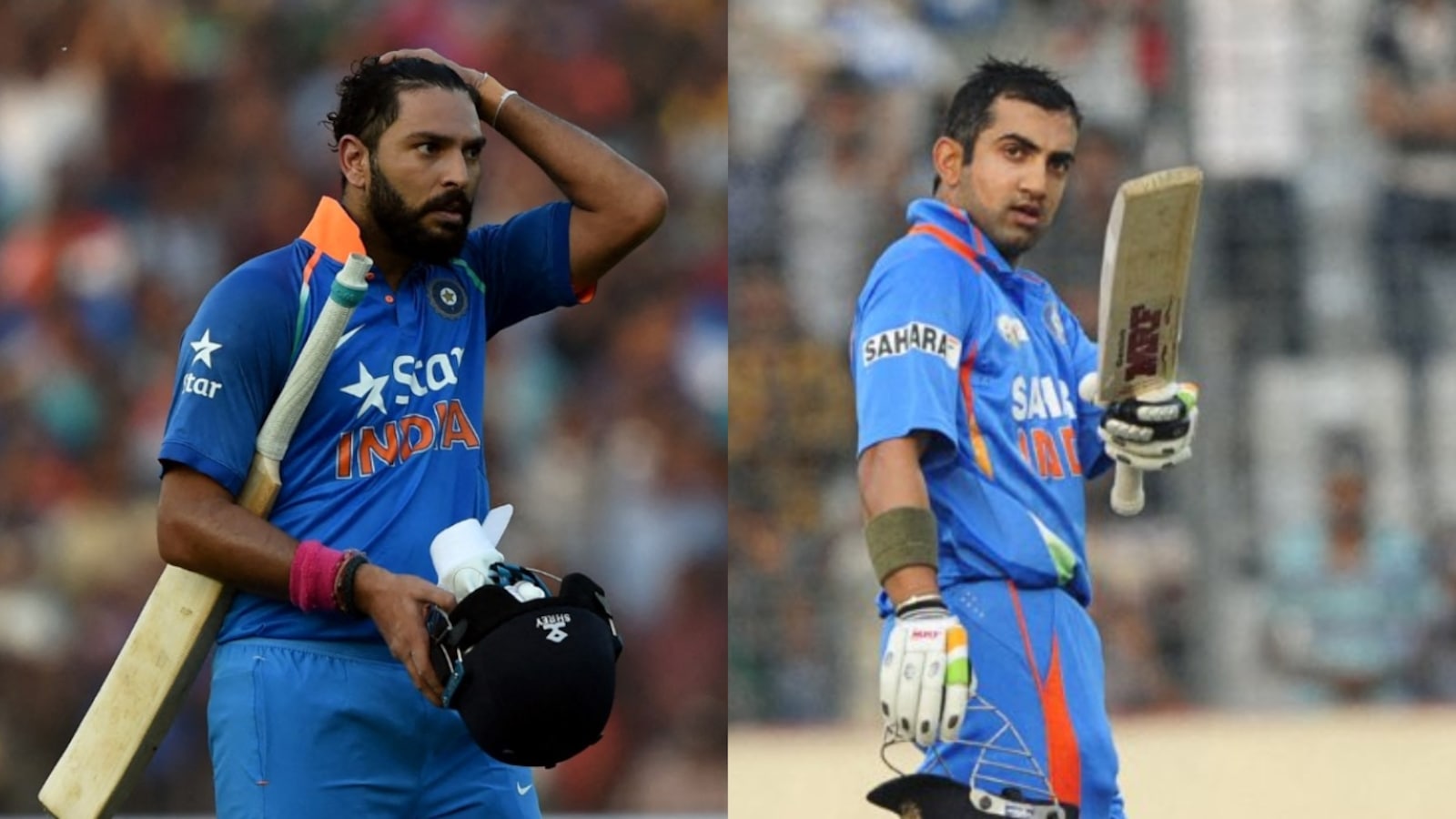
A former national selector has made a startling claim about the end of Yuvraj Singh and Gautam Gambhir's India careers, saying both were given a blunt choice: leave the team or retire. The revelation, which has sparked fresh debate among cricket fans, offers a rare window into how selection calls were communicated to two of India's most celebrated match-winners.
According to the former BCCI selector, the message to the senior duo was not about form alone. It was about the team's future direction, the need to build a new core, and the uncomfortable reality that careers cannot last forever. The selector's account suggests that Yuvraj and Gambhir, who played pivotal roles in India's 2007 T20 World Cup and 2011 ODI World Cup triumphs, were effectively told that their time in the national set-up was over.
Key Facts At A Glance
- A former BCCI selector claims Yuvraj Singh and Gautam Gambhir were told to leave the team or retire.
- The remarks shed light on why both players' India careers ended earlier than many expected.
- Yuvraj and Gambhir were central figures in India's 2007 T20 World Cup and 2011 ODI World Cup wins.
- Yuvraj last played for India in 2017; Gambhir's last international appearance was in 2016.
- The selector's comments have revived discussion about how Indian cricket handles transitions and senior players.
The Blunt Message That Ended Two Careers
In Indian cricket, selection decisions are often wrapped in diplomatic language. Players are "rested", "rotated", or "left out of the squad" while the door is said to remain open. But the former selector's version of events is far more direct. He indicated that Yuvraj and Gambhir were not simply dropped on form; they were told to either step away from the team or announce their retirement.
That choice is a familiar one in elite sport. It allows a selection committee to move on without formally sacking a legend. It also places the burden on the player to make a public exit. For Yuvraj and Gambhir, two proud competitors who had spent years fighting for India, the instruction would have been difficult to hear.
Neither player was at the peak of his powers when the message arrived. Yuvraj had battled cancer, returned to the national team, and produced moments of brilliance, but consistency had become elusive. Gambhir had lost his place across formats, made a comeback in Test cricket, and then slipped out of contention again. The selector's claim helps explain why those exits were not followed by the kind of farewell series that fans often expect for World Cup heroes.
Yuvraj Singh: From Six Sixes To A Quiet Exit
Yuvraj Singh's international career began in 2000, and for more than a decade he was the beating heart of India's middle order. He could change a game in an over, bowl useful left-arm spin, and field like a panther. His six sixes off Stuart Broad in the 2007 T20 World Cup remains one of the most iconic passages of play in the tournament's history. Later that year, he was named Player of the Tournament as India won the inaugural T20 World Cup.
In 2011, Yuvraj delivered one of the greatest individual campaigns in World Cup history. He scored 362 runs and took 15 wickets, becoming the first player to score 300 runs and take 15 wickets in a single World Cup. He was named Player of the Tournament as India lifted the ODI World Cup after 28 years. His performances in the knockout stages, including a crucial fifty in the final, cemented his place among India's greatest limited-overs players.
Then came the fight of his life. Yuvraj was diagnosed with a rare form of germ cell cancer, underwent treatment in the United States, and returned to cricket in 2012. His comeback was emotional and inspiring. He scored a century against England in 2017, but by then the team was changing. Younger batsmen were emerging, and the selectors were looking ahead. Yuvraj's last international appearance came in 2017, and he announced his retirement from international cricket in 2019. For a player of his stature, the exit felt abrupt.
Gautam Gambhir: The Fighter Who Opened Doors
Gautam Gambhir's journey was built on grit. He made his ODI debut in 2003 and his Test debut in 2004, but it was the 2007 T20 World Cup that transformed him into a national hero. His 75 off 54 balls in the final against Pakistan helped India win the inaugural title. In 2009, he became the top-ranked Test batsman in the world, and he formed a formidable opening partnership with Virender Sehwag.
Gambhir's finest hour came in the 2011 ODI World Cup final. Chasing 275 against Sri Lanka, India were in trouble when he walked out to bat. His 97 off 122 balls anchored the innings and allowed MS Dhoni and others to finish the job. It was an innings of immense concentration and courage, and it remains one of the most important knocks in Indian cricket history.
But after 2012, Gambhir's form dipped. He was dropped from the Test team, fought his way back in 2016, and then lost his place again. His last international match was a Test against England in 2016. He remained a successful IPL captain, leading Kolkata Knight Riders to two titles, and later entered politics. Yet his India career ended without a traditional send-off. The selector's claim that he was told to leave or retire adds a new layer to that story.
Why Selectors Choose The "Leave Or Retire" Route
The phrase "leave the team or retire" is not unique to Indian cricket, but it has been used in the Indian set-up before. When a senior player is no longer part of the plans, selectors often prefer a quiet transition. They want to avoid the spectacle of dropping a legend, and they want to give younger players a clear path. At the same time, the approach can leave players feeling disrespected.
Former captain Sourav Ganguly was famously dropped in 2005 and then made a remarkable comeback. Rahul Dravid and VVS Laxman retired on their own terms after long careers. Virender Sehwag was dropped and did not get a farewell. Zaheer Khan, Harbhajan Singh, and others also faded out. The pattern suggests that Indian cricket has not always been good at managing the end of great careers.
The former selector's comments about Yuvraj and Gambhir fit that pattern. Both men had given everything to the team. Both had won World Cups. Both were still capable of playing domestic cricket and IPL. But the national team had moved on. The selector's message, as reported, was essentially: you can leave now, or you can retire. Either way, the future belonged to someone else.
The Changing Face Of Indian Cricket
When Yuvraj and Gambhir were at their peak, India's batting line-up was built around experience. Sachin Tendulkar, Rahul Dravid, VVS Laxman, Sourav Ganguly, and later MS Dhoni formed a core that lasted for years. Yuvraj and Gambhir were part of that golden generation. But by the mid-2010s, the team was shifting towards a new leadership group under Virat Kohli.
The rise of Rohit Sharma, Shikhar Dhawan, Ajinkya Rahane, Cheteshwar Pujara, Ravindra Jadeja, and R Ashwin changed the balance. The selectors wanted players who could field better, run harder, and fit a more modern template. Yuvraj and Gambhir, for all their achievements, were seen as part of the past. The "leave or retire" message was a sign of that transition.
It is also worth noting that the Board of Control for Cricket in India has often left such conversations to the selection committee. The chief selector or the captain may communicate the decision, but the player is expected to read between the lines. In this case, the former selector's decision to speak openly has given fans an unusual look at the machinery behind the scenes.
How Fans And Former Players Have Reacted
The revelation has triggered a mix of anger and sadness among supporters. Many believe Yuvraj and Gambhir deserved a proper farewell. Others argue that selectors cannot afford sentiment when building a team. The debate is not new. Every generation of Indian cricket has seen stars fade away, and every generation has questioned whether the exit was handled well.
For Yuvraj, the emotional connection with fans remains powerful because of his cancer battle and his World Cup heroics. For Gambhir, the respect comes from his fighting spirit and his match-winning contributions in finals. Both players remain involved in cricket in different ways, and both have spoken about their careers with pride rather than bitterness. But the selector's account suggests that the end was not entirely of their choosing.
Ultimately, the story of Yuvraj and Gambhir is a reminder that even World Cup winners are not immune to the harsh logic of selection. Their numbers, their age, and the team's needs all pointed in the same direction. The former selector's claim that they were told to leave or retire may be uncomfortable, but it is also a candid description of how high-performance sport works. The legacy of both players, however, is secure. No selection decision can erase what they achieved in India's colours.
Source: NDTV Sports News