

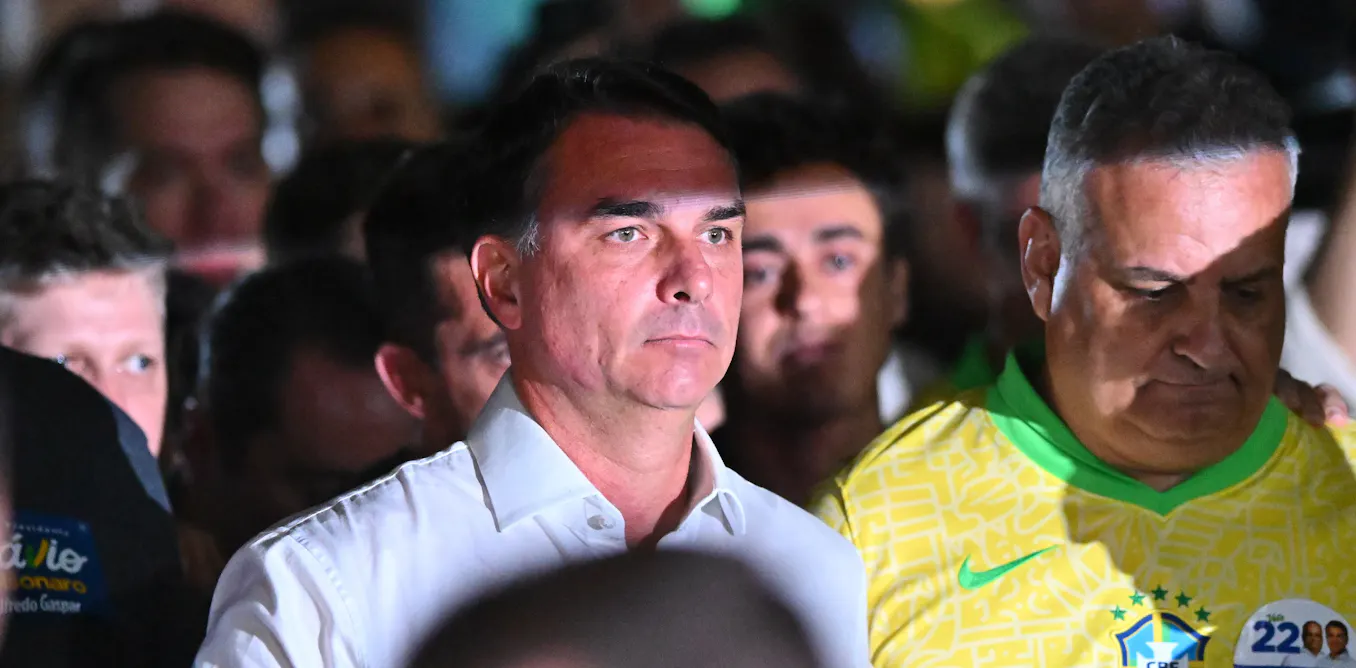
For a country that had spent months bracing for a different outcome, the confirmation of Luiz Inácio Lula da Silva's victory in Brazil's presidential runoff landed with unusual force. The result hands the veteran leftist a historic fourth term in office and interrupts a sequence of right-wing electoral triumphs that had appeared to be sweeping across Latin America. Yet beneath the headline number, the picture is far more complicated than a simple swing of the pendulum back to the left.
The right did not lose Brazil. It lost the presidency. In Congress, the Liberal Party has claimed the largest share of seats in both houses, giving the movement Jair Bolsonaro built a powerful base from which to constrain the incoming government, shape legislation and prepare for the next contest. That split verdict — a leftist executive facing a legislature tilted to the right — will define Brazilian politics for the years ahead.
A win that bucks the regional trend
Lula's return to the Planalto Palace comes at a moment when progressive movements across the region had grown accustomed to bad news. Conservative and far-right candidates had recorded victories in Argentina, Chile and Colombia, part of a broader realignment that suggested Latin America's leftward cycle had run its course. For those governments and activists, the Brazilian result has been seized upon as proof that electoral fortunes can reverse quickly.
That reading may be premature. Several of Latin America's right-wing leaders are contending with low and declining public approval, but dissatisfaction with incumbents is not the same thing as an ideological shift. Brazil's own result illustrates the ambiguity: voters removed a Bolsonaro from the presidency while simultaneously sending a large contingent of Bolsonaro-aligned legislators back to Brasília. The country has not chosen a direction so much as it has chosen divided government.
What next for Flávio Bolsonaro?
The Bolsonaro family has been a fixture of Brazilian political life since the 1990s, but it became a dominant force only after Jair Bolsonaro won the presidency in 2018. Flávio Bolsonaro, the eldest son and a senator, campaigned on a platform closely mirroring his father's: tax cuts, a hard line on crime, and a promise to dismantle what the family describes as the machinery of political persecution.
He also made an explicit pledge to secure his father's release from prison. Jair Bolsonaro is currently serving a 27-year sentence after being convicted of plotting a coup to overturn the 2022 presidential election that he lost. Had Flávio won, that promise would have become the central test of his administration. Instead, the question of his father's legal fate now rests with courts and congressmen rather than with a son in the presidential chair.
The defeat was followed by a period of uncertainty. Flávio initially refused to concede and indicated he would seek an annulment of the result, a manoeuvre that echoed the contestation strategy his father pursued four years earlier. He has reportedly since abandoned that plan, a decision that spares Brazil a prolonged institutional crisis but leaves his own political future unresolved.
A legal cloud that will not lift soon
The younger Bolsonaro's path forward is further complicated by allegations of financial misconduct at the centre of an ongoing investigation by Brazilian police. Shortly after the results came in, the Supreme Court ordered him to surrender his passports and prohibited him from leaving the country — an extraordinary measure that signals the seriousness with which the judiciary is treating the case.
Those restrictions carry direct political consequences. A politician barred from international travel cannot easily build the kind of cross-border profile that modern campaigns require, and a candidate facing live criminal exposure is a difficult vessel for a party seeking to project competence. Even if the allegations are ultimately resolved in his favour, the process itself could consume the years he would need to rebuild his brand.
Why the Bolsonaro name may not leave politics yet
The family's influence is unlikely to disappear simply because its most prominent electoral vehicle stalled. Former First Lady Michelle Bolsonaro, Jair Bolsonaro's wife, was elected to Brazil's Senate for the first time earlier this month. Presenting herself as a dedicated evangelical Christian, she has built a strong profile among religious voters, a group that has been a cornerstone of support for the Bolsonaro movement more broadly.
Her Senate seat gives her something she has never previously possessed: an independent political platform. Rather than serving as an amplifier for her husband's message, she can now sponsor legislation, build a voting record and cultivate her own network of allies. Within a family whose internal dynamics have often determined the movement's direction, that new standing makes her a natural successor to Flávio as the standard-bearer of the right.
The Liberal Party, which owes much of its recent growth to the Bolsonaro brand, is widely expected to throw its weight behind her rather than look elsewhere. But the transition is not without risk. She remains relatively untested in the rough theatre of presidential campaigning, and her close association with her husband's legal troubles could limit her reach beyond the movement's core. Her challenge will be to hold the base while broadening it — a task that has defeated more experienced politicians.
Could the centre-right make a comeback?
There is no guarantee that the next figurehead of the Brazilian right will carry the Bolsonaro surname at all. Historically, the country's politics was characterised by a robust traditional centre-right, whose influence largely faded after Jair Bolsonaro's election in 2018. That collapse had a narrowing effect: for voters who disliked Lula and his party, the only credible alternative on offer was a far-right candidate.
Some more centrist conservative politicians now see an opening. The most prominent is Tarcísio de Freitas, who has just been re-elected as governor of São Paulo, the country's most populous state and its economic engine. De Freitas served as infrastructure minister under Jair Bolsonaro, but has carefully portrayed himself as a more technical, pragmatic figure on the centre-right rather than an ideological warrior.
He has distanced himself from far-right fringe conspiracies as well as the confrontational rhetoric associated with Bolsonaro-style politics, a positioning that appeals to business groups, moderate voters and segments of the electorate exhausted by permanent cultural combat. Governing São Paulo gives him an administrative record to run on and a national media platform that few other conservatives possess.
Yet questions linger. Given his strong previous connections with Jair Bolsonaro, it remains to be seen whether he would genuinely offer a break from Bolsonarism or merely a softer packaging of the same coalition. One practical complication is partisan: de Freitas belongs to the Republicanos party, not the Liberal Party, meaning a national campaign would require negotiating a merger of interests that the Bolsonaro camp may not welcome. The Liberal Party is more likely to back Michelle Bolsonaro, setting up a contest that will play out in primaries, state machines and television studios over the coming years.
Whatever happens, the competition to lead the right will be crowded. It will have to factor in who is best positioned for the next presidential election in 2030 — and whether the movement tries to broaden its appeal by moving toward the centre or finds a new figurehead to champion the far-right agenda.
Succession challenges for the left
Those on Brazil's political left may have won a reprieve with this result, but there are challenges on the horizon. Lula, who is about to turn 81, will be serving his last presidency, closing a chapter that has shaped Brazilian politics for two decades. His Workers' Party has not yet identified an obvious successor, and the absence of a clear heir is a vulnerability that the right will exploit.
One stand-out option is former presidential candidate Fernando Haddad, who has served in multiple ministerial roles under Lula, most recently as minister for finance. His experience is considerable, but his loss to Bolsonaro in the 2018 presidential election, and his more recent defeat in the 2022 São Paulo gubernatorial race, raise questions about his capacity to galvanise support beyond the party's core.
The deeper problem is structural. The Workers' Party's strength has long depended on Lula's personal appeal, particularly among working-class and northeastern voters. Transferring that loyalty is not straightforward, and it will need to be accomplished while governing with a Congress in which the opposition controls the largest bloc. Every budget vote, every committee appointment and every investigation will serve as a reminder of that arithmetic.
What this means for Latin America
Progressive movements across the region are already pointing to the Brazilian result as evidence that their recent run of defeats is reversible. Some Latin American right-wing leaders are indeed struggling with weak public approval, and the symbolism of Lula's return is not lost on governments facing their own restive electorates.
But the outcome in Brazil does not necessarily signal that Latin America is about to shift back to the left. It signals that anti-incumbent sentiment remains the most powerful force in the region, and that no ideological camp can take its position for granted. Brazil's voters removed a president and simultaneously strengthened the movement he led — a contradiction that will not be resolved quickly.
In the next few years, the looming absences of figures who have dominated the country's politics for a generation — Lula, and the Bolsonaro father and son — could create openings on both sides. What replaces them will be determined less by the drama of a single election night than by the patient work of party building, coalition management and the slow transfer of loyalty from one generation to the next.
Source: The Conversation News