

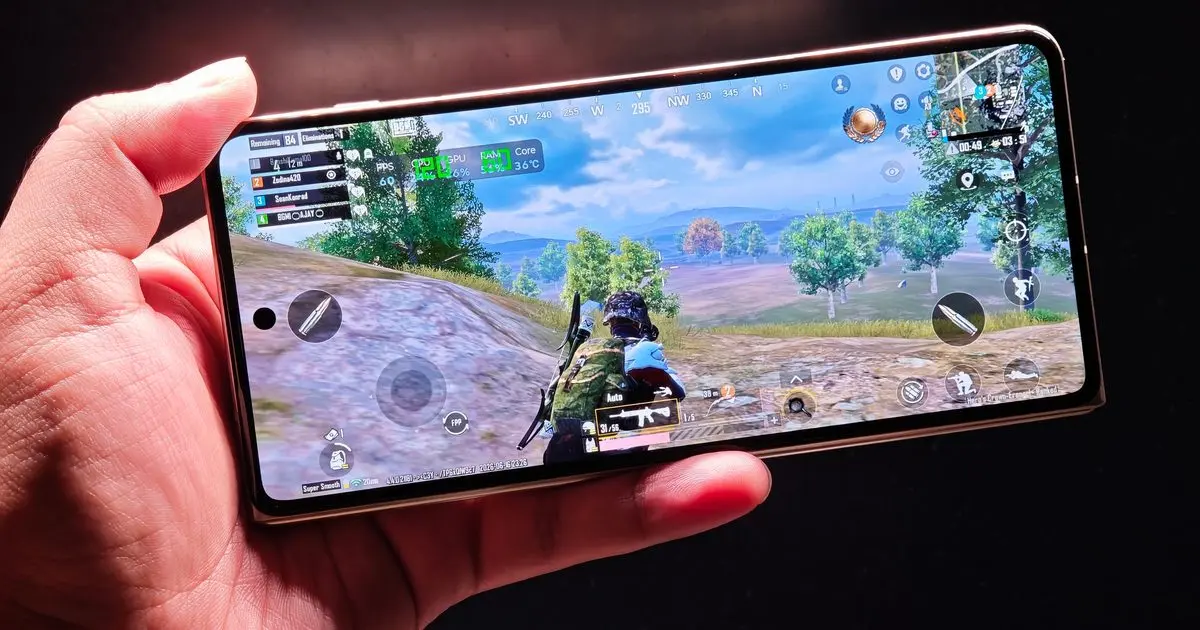
The surge in mobile game releases is impossible to ignore. Research firm ATTN Economy reported that 181,000 mobile games launched in the six-month period ending May 2026, marking a 118 percent increase on iOS and a 73 percent jump on Android compared to the same timeframe the previous year. The primary driver behind this explosion is a growing trend known as vibe-coding, where individuals with minimal programming experience use generative AI tools to create and publish games without writing traditional code.
Vibe-coding relies on large language models and image generators to handle scripting, asset creation, and even level design. Tools like ChatGPT, Claude, and various game-focused AI suites allow users to input prompts such as ‘create a platformer with a cat protagonist’ and receive functional prototypes in minutes. This democratization of game development has lowered the barrier to entry to an unprecedented degree. Yet, despite the flood of new titles, questions about quality, fairness, and sustainability are becoming increasingly urgent.
The notion that AI will level the playing field for indie developers has proven optimistic. Even with reduced development times, the productivity gains are more modest than early predictions suggested. A former executive at French mobile gaming studio Voodoo told the Financial Times that AI shaved development time from roughly 14 days to 10 days. While useful, this 28 percent reduction hardly constitutes the industry-wide transformation many envisioned. The real bottleneck is not the speed of creation but the ability to market, monetize, and retain players in a market dominated by deep-pocketed giants.
Why the AI gaming boom isn't helping indie developers
Statistical evidence underscores the growing inequality. In 2025, the top 1 percent of game publishers controlled $75.6 billion in revenue, leaving just $6.1 billion for the remaining 99 percent of developers. That same top tier accounted for nearly 80 percent of all worldwide downloads. Vibe-coding has made the technical side of game development accessible, but the economic landscape remains fiercely lopsided. Major studios leverage decades of player data, established franchises, and vast marketing budgets that independent creators cannot match.
Moreover, the app store algorithms favor games that already have high engagement and download numbers. Newcomers, especially those using AI to produce generic or low-effort titles, struggle to gain visibility. Many vibe-coded games are derivative, often mimicking popular mechanics without adding original twists. This results in a marketplace saturated with clone-like experiences that fail to retain users. The promise of AI enabling a new generation of innovative indie hits has not materialized; instead, the same big players continue to dominate.
The quality issue is further compounded by the fact that AI tools, while powerful, lack the creative intuition and nuanced decision-making of human developers. They can generate countless variations of textures, sound effects, and code snippets, but they struggle to produce cohesive, emotionally resonant experiences. A game that feels special often comes from human instinct: a clever puzzle design, a touching narrative beat, or a perfectly tuned difficulty curve that AI cannot yet replicate.
Trust in generative AI among gaming professionals plummets
The industry's relationship with generative AI is souring rapidly. According to a survey from the Game Developers Conference (GDC) Festival of Gaming, one in four gaming employees has been laid off in the past two years. These job losses are partly attributed to studios replacing certain roles—like concept artists, writers, and junior programmers—with AI tools. The human cost is significant, and it has fueled a sharp downturn in sentiment.
In 2024, only 18 percent of gaming professionals viewed generative AI as harmful to the industry. By 2025, that number had skyrocketed to 52 percent. Many developers report feeling that AI is being used to cut costs rather than enhance creativity. They also worry about copyright issues, as AI models are trained on vast datasets that often include unlicensed art, code, and music. The legal gray area surrounding AI-generated content has made publishers cautious, and some platforms have started labeling AI-assisted games or outright banning them.
Veteran game designers argue that reliance on AI leads to homogenization. When thousands of developers use the same underlying models, the output begins to look and feel similar. Unique art styles, innovative gameplay mechanics, and original storytelling take a backseat to what the AI predicts will be commercially safe. The result is a flood of games that are technically competent but artistically sterile. Players have also noticed this trend, with many complaining that app stores feel cluttered with unfinished or derivative titles.
Despite these concerns, AI is not universally condemned. Some studios use it strategically to handle tedious tasks like bug testing, localizing text, or generating placeholder assets. This allows human developers to focus on higher-level design and polish. The issue is when AI becomes a substitute for human creativity rather than a supplement. The most successful indie games of recent years—such as those praised for their art, writing, or unique mechanics—are almost always built by small teams relying on human talent, not automated tools.
The gaming boom fueled by AI and vibe-coding is real, but the underlying tensions are equally tangible. More games than ever are entering the market, but the definition of 'more' does not equate to 'better.' For players, this means an overwhelming number of choices, many of which are forgettable. The signal-to-noise ratio has worsened, making it harder to discover hidden gems. Discovery mechanisms, already flawed, are further strained by the sheer volume of new releases.
Looking ahead, the industry may need to rethink its approach to AI. Rather than focusing on volume, developers could use AI to prototype ideas rapidly, then invest human time in refining and differentiating the final product. Platform holders might implement stricter quality control or curation to help players find worthwhile games. But as long as the reward structures favor quantity over quality, the flood will continue—and the human touch that makes a game truly memorable will remain irreplaceable.
Source: Digital Trends News