

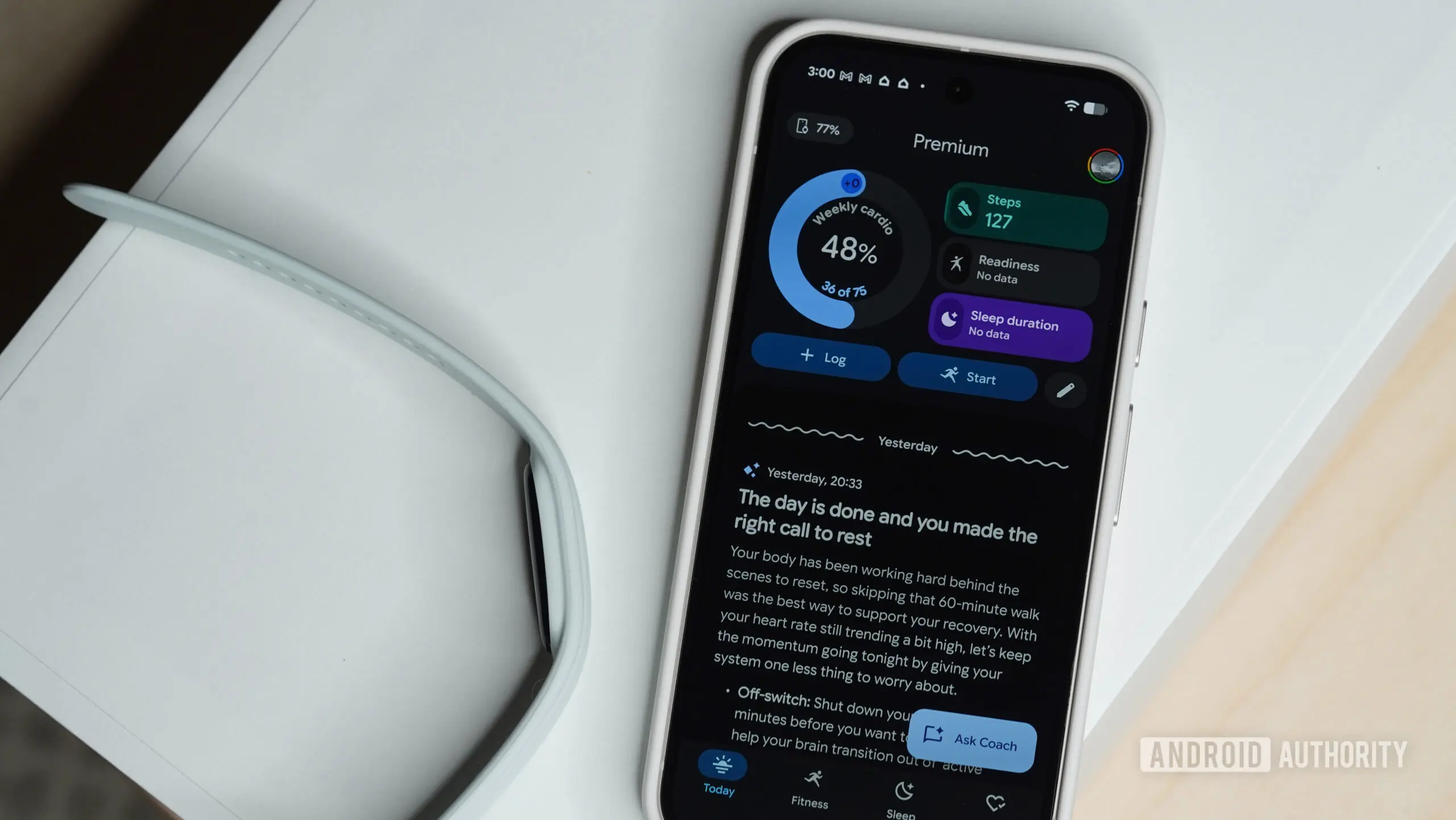
In a surprising turn of events, some customers who pre-ordered the Google Fitbit Air have already received their devices days ahead of the anticipated May 26 shipping window. While early deliveries are typically a cause for celebration, Android users among the first recipients have encountered a frustrating roadblock: they cannot pair the screenless fitness tracker with their phones due to a missing app update.
The issue was first reported over the weekend on Reddit, where a user shared that they had received their Fitbit Air but were stuck on an 'app update required' message. The device demands the latest version of the Google Health app (version 5.0), which has not yet rolled out to all Android users via the Google Play Store. Google has since acknowledged the problem, confirming that the company is working to accelerate the rollout to accommodate the early deliveries.
This development is notable because the Google Fitbit Air is one of the company's most anticipated wearable launches since its acquisition of Fitbit in 2021. The device is a screenless fitness tracker aimed at simplicity and affordability, focusing on core health metrics like heart rate, sleep, and step counting. Unlike the more sophisticated Fitbit Sense or Versa series, the Air does not have a display and relies entirely on smartphone connectivity via Bluetooth for data sync and notifications. This makes the pairing process—which is currently broken for many Android users—absolutely essential for the device to function.
The Root Cause: Google Health 5.0 Update Lag
At the heart of the pairing issue is the Google Health app, which serves as the central hub for all health data collected by the Google Fitbit Air and other compatible devices. Version 5.0 introduces support for the new screenless tracker, including the necessary firmware pairing protocols and data synchronization algorithms. According to a Google product team representative who responded to the Reddit thread, the update is necessary to 'pair and use the product.'
Google began rolling out version 5.0 of Google Health a few days ago. Early reports suggest that some Pixel phone users have already received the update, but the rollout is staged—a common practice to catch potential bugs before reaching all users. For the Fitbit Air early adopters, the timing couldn't be worse. Their devices arrived before the update reached their specific devices or regions, leaving them with a bricked wearable until the update becomes available.
'Hey, Andy from Google product team here – looks like your order arrived early! Sorry for the experience, as others have said here, confirming you do need the updated app. We are doing our best today to accelerate the rollout of the updated app on Android via Play to accommodate early deliveries and it should be available shortly,' the Google representative wrote.
Interestingly, iOS users have not faced the same issue. The Google Health app update for iPhones is already available on the Apple App Store. This disparity hints at the different update review processes between the two platforms—Apple's App Store typically has a faster review turnaround for minor updates, while Google's staged rollout can take days to reach all Android devices.
Expanded Context: The Google Fitbit Air and the Wearable Landscape
The Google Fitbit Air represents Google's renewed push into the budget fitness tracker segment. It is priced at $89.99, positioning it as a direct competitor to the Xiaomi Mi Band and the Samsung Galaxy Fit series. Unlike many smartwatches that try to do everything, the Fitbit Air strips away the screen and focuses on long battery life—promising up to 14 days of usage on a single charge. It also includes automatic activity tracking, sleep stage monitoring, and heart rate variability measurements.
This device is also part of Google's strategy to consolidate its health ecosystem. Following the Fitbit acquisition, Google has gradually merged Fitbit's backend systems into Google Health, creating a unified platform for health metrics across Android and iOS. The Fitbit Air is the first device to launch exclusively under the new 'Google Fitbit' brand, moving away from the standalone Fitbit identity. This transition has been rocky for some users, as legacy Fitbit services have been deprecated or migrated.
For example, earlier this year, Google announced that users of older Fitbit devices would need to transition to a Google Account to continue syncing data—a move that sparked privacy concerns. With the Fitbit Air, Google is requiring the Google Health app out of the box, signaling a complete departure from the old Fitbit app ecosystem. This makes the current update delay particularly problematic, as early adopters are essentially beta testers for a new software ecosystem.
What Early Buyers Are Saying
Despite the initial frustrations, many Reddit users expressed understanding, noting that receiving the device early is a pleasant surprise. One user commented, 'I love that it arrived early, but I wish I could actually use it. I've been checking the Play Store every hour for the update.' Another user mentioned that they were able to pair the Fitbit Air with an iOS device temporarily to test basic functionality, but quickly switched back to their primary Android phone.
Google has not provided an exact timeline for when the Android update will be fully available, but the product team member indicated it could be 'later today or tomorrow.' Users are advised to keep checking the Google Play Store for version 5.0 of Google Health. In the meantime, those who haven't received their Fitbit Air yet may benefit from the delay—by the time their unit arrives, the software should be ready.
Broader Implications for Google's Wearable Strategy
This launch hiccup is a microcosm of the challenges Google faces in the wearable space. Despite its deep pockets and strong software engineering, the company has struggled to deliver a seamless experience with its hardware-software integration. The Pixel Watch, for instance, was criticized for its battery life and lackluster third-party app support. The Fitbit Air, by contrast, is a simpler device that should have been easier to launch flawlessly.
However, the missing app update is a reminder that even the best hardware is useless without the corresponding software. For Google, the stakes are high. With the health and fitness tracking market growing rapidly—and competitors like Apple, Samsung, and Xiaomi offering increasingly polished ecosystems—any misstep could cost them early adopters' trust.
Another interesting detail from the Reddit exchange was a user asking about Apple Health integration. The Google product team member responded that support for writing data to Apple Health is 'coming soon.' This implies that the Google Fitbit Air will eventually allow health data to sync directly into Apple's Health app, which runs on iOS and iPadOS. This move would be a significant olive branch to iPhone users who might be considering the Fitbit Air over the Apple Watch—a rare example of cross-platform health data sharing.
Currently, the Google Health app on iOS can read data from Apple Health, but cannot write to it. If Google enables writing, it would mean that step counts, heart rate measurements, and sleep data from the Fitbit Air could be aggregated within Apple's ecosystem, making the device more attractive to Apple loyalists. This feature is not yet available, but its imminent arrival suggests Google is serious about interoperability.
What to Do If You Receive Your Fitbit Air Early
If you are an Android user who has received the Google Fitbit Air but cannot pair it, here are some steps you can take:
- Check for the Google Health app update – Go to the Google Play Store, search for 'Google Health', and see if version 5.0 is available. If not, keep refreshing.
- Enable automatic updates – Ensure your phone is connected to Wi-Fi and has auto-update enabled for Google Health. The update may push overnight.
- Use a temporary iOS device – If you have access to an iPhone or iPad, download Google Health from the App Store, which already has version 5.0. Pair the Fitbit Air, then unpair and wait for your Android to update.
- Contact Google support – Google is aware of the issue and may offer workarounds or compensation for the inconvenience.
For iOS users, there is no problem. Simply ensure Google Health is updated to the latest version, then pair the Fitbit Air via the app. The device should work immediately.
Future Outlook: Google's Fitbit Air and the Health App Ecosystem
The Google Fitbit Air is more than just a budget tracker; it is a testament to Google's ambition to create a health data platform that spans both Android and iOS. The current pairing debacle is unfortunate, but likely temporary. Once the Google Health 5.0 update is widely available, early adopters will be able to enjoy the device's full capabilities. In the meantime, the excitement surrounding the early deliveries underscores strong demand for a simple, long-lasting fitness tracker that stays out of the way.
As the wearable market evolves, screenless trackers like the Fitbit Air are carving a niche for users who prefer minimalist hardware paired with a rich software experience. Google's ability to quickly resolve the app update issue will set the tone for its future releases. With the support for exporting data to Apple Health on the horizon, the Fitbit Air could become a rare cross-platform health tool.
For now, affected Android users must practice patience. But given Google's proactive response and the accelerated rollout, the wait should not be long. And for those who have not yet received their devices, the software will likely be ready by the time the package arrives.
Source: Android Authority News