

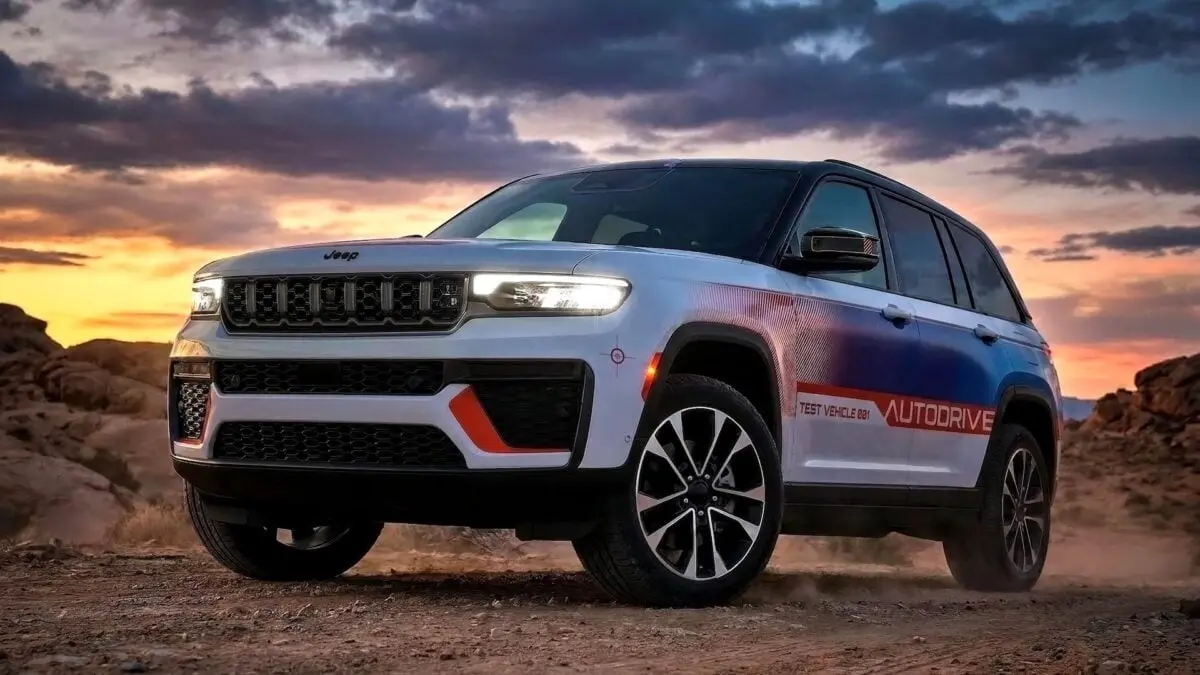
The race to bring autonomous driving technology to commercial passenger vehicles is accelerating, and Stellantis — the parent company behind iconic brands such as Jeep, Ram, Dodge, Fiat, and others — has just made a significant move. On May 21, 2026, the automaker announced a strategic technology partnership with Wayve, a London-based startup specializing in AI-driven autonomous driving software. The deal will integrate Wayve's AI Driver system into Stellantis' STLA AutoDrive platform, setting the stage for a new generation of hands-free, supervised driving capabilities.
Stellantis is not the first major automaker to pursue Level 2++ systems — a classification that allows drivers to temporarily take their hands off the wheel while still remaining attentive and ready to take control at any moment. Tesla's Autopilot and Full Self-Driving (FSD) systems, Rivian's Driver+, and Ford's BlueCruise all operate in a similar space. However, the partnership with Wayve marks a unique approach: instead of relying on high-definition maps or a heavy suite of expensive sensors, Wayve's software learns from real-world traffic data using cameras and end-to-end machine learning. This approach is designed to be vehicle-agnostic, meaning it can be adapted to a wide range of vehicles, from passenger cars to delivery vans, without requiring extensive retraining for each model.
Background on Stellantis and Autonomous Driving
Stellantis, formed in 2021 from the merger of Fiat Chrysler Automobiles and French Groupe PSA, has been relatively cautious in the autonomous driving space compared to rivals like General Motors (with its Cruise division) or Ford (with its partnership with Argo AI, now defunct). The company has focused on developing its STLA Brain architecture and STLA AutoDrive platform, which are designed to support a range of automated driving features. However, until now, those features have been limited to advanced driver-assistance systems (ADAS) like lane keeping, adaptive cruise control, and automated parking. The partnership with Wayve represents a significant leap forward, aiming to deliver hands-free driving on both highways and city streets.
Stellantis CEO Carlos Tavares has previously expressed a pragmatic view of autonomy, emphasizing that technology must be safe, affordable, and scalable. Wayve's approach aligns with this philosophy: by using a software-first strategy that can be trained with minimal data and deployed across multiple vehicle platforms, the cost per vehicle is likely lower than systems that rely on lidar and centimeter-level maps. The first integration is planned for North America in 2028, though no specific brand or model has been confirmed. The prototype was quickly developed on the Jeep Cherokee platform in less than two months, demonstrating the flexibility of Wayve's software.
Wayve's Technology and Unique Approach
Founded in 2017 by Alex Kendall, Edoardo Mello Rella, and Amar Shah, Wayve has become one of the most talked-about startups in the autonomous driving sector. Unlike most competitors that use a modular approach — separating perception, prediction, planning, and control — Wayve uses an end-to-end neural network that takes in raw camera data and directly outputs driving commands. This approach, which the company calls "AI Driver," is trained on massive datasets of real-world driving and can handle complex urban environments, roundabouts, and even adverse weather conditions.
Wayve's software is designed to work without high-definition maps, which are expensive to maintain and can become outdated quickly. Instead, the system learns to understand its environment in real time, similar to how a human driver would. This makes it particularly attractive to automakers like Stellantis and Nissan, which want to deploy the same system across multiple countries and regions without having to create and update maps for each one. Wayve's technology has been tested in London, San Francisco, and other dense cities, and the company claims its system can achieve a level of robustness comparable to or better than traditional approaches.
Investment and Partnerships
Wayve has attracted significant investment from some of the biggest names in tech and automotive. In early 2026, the company announced a $1.2 billion Series D investment round led by SoftBank, with participation from Microsoft, Nvidia, and Uber. Just a month later, a separate $60 million investment came from Advanced Micro Devices (AMD), Arm, and Qualcomm Ventures, signaling strong interest from chipmakers. This financial backing is not just about cash; it also provides strategic access to computing power, edge AI, and mobility platforms.
Uber's investment is particularly notable because it includes a commitment to launch Wayve-powered robotaxis on the Uber platform. The first service is expected to launch in London in 2026, with plans to expand to other cities. This gives Wayve a dual strategy: supplying autonomous driving software to automakers for consumer vehicles (Level 2++) while also working with mobility service providers for fully autonomous robotaxis (Level 4/5). Nissan signed a similar deal in December 2025 to integrate Wayve's technology into a broad range of its cars starting in 2027.
The Competitive Landscape
The autonomous driving industry is currently in a period of consolidation and shifting strategies. Several years ago, there was a rush to achieve full Level 5 autonomy, but many companies have since scaled back their ambitions. Waymo and Cruise continue to operate robotaxi services in limited areas, but the expense and technical challenges have led to a renewed focus on driver-assist features. Tesla, despite its claims, still operates a Level 2 system that requires constant driver supervision. Ford closed its Argo AI division in 2022, and Apple has reportedly shelved its self-driving car project. In this context, Stellantis's partnership with Wayve represents a pragmatic and potentially cost-effective path forward.
Mobileye, the Israeli company owned by Intel, remains a major player with its Mobileye SuperVision system, which is used by BMW, Volkswagen, and others. Unlike Wayve, Mobileye relies heavily on REM (Road Experience Management) HD maps, though it is also moving toward a more vision-centric approach. Wayve's end-to-end learning may offer advantages in scalability and adaptability, but it also faces challenges in interpretability and safety validation — a topic of ongoing debate in the AI research community.
Regulatory and Market Context
Regulations around autonomous driving vary widely around the world. In the United States, the National Highway Traffic Safety Administration (NHTSA) has been slow to update its guidelines, but Level 2 systems are generally allowed as long as automakers comply with existing safety standards. The European Union has introduced a framework for Level 3 systems, but Level 2++ remains a gray area. Wayve and Stellantis describe the first iteration as a Level 2++ system, meaning the driver remains legally responsible for the vehicle's operation at all times. This approach avoids many regulatory hurdles while still providing significant convenience to drivers.
Consumer acceptance also plays a critical role. Surveys show that while many drivers are interested in semi-autonomous features, they are wary of handing over full control. A system that allows hands-free driving on highways and city streets — with the driver required to supervise — could be a more palatable stepping stone. Stellantis hopes that by rolling out this technology on popular vehicles like the Jeep Wrangler, Ram 1500, and Dodge Charger, it can build consumer trust and pave the way for more advanced features in the future.
Future Outlook
The partnership between Stellantis and Wayve is set to evolve over time. As regulations adapt and customer expectations shift, the STLA AutoDrive platform could support higher levels of automation. Wayve's technology is designed to be scalable, potentially enabling Level 3 (eyes-off) and even Level 4 (mind-off) features down the line. The company is also exploring applications beyond passenger cars, including delivery vans and commercial fleets — a market that Uber has already signaled interest in.
Stellantis's decision to go with a smaller, agile startup rather than a more established supplier like Mobileye or Bosch reflects a broader trend in the automotive industry: automakers are increasingly looking for innovative software solutions that can be iterated quickly and deeply integrated into their own platforms. Wayve's success will depend on its ability to deliver a consistent, safe, and reliable system at scale, but the early signs are promising. With a prototype operational in less than two months on the Jeep Cherokee platform, the company has demonstrated impressive speed and flexibility.
The self-driving industry has had its ups and downs, but the Stellantis-Wayve partnership signals that the dream of hands-free driving in everyday vehicles is still very much alive — and moving closer to reality. As Wayve continues to refine its AI driver and expand its partnerships, consumers may soon find themselves behind the wheel of a Jeep, Ram, or Dodge that can navigate both the open highway and the busy city street, all while the driver sits back and supervises. The countdown to 2028 has begun.
Source: Gizmodo News