

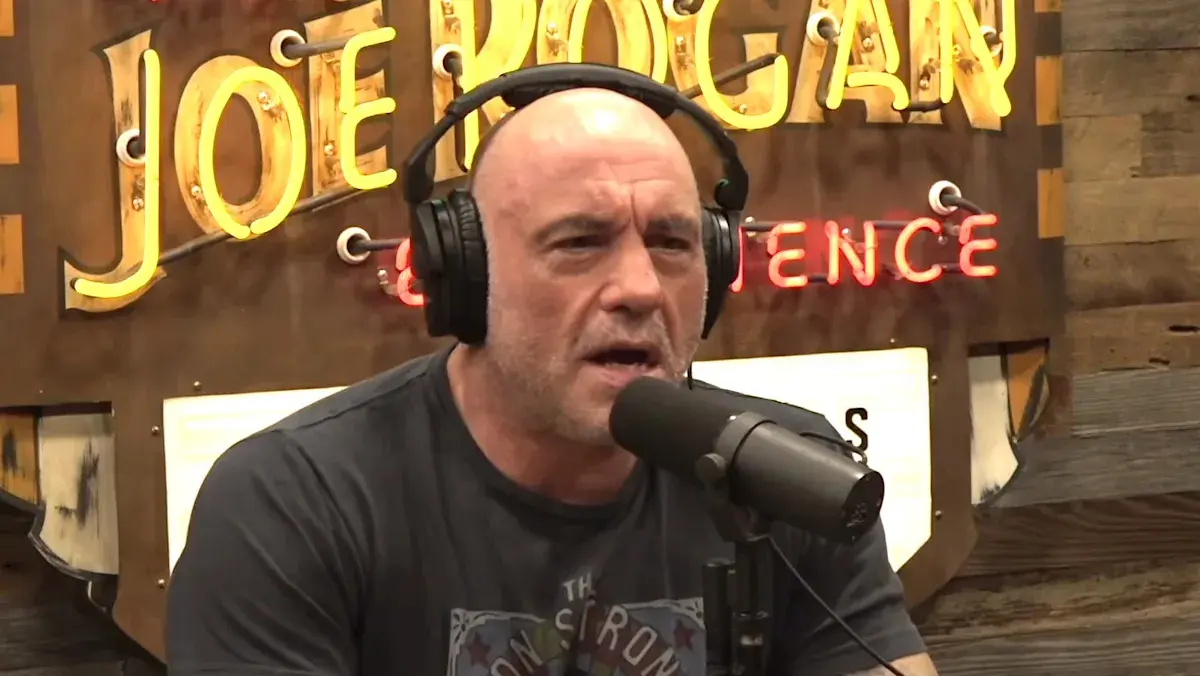
Podcaster Joe Rogan has voiced strong disapproval of President Donald Trump’s latest financial maneuver, describing it as “crazy” and comparing it to the actions of a brutal dictator. During a recent episode of The Joe Rogan Experience, Rogan and guest comedian Tom Segura dissected the details of a $1.8 billion Department of Justice fund established by the Trump administration. The fund is part of a controversial settlement that drops Trump’s $10 billion lawsuit against the Internal Revenue Service and the Treasury Department, and in return, it grants Trump, his family, and his company permanent immunity from any future tax audits or investigations.
Rogan, who once endorsed Trump during the 2024 election, has become increasingly critical of the president’s actions, especially since the escalation of hostilities with Iran. On his show, Rogan expressed disbelief at the breadth of the agreement. “That is so crazy,” he said. “Imagine like somebody accused you of murder, yeah, and turns out you weren’t guilty of that murder and then you sue them and you go, ‘You can never prosecute me for murder again.’ And then you just go straight Uday Hussein.” He likened the situation to Uday Hussein, the son of Saddam Hussein, known for his sadistic brutality.
The deal, signed by Acting Attorney General Todd Blanche, includes a one-page document that permanently bars the U.S. government from conducting “examinations or similar or related reviews” of the Trump Organization, Trump himself, or his two sons, Donald Jr. and Eric. The order extends to “any matters that were raised or could have been raised” in Trump’s original lawsuit, effectively shutting down any current or pending tax investigations. The fund, which is managed by the DOJ, is intended to compensate individuals whom the administration claims were unfairly targeted by previous administrations, including some participants in the January 6 Capitol insurrection.
This unprecedented legal settlement has drawn sharp criticism from both sides of the political aisle. Former IRS Commissioner Daniel Werfel called the arrangement “an unprecedented remedy,” stating that “people expect the same tax rules and enforcement framework to apply to everybody.” Even Senate Republican leader Mitch McConnell condemned the move, saying, “So the nation’s top law enforcement official is asking for a slush fund to pay people who assault cops? Utterly stupid, morally wrong—Take your pick.” The backlash highlights the divisive nature of the deal, which Rogan and many others see as a dangerous overreach of executive power.
Rogan’s reaction is particularly notable given his previous alignment with Trump. Rogan’s podcast has immense influence, especially among young male voters, a demographic that Trump has actively courted. In 2024, Rogan formally endorsed Trump, citing concerns about the economy and foreign policy. However, as Trump’s second term has progressed, Rogan has become more critical, especially regarding the administration’s handling of international conflicts. The Iran war, which Trump initiated, has been a key point of contention. Since then, Rogan has used his platform to question Trump’s decisions, though he remains cautious in his criticism.
The $1.8 billion fund itself has been described as a “slush fund” by opponents. It is designed to pay out claims from people who say they were victims of “weaponized government” under previous administrations. Among those expected to benefit are individuals charged in connection with the January 6 attack on the U.S. Capitol. This aspect has been particularly controversial, as many of the insurrectionists were convicted of assaulting law enforcement officers. Conservatives like McConnell have argued that using taxpayer money for such purposes sends the wrong message. Meanwhile, liberal groups have called the deal a form of corruption, noting that it effectively buys Trump immunity from tax scrutiny.
The background to this deal lies in Trump’s long-running battle with the IRS. In 2018, Trump’s tax returns were leaked to The New York Times, revealing that he had paid only $750 in federal income taxes in 2016 and 2017. Trump subsequently filed a $10 billion lawsuit against the IRS and the Treasury, alleging that the leak violated his privacy and that the agencies had mishandled his records. The lawsuit dragged on for years, with Trump’s legal team arguing that the government had acted in bad faith. The settlement now ends that litigation, but in a way that many legal experts find troubling.
Rogan’s comparison to Uday Hussein is striking. Uday Hussein was notorious for his cruelty, including torture and executions. Rogan’s point was that Trump’s deal effectively gives him immunity from future prosecution, much like a dictator would demand. This analogy has resonated with many of Rogan’s listeners, who are often skeptical of government power. The segment has gone viral, further amplifying criticism of Trump’s actions.
In addition to the tax immunity, the deal includes a provision that the fund will be used to repay people who were “unfairly targeted” by the “deep state.” This phraseology echoes Trump’s long-standing rhetoric about a political establishment working against him. The fund’s administration has not been fully detailed, raising concerns about transparency and potential misuse. Some reports suggest that the fund could be used to compensate not only January 6 defendants but also other individuals who claim to have been victims of political persecution, such as those involved in the Russia investigation or the Ukraine impeachment inquiry.
Rogan’s reaction is part of a broader shift in public opinion regarding Trump’s second term. While Trump remains popular among his base, independent voters and some conservative commentators have grown uneasy with his approach to governance. Rogan’s influence cannot be understated; his podcast consistently ranks among the top in the world, and his audience is predominantly male, aged 18-34, a demographic that is crucial for any political movement. By publicly criticizing Trump, Rogan may be signaling a change in the political winds, especially among younger conservatives who once saw Trump as a disruptor but now view him as authoritarian.
Trump, for his part, has tried to maintain ties with Rogan. In early 2025, Trump signed a bill legalizing psychedelic-assisted therapy for mental health conditions, a cause that Rogan has long championed. Rogan has been an advocate for medical uses of psychedelics, and Trump’s signing of the bill was seen as an attempt to curry favor with the podcaster. However, Rogan’s recent comments suggest that such overtures may not be enough to keep him in the pro-Trump camp.
The international dimension of the story is also relevant. The U.S. is currently engaged in a fragile ceasefire with Iran, which Trump unilaterally withdrew from in 2018 before re-entering and then escalating tensions. Iran has accused the U.S. of violating the ceasefire, and Secretary of State Marco Rubio has stated that a deal is still possible. Rogan has previously expressed skepticism about U.S. foreign policy, and the Iran situation has further eroded his trust in the administration.
In his podcast, Rogan also touched on the broader implications of the deal. “This is a precedent that changes everything,” he said. “If a president can just settle a lawsuit by buying off the government with a slush fund, then what’s to stop any future president from doing the same? It’s a breakdown of the rule of law.” This argument has been echoed by legal scholars and journalists, who have noted that the agreement essentially allows a sitting president to use government funds to protect himself from accountability.
The timing of the deal is also politically charged. As the 2026 midterm elections approach, Republicans are already divided over Trump’s leadership. The deal has provided ammunition for anti-Trump Republicans like McConnell, who has become more outspoken in his criticism. Meanwhile, Democrats have called for congressional investigations into the fund’s legality and transparency. The House Judiciary Committee has already announced hearings on the matter.
Rogan’s show is known for long-form conversations, and his segment with Segura on this topic lasted over 30 minutes. Rogan and Segura dissected the legal language of the agreement, questioning how such a broad immunity clause could be constitutional. “It’s like they didn’t even try to hide it,” Segura said. Rogan agreed, noting that the secrecy of the deal, which was announced without prior notice, suggests a lack of accountability.
In the weeks following the announcement, several news outlets have reported on the implications. PBS reported that tax experts are “shocked and concerned” by the breadth of the directive. The New York Times editorial board called the deal “an assault on the integrity of the tax system.” Rogan’s reaction is just one voice in a growing chorus of criticism, but his platform amplifies that message to millions worldwide.
Ultimately, the deal may have significant long-term consequences for the relationship between the executive branch and independent agencies like the IRS. If left unchallenged, it could set a precedent that future presidents use to shield themselves from scrutiny. For now, Rogan’s comments have added fuel to the fire, and the public debate continues to intensify.
Source: Yahoo News News