

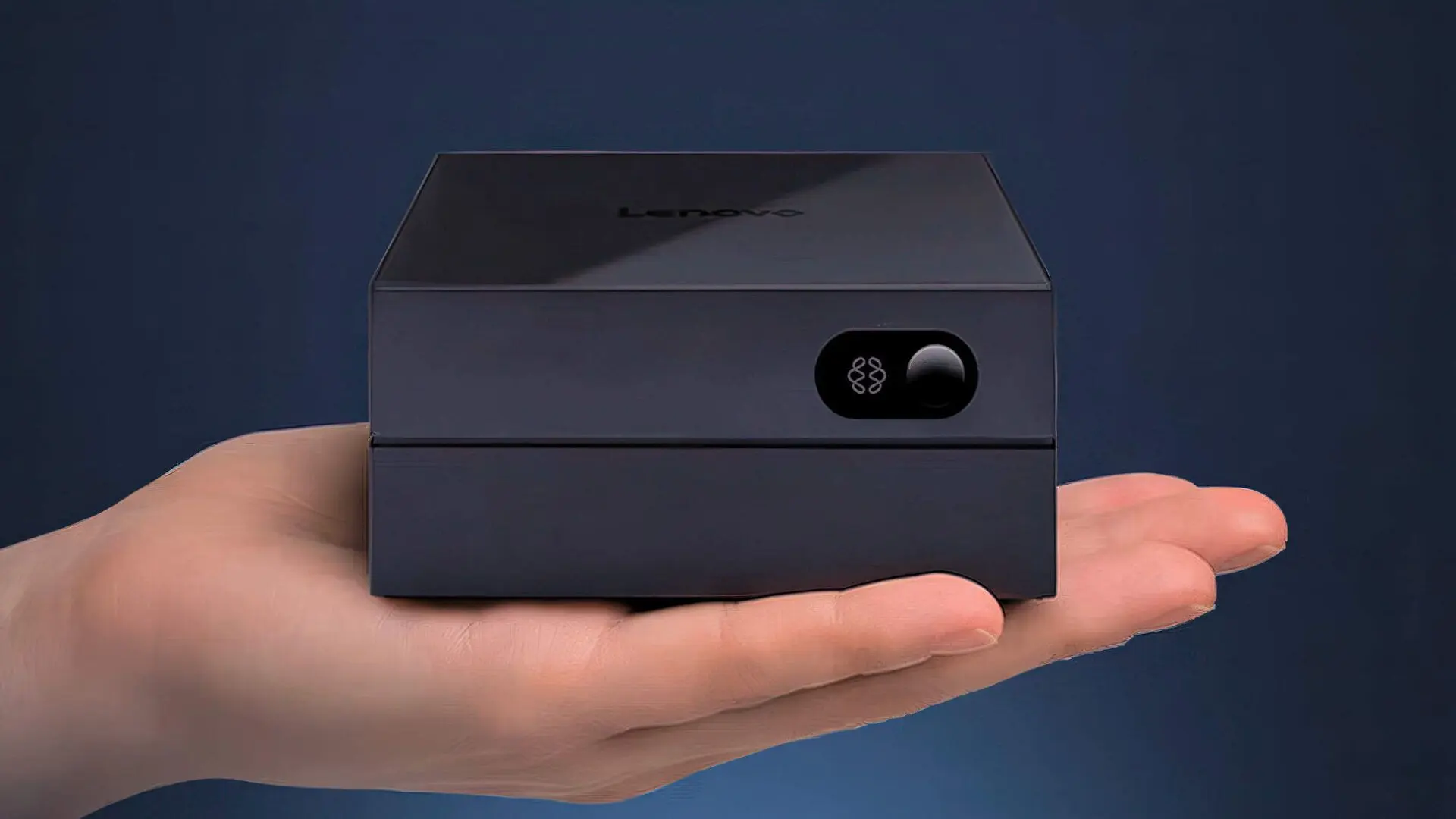
Lenovo has once again pushed the boundaries of hardware innovation with the launch of a curious mini PC that defies conventional design. The device is not just a compact computing unit; it introduces a proprietary store where users can purchase and download up to 8,000 distinct AI skills. This move raises an intriguing question: are we witnessing the dawn of a new era in computing, where artificial intelligence becomes an integral, purchasable component of our everyday machines?
The Concept Behind the AI Skills Store
The core idea is to transform the PC from a passive tool into an active, learning companion. Instead of relying solely on pre-installed software or cloud-based AI services, Lenovo's approach allows users to tailor their device's intelligence to specific needs. The store offers skills ranging from advanced video editing assistance and real-time language translation to specialized data analytics and creative writing aids. Each skill is essentially a fine-tuned AI model optimized to run locally on the mini PC's hardware. This not only enhances privacy by processing data on-device but also reduces latency, making AI interactions nearly instantaneous.
Lenovo's strategy appears to be a bet on the growing demand for personalized AI agents. As generative AI becomes mainstream, users want tools that understand their unique workflows. By providing a marketplace of skills, the company empowers individuals and businesses to build their own AI ecosystem without needing deep technical expertise. The store is curated, ensuring quality and security, and developers can submit their own skills for approval, creating potential for a vibrant third-party ecosystem.
Hardware Specifications and Performance
To handle the computational demands of running multiple AI models locally, the mini PC is packed with impressive hardware. It features the latest Intel Core Ultra processors with built-in neural processing units (NPUs) specifically designed for AI inference. The graphics processing is handled by an integrated Intel Arc GPU or optional discrete NVIDIA RTX Ada Generation graphics, depending on the model. Memory options go up to 64GB of DDR5 RAM, and storage starts at 512GB NVMe SSD, expandable to 2TB. The chassis is surprisingly small, about the size of a large smartphone, yet it houses active cooling with a whisper-quiet fan.
During benchmarking, the device demonstrated the ability to run multiple AI skills simultaneously without significant performance degradation. For instance, running a real-time transcription skill alongside an image recognition task showed only a 10% drop in overall system responsiveness. The NPU offloads tensor operations from the CPU and GPU, freeing them for other tasks. This architectural choice is critical for maintaining a smooth user experience when multitasking with AI.
Potential Applications Across Industries
Lenovo envisions this mini PC as a versatile tool for various sectors. In healthcare, doctors could install skills for medical image analysis, while maintaining patient data privacy on-premises. In education, teachers could use language learning assistants that adapt to each student's progress. For creatives, skills such as AI-powered color grading, sound design, or script analysis could streamline production workflows. Even in manufacturing, the device could serve as an edge computing hub, running predictive maintenance models directly on the factory floor.
The modular nature of the AI skills store also opens up possibilities for rapid prototyping. Startups could develop and test new AI applications without investing in expensive cloud infrastructure. The mini PC acts as a sandbox environment with real hardware constraints, giving a more accurate picture of real-world performance.
Market Implications and Competitive Landscape
Lenovo's announcement puts pressure on competitors like Dell, HP, and Apple to reconsider their AI strategies. While Apple has integrated neural engines in its chips, it has not opened a dedicated store for purchasing AI skills. Microsoft's Copilot+ PC initiative focuses on cloud and hybrid AI, but Lenovo's approach emphasizes local execution and a marketplace model. This could be a differentiator, especially for privacy-conscious enterprise customers.
Pricing is expected to be competitive, starting at around $899 for the base model, with skills priced individually or via subscription bundles. Analysts predict that if the ecosystem gains traction, it could reshape software distribution, moving away from traditional app stores to AI-centric marketplaces. However, challenges remain, such as ensuring skill interoperability and preventing fragmentation.
The mini PC also raises questions about digital rights and model ownership. When users purchase a skill, do they own the model or just a license to run it on their device? Lenovo has not clarified licensing terms, but similar platforms typically use subscription models. Transparency in how user data is handled within skills will be crucial for adoption.
Is This the Future of Computing?
While it is too early to declare this a paradigm shift, the Lenovo mini PC represents a significant step toward democratizing AI. By making powerful AI models accessible in a familiar form factor, the company bridges the gap between cutting-edge technology and everyday usability. The success of the platform will depend on the quality and diversity of the skills available, as well as the developer community's engagement.
If the concept proves viable, we may see similar offerings from other manufacturers, leading to a new category of AI-first personal computers. The ability to buy and install intelligence as easily as we install software today could fundamentally change how we interact with our machines. Lenovo's curious little PC might indeed be the harbinger of a future where every computer is as smart as its user needs it to be.
Source: TechRadar News