

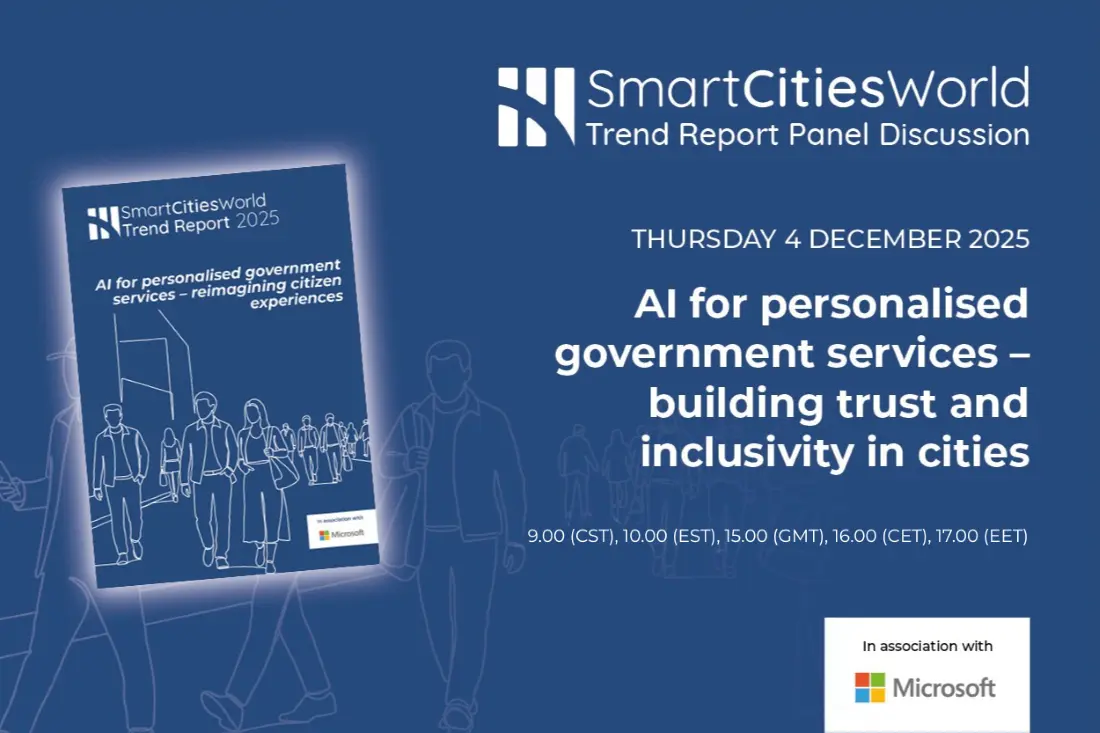
The integration of artificial intelligence into government services is rapidly reshaping the relationship between citizens and public institutions. At the heart of this transformation lies the promise of personalisation: AI systems can analyse individual needs, predict service requirements, and deliver tailored interactions at scale. However, achieving this potential demands more than technological sophistication. It requires a fundamental commitment to building trust and ensuring inclusivity, particularly in the complex ecosystem of urban environments.
A recent panel discussion brought together city leaders, technologists, and policymakers to examine how AI can be deployed to create government services that are not only efficient but also equitable and trustworthy. The conversation underscored the need for data-driven approaches that respect privacy, mitigate bias, and actively involve communities in decision-making. Central to this vision is the concept of the digital twin – a virtual replica of physical city systems that allows for real-time simulation, analysis, and optimisation.
The Rise of Digital Twins in Urban Governance
Digital twins have emerged as a critical tool for urban planning and management. By creating a dynamic, data-rich mirror of infrastructure such as transport networks, energy grids, water systems, and public spaces, cities can test policy interventions before committing resources, monitor performance in real time, and respond proactively to disruptions. AI enhances this capability by enabling predictive analytics, pattern recognition, and automated decision support.
For example, a digital twin of a city's transport network can model the impact of new bus routes, traffic signal timings, or congestion charging schemes. AI algorithms can analyse historical and live data to predict demand fluctuations, identify bottlenecks, and suggest adaptive routing that improves journey times for all modes – from private cars to pedestrians and cyclists. The same approach can be applied to emergency services, waste collection, air quality monitoring, and energy distribution.
The true value of digital twins lies in their ability to break down silos across municipal departments. When a city maintains a unified digital model that layers data from multiple sources – including IoT sensors, satellite imagery, social media feeds, and administrative records – it becomes possible to understand interdependencies. For instance, a heatwave can be modelled not just for its effect on temperature but also on electricity demand, public health risks, and transport system stress. AI systems can then recommend coordinated responses, such as opening cooling centres, adjusting bus schedules, and issuing targeted alerts to vulnerable populations.
Practical Applications in Transport and Mobility
Urban transport networks are among the most visible and impactful areas where AI and digital twins are being deployed. City authorities worldwide are using these tools to support day-to-day operations – such as real-time traffic management and incident detection – as well as long-term planning for infrastructure investment and service improvements.
In many cities, AI-driven systems now control traffic signals based on actual congestion patterns rather than fixed timetables. This reduces delays, lowers emissions, and improves travel time reliability. For public transport, AI can optimise bus and train schedules to match demand fluctuations, reducing overcrowding and wait times. Passengers benefit from personalised journey planning apps that integrate multimodal options and provide real-time updates.
Beyond operations, digital twins enable scenario testing for major projects. Before building a new tram line or cycle lane, planners can simulate its effects on traffic flow, business access, and pedestrian safety. Community stakeholders can visualise proposed changes and provide feedback, fostering a more inclusive planning process. Importantly, AI models must be trained on diverse datasets to avoid perpetuating existing inequalities – for example, ensuring that service adjustments do not disproportionately disadvantage low-income neighbourhoods or people with disabilities.
Building Trust Through Transparency and Ethics
Trust is the currency of public services. As governments increasingly rely on AI to make or assist decisions, citizens must be confident that these systems are fair, accountable, and secure. The panel discussion highlighted several key principles for building trust: transparency about how AI models work and what data they use; robust data protection measures to prevent misuse; mechanisms for human oversight and appeal; and clear communication about the benefits and limitations of AI.
One approach gaining traction is the use of explainable AI (XAI) techniques that allow non-experts to understand why a particular recommendation was made. For example, if a digital twin suggests closing a road for maintenance, the system should be able to show the data that led to that decision – such as structural condition reports, traffic counts, and safety records. This transparency helps build public acceptance and enables officials to justify their actions.
Another critical factor is data sovereignty. Cities must ensure that the data collected from smart city systems – such as CCTV cameras, environmental sensors, and mobile devices – is stored and processed in ways that comply with local regulations and respect citizens' privacy rights. The concept of sovereign AI emphasises the importance of retaining control over data and algorithms within national or municipal boundaries, rather than relying on external cloud providers that may have different legal frameworks. This issue was explored in depth in a recent podcast featuring an expert on sovereign AI for cities.
Inclusivity requires that AI systems do not entrench existing biases. Algorithms trained on historical data can inadvertently replicate patterns of discrimination, such as in housing allocation, policing, or social services. Therefore, continuous auditing, diverse training datasets, and community engagement are essential to ensure that AI-driven government services benefit all residents equitably.
Global Case Studies: From Kuala Lumpur to Dublin
Cities around the world are taking concrete steps to implement AI-powered personalised services. Malaysia has positioned itself as a leader in this field, hosting the first Southeast Asian Smart City Expo in Kuala Lumpur. The event showcased innovations in digital twins, autonomous vehicles, and smart governance. Malaysian officials emphasised the goal of using AI to streamline bureaucratic processes, reduce corruption, and improve citizen satisfaction.
In Europe, Sunderland in the United Kingdom is undergoing a remarkable transformation. Once a traditional industrial city, Sunderland is now repositioning itself as a hub for smart city innovation. Its strategy centres on digital infrastructure – including a city-wide fibre network and IoT sensor deployment – combined with low-carbon initiatives to build a resilient, future-focused economy. AI is being used to optimise energy use in municipal buildings, manage traffic flows, and provide personalised job training recommendations for residents.
Meanwhile, Dublin is leveraging digital twin technology to enhance urban experiences and services. The Irish capital has launched several pilot projects, including a digital twin of the city centre to model pedestrian movement and reduce congestion. AI algorithms analyse data from public transport ticketing, bike-sharing stations, and footfall counters to help planners design more efficient and accessible streets. Dublin is also using AI to support economic growth by identifying opportunities for business clusters and retail revitalisation.
In Asia, Quezon City in the Philippines has focused on climate resilience. After experiencing unexpected extreme rainfall events, the city implemented a smart sensor network that provides early warnings for flooding. AI models process rainfall data and river levels to predict flood-prone areas, enabling pre-emptive evacuations and resource deployment. This approach not only saves lives but also builds community trust in government's ability to protect them.
The Role of Smart Sensor Networks and Indoor Safety
While much attention is paid to outdoor smart city infrastructure, indoor environments also benefit from AI-driven sensor networks. Modern buildings can be equipped with sensors that monitor air quality, temperature, humidity, occupancy, and noise levels. AI systems analyse this data to detect early signs of hazards – such as gas leaks, fire risks, or structural weaknesses – and improve situational awareness for facility managers.
These networks support healthier and more secure spaces by automatically adjusting ventilation, lighting, and heating to optimise comfort and energy efficiency. In hospitals, AI can monitor patient movements and equipment usage to improve workflow and infection control. In schools, it can help manage classroom occupancy and air quality to create better learning environments. The same principles apply to government offices, libraries, and community centres, where personalised services can include adaptive lighting for people with visual impairments or real-time navigation assistance for wheelchair users.
Gareth Tang, President of Urban Solutions at ST Engineering, has explained how urban AI applications are set to evolve. He detailed projects where AI is already making significant impact, such as predictive maintenance of public elevators, automated waste bin collection routing, and intelligent street lighting that dims when no one is present. These incremental improvements contribute to a smarter, more efficient urban fabric that operates seamlessly in the background, building trust through reliability.
Upcoming Events and Collaborative Platforms
The momentum behind AI for personalised government services is reflected in a growing number of events and initiatives. Notably, the SmartCitiesWorld Summit 2026 is scheduled to take place during London Climate Action Week. This gathering will bring together urban leaders, technology partners, and policymakers to explore how climate resilience, digital transformation, and inclusive service delivery intersect. The summit aims to translate high-level strategy into practical, actionable steps that cities can implement immediately.
Panel discussions, webinars, and city profiles are already circulating among the global smart city community. A recent on-demand panel discussion focused on digital twins and AI as the intelligent operating layer for cities, while a webinar examined how to get data strategy right for smarter sites and safer operations. These resources provide cities with best practices, case studies, and expert guidance to accelerate their own transformations.
Newsletters, both daily and weekly, curate the latest developments in the field, featuring city interviews, special reports, and guest opinions. This continuous flow of information helps city officials stay informed about emerging technologies, funding opportunities, and regulatory changes that affect their smart city projects.
As cities confront the combined pressures of climate change, ageing infrastructure, and rising citizen expectations, AI offers a powerful toolkit for delivering government services that are both highly personalised and broadly inclusive. The road to trust is paved with transparent algorithms, respectful data governance, and genuine community engagement. By learning from pioneers in Kuala Lumpur, Sunderland, Dublin, Quezon City, and elsewhere, urban leaders can forge a future where technology strengthens the bond between government and the people it serves.
Source: Smart Cities World News