

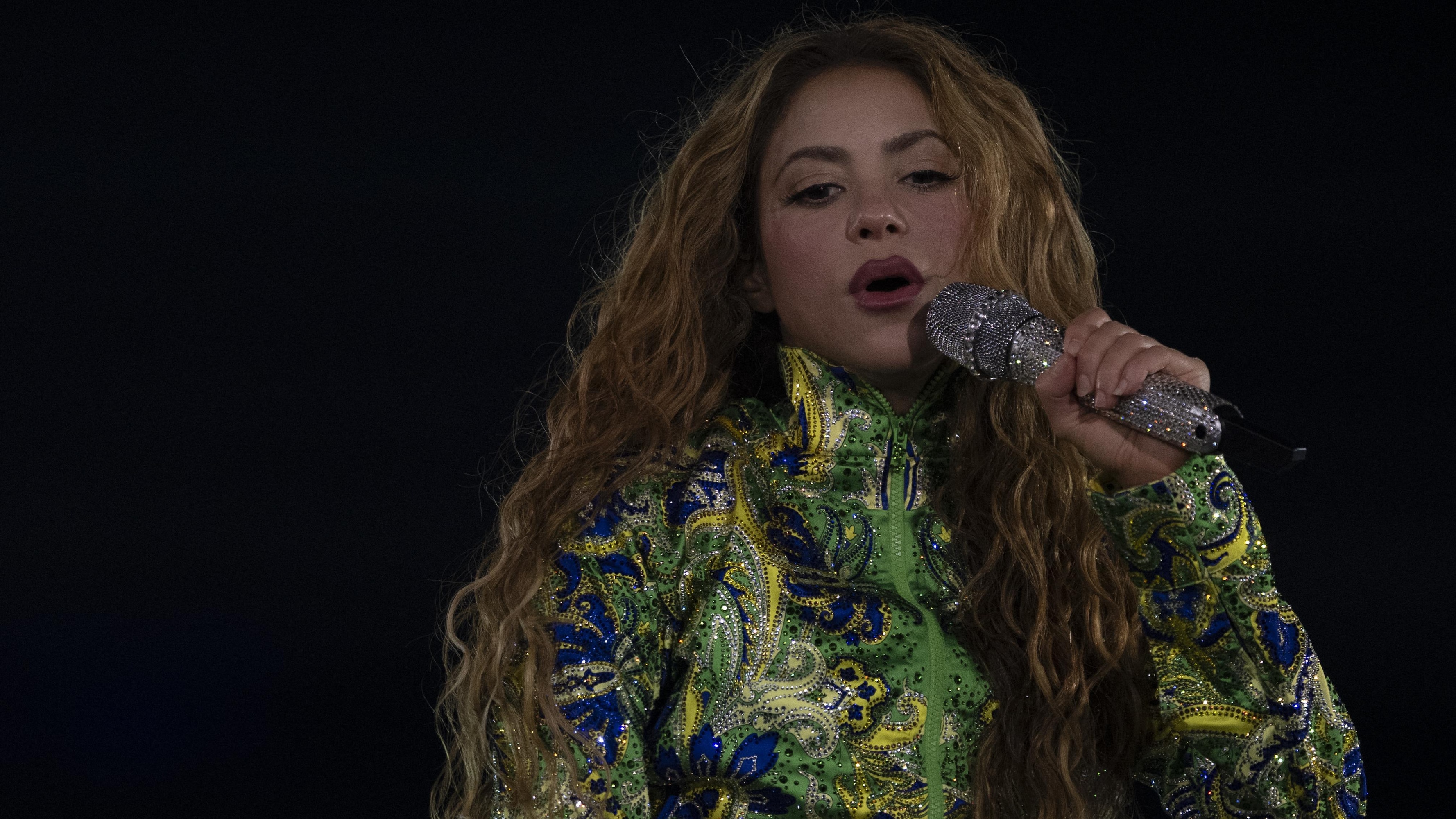
Global music icons Shakira and Burna Boy have officially launched the soundtrack for the 2026 FIFA World Cup with the release of 'Dai Dai,' a vibrant anthem that blends Afrobeat rhythms with Latin pop sensibilities. The music video, which dropped on May 23, 2026, features brief cameos from some of football's biggest names—Lionel Messi, Kylian Mbappe, Bukayo Saka, and Erling Haaland—each delivering short messages of support for the tournament. This marks Shakira's second time behind an official World Cup song, following her multi-platinum 2010 hit 'Waka Waka (This Time for Africa).'
The collaboration between Shakira—a Colombian superstar known for her explosive stage presence and crossover appeal—and Burna Boy, the Nigerian Afrofusion pioneer who has taken the world by storm, signals a deliberate effort to unite diverse global audiences ahead of the 2026 World Cup, which will be co-hosted by the United States, Canada, and Mexico. The track's title, 'Dai Dai,' is a Swahili phrase meaning 'long ago' or 'in the past,' but in the context of the song, it evokes a call to celebration and collective joy, urging fans to leave behind their worries and embrace the tournament's spirit.
Background: Shakira's World Cup Legacy
Shakira's involvement with World Cup anthems spans over a decade. Her 2010 anthem 'Waka Waka (This Time for Africa),' performed alongside the South African band Freshlyground, became one of the best-selling World Cup songs of all time, with over 100 million streams on YouTube alone. The song's infectious chorus and dance moves helped define the 2010 tournament in South Africa, and its message of unity and resilience resonated globally. Shakira also performed at the 2014 World Cup closing ceremony in Brazil, delivering a medley of her hits including 'La La La (Brazil 2014)'—a song she originally wrote as an unofficial anthem after being unable to secure the official slot. For 2026, Shakira was approached early by FIFA to create an official anthem that would reflect the multicultural fabric of the host nations—the U.S., Canada, and Mexico—while also connecting with the broader African diaspora through Burna Boy's involvement.
Burna Boy, born Damini Ebunoluwa Ogulu, has emerged as one of the most influential African artists of his generation. His Grammy-winning album 'Twice as Tall' and his 2022 release 'Love, Damini' solidified his global reputation. Known for blending Afrobeat, dancehall, reggae, and pop, Burna Boy has collaborated with artists like Beyoncé, Ed Sheeran, and Jorja Smith. His inclusion in 'Dai Dai' adds a distinct African pulse to the World Cup roster, continuing football's long tradition of incorporating African music into its official soundtracks—a tradition dating back to the 1998 World Cup's 'Carnaval de Paris' by Dario G and the 2006 'The Time of Our Lives' by Il Divo and Toni Braxton, but truly reaching new heights with Shakira's earlier work.
The Music Video: A Star-Studded Affair
The 'Dai Dai' music video opens with Shakira and Burna Boy in a futuristic, neon-lit stadium setting, flanked by dancers clad in jersey-inspired outfits. As the beat builds, the camera cuts to quick flashframes of Lionel Messi wearing an Argentina jersey, offering a thumbs-up and mouthing the word 'Dai Dai.' Kylian Mbappe appears next, wearing a France shirt, his trademark speed implied through a blurred motion effect. Bukayo Saka, representing England, is shown smiling and gesturing to the camera, while Erling Haaland—wearing a Norway kit despite the nation not qualifying—appears in a scene that has sparked debate among fans: Haaland's presence is explained as a nod to his global star power and his status as one of the most marketable athletes in the world, regardless of his team's qualification status.
The video also includes a brief appearance by Nigerian football legend Jay-Jay Okocha, a nod to Burna Boy's Nigerian heritage and the deep ties between the country's music and football cultures. Okocha, known for his flair and technique, is shown juggling a ball in a street setting that transitions into a dance battle. The choreography, directed by renowned hip-hop choreographer Parris Goebel, fuses Afrobeat moves with Latin steps, creating a visual representation of the song's hybrid genre. Critics have praised the video for its inclusivity and energy, though some have noted that the cameos from Messi, Mbappe, Saka, and Haaland are brief—each appearing for only a few seconds. However, FIFA sources say that full-length versions of the stars' messages will be released on social media leading up to the tournament.
Context: The 2026 World Cup and Its Anthems
The 2026 FIFA World Cup is unique in several ways. It is the first tournament to feature 48 teams, expanded from 32, and the first to be hosted by three nations simultaneously. The matches will take place across 16 cities in the United States, Canada, and Mexico, from Vancouver to Mexico City, with the final slated for MetLife Stadium in New Jersey. The tournament's slogan, 'We Are 16' (referencing the number of host cities), emphasizes unity and shared passion for the game. Against this backdrop, 'Dai Dai' aims to become a unifying anthem, much like 'Waka Waka' before it.
Shakira and Burna Boy's collaboration also arrives at a time when the global music industry is increasingly embracing cross-continental partnerships. Afrobeat has become a dominant force in pop music, with artists like Burna Boy, Wizkid, Tems, and Rema regularly charting in the U.S. and Europe. By pairing a Latin pop pioneer with an African superstar, FIFA is tapping into two of the most commercially vibrant music markets in the world—a strategic move given that the 2026 World Cup will be held in North America, where Latin and African music audiences are massive and growing rapidly.
The song's release has already generated significant traction on social media. Within 24 hours, the 'Dai Dai' video garnered over 50 million views across YouTube, Instagram, and TikTok. Fans have begun creating their own dance challenges, with many attempting to replicate the choreography from the video. The song is also being used by several national football associations in promotional content for pre-tournament friendlies. Marketing experts predict that 'Dai Dai' will be one of the most streamed World Cup anthems in history, potentially surpassing the long-standing record held by 'Waka Waka.'
Key Facts: The Artists, The Stars, The Song
- Shakira: Colombian singer-songwriter, born in Barranquilla, known for hits like 'Hips Don't Lie,' 'Whenever, Wherever,' and 'Waka Waka.' She has sold over 80 million records worldwide and won three Grammy Awards. Her previous World Cup anthem, 'Waka Waka,' was performed at the 2010 FIFA World Cup in South Africa and remains one of the most-watched World Cup songs on YouTube.
- Burna Boy: Nigerian Afrobeat artist, born in Port Harcourt. He won the Grammy Award for Best Global Music Album in 2021 for 'Twice as Tall.' His 2022 single 'Last Last' went viral globally. He is known for his socially conscious lyrics and fusion of genres.
- Lionel Messi: Argentine footballer, widely regarded as one of the greatest players of all time. He led Argentina to the 2022 World Cup title and is participating in his fifth World Cup in 2026 at age 38. His appearance in the video comes amid a recovering adductor injury suffered in a recent friendly.
- Kylian Mbappe: French forward, star of PSG and the French national team. He was the top scorer at the 2018 World Cup, which France won, and scored a hat-trick in the 2022 final. At 27, he is expected to be a key figure in the 2026 tournament.
- Bukayo Saka: English winger, plays for Arsenal. He was a standout performer for England in the 2022 World Cup and Euro 2020. His positive image and philanthropic work make him a popular figure among global audiences.
- Erling Haaland: Norwegian striker, known for his prolific scoring at Manchester City. Though Norway did not qualify for the 2026 World Cup, Haaland's appearances in promotional material highlight his immense star power and social media appeal.
The production of 'Dai Dai' involved a team of top producers, including Latin Grammy winner Andrés Torres and Nigerian beatmaker Kel P. The song's lyrics, written in a mix of Spanish, English, and Pidgin English, reflect the multicultural nature of the tournament. Key phrases include 'Come make we celebrate, e be the time of our lives' (English/Pidgin) and 'Dale, dale, que la fiesta ya empezó' (Spanish/Colombian slang for 'Go, go, the party has started'). The chorus repeats 'Dai Dai' over a driving percussion line, encouraging clap-along and dancing.
Reception and Impact
Early reviews from music critics have been largely positive. Rolling Stone called 'Dai Dai' a 'joyful fusion that bridges continents,' while Billboard praised the video's 'high-energy choreography and clever use of football stars.' Some fans on social media expressed disappointment that the cameos were too short, but FIFA officials have hinted that extended cuts featuring each player will be released during group stages. The song debuted at No. 1 on Spotify's Global 50 chart for the first 24 hours, and it is expected to remain in the top 10 through the tournament's kickoff.
Beyond its commercial performance, 'Dai Dai' carries symbolic weight. It represents the first time an African artist has headlined a World Cup anthem since Shakira's original collaboration with South African band Freshlyground in 2010. Burna Boy's involvement has been hailed as a triumph for the African music industry, which has long sought greater representation at global events. Meanwhile, Shakira continues to cement her status as the unofficial queen of World Cup anthems—a title she earned through her consistent ability to craft songs that transcend language and cultural barriers.
As the countdown to the 2026 FIFA World Cup continues, with matches beginning on June 11, 2026, 'Dai Dai' will undoubtedly be played in stadiums, fan zones, and living rooms around the world. It serves not only as entertainment but as a soundtrack to a month of competition, camaraderie, and celebration—a reminder that, in the end, football and music are universal languages that bring people together.
Shakira and Burna Boy, two artists from vastly different backgrounds, have created a moment that captures the spirit of a tournament that will be played across three nations, on a continent that is home to diverse populations. The song's success may well be measured not just in streams, but in the memories it helps create for millions of fans watching the beautiful game unfold.
Source: Bleacherreport News