

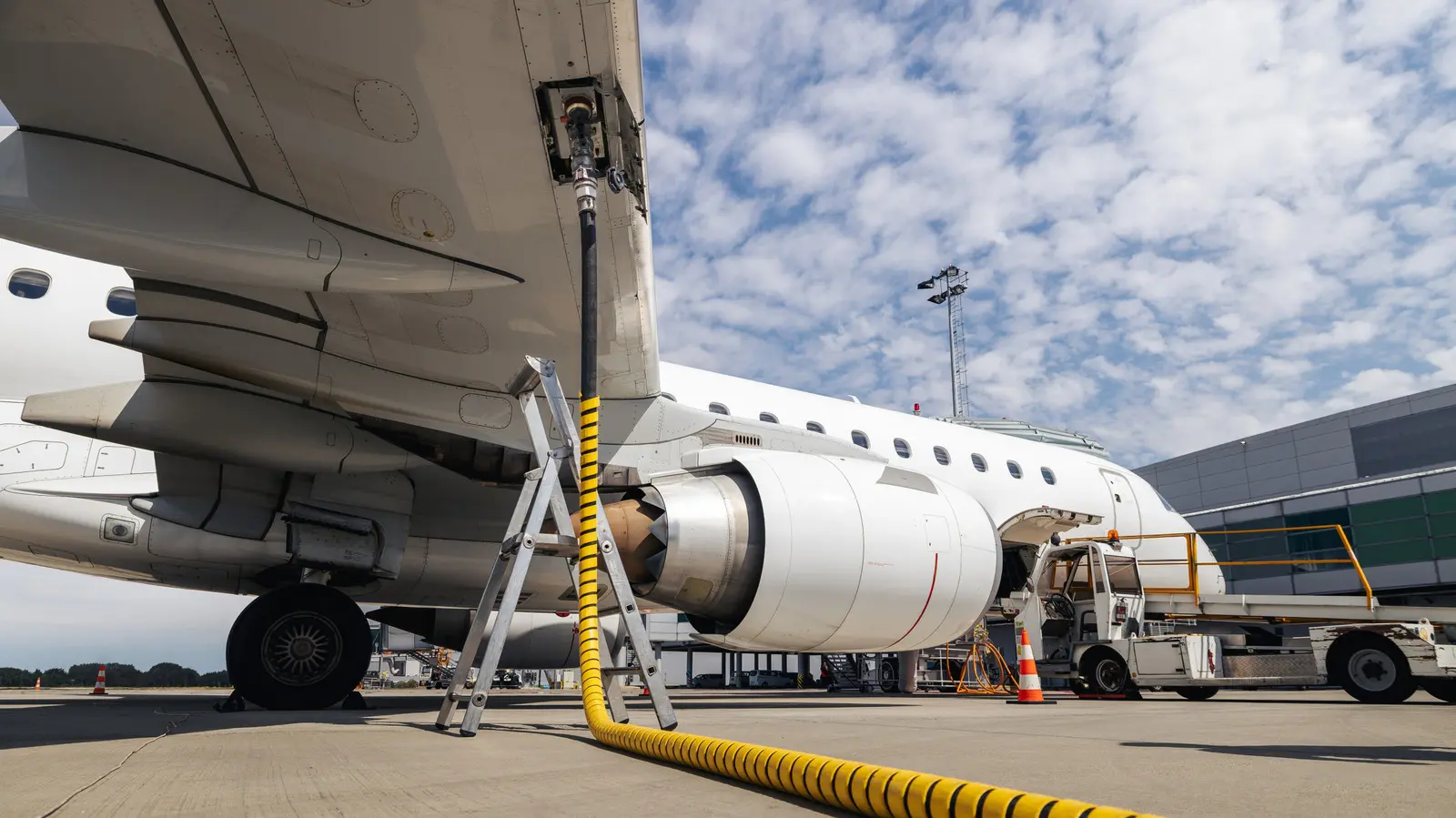
Most people measure liquid fuel—gasoline for a car, kerosene for a heater, or diesel for a truck—in gallons. It’s intuitive: liquids take up space, so volume seems like the natural metric. But step onto a commercial airliner or a military jet, and you’ll hear pilots and ground crews talk about fuel in pounds, not gallons. This isn’t arbitrary; it’s a matter of physics, safety, and aviation industry standards that have evolved over decades.
The Physics of Volume at Altitude
At sea level, where most driving, heating, and daily refueling happens, the volume of a liquid remains relatively stable. Temperature changes are modest, and air pressure is constant. However, an aircraft climbs to cruising altitudes of 30,000 to 40,000 feet, where temperatures can drop to -50°F (-45°C) and air pressure is a fraction of sea level. Jet fuel, like all liquids, expands when warm and contracts when cold. A tank that holds 10,000 gallons of fuel on the ground at a hot desert airport might actually contain a different mass of fuel once the plane reaches cold altitude. If you rely on volume, you could be misled about how much fuel remains—and that could be catastrophic.
The density of jet fuel changes with temperature. For example, Jet A-1 (the most common commercial jet fuel) has a density around 6.7 pounds per gallon at 59°F (15°C). But at -40°F, the same gallon might weigh 7.1 pounds. A pilot who uses a gallon gauge would think they have the same amount of fuel, but the actual energy content (mass) is higher or lower. Since jet engines burn fuel by mass (pounds of fuel per hour), using pounds eliminates this variability.
Weight and Balance: The Core of Flight Safety
Every aircraft has strict weight limits: maximum takeoff weight (MTOW), maximum landing weight (MLW), and maximum zero fuel weight (MZFW). These are all measured in pounds or kilograms. Fuel is a significant portion of an aircraft’s weight—a long-haul airliner like a Boeing 777 can carry over 300,000 pounds of fuel. The distribution of that weight among wing tanks, center tanks, and optional belly tanks affects the aircraft’s center of gravity. An improper center of gravity can make a plane unstable, hard to control, or even impossible to fly.
Pilots and flight dispatchers calculate fuel load using weight to ensure the aircraft stays within its structural limits and that the center of gravity remains within a safe range. If fuel were measured in gallons, they would have to constantly convert volumes to weights, introducing a potential error factor. By using pounds from the start, the entire aviation ecosystem—from fuel trucks to flight planning software to cockpit displays—is standardized on mass.
Fuel Burn and Efficiency Calculations
An aircraft’s fuel consumption rate is expressed in pounds per hour. For example, a Boeing 737 might burn about 5,000 pounds of fuel per hour during cruise. That rate changes with altitude, speed, and outside temperature, but it’s always calculated based on mass. If you used gallons, you would need to know the fuel’s specific gravity at that moment, which varies with temperature and even the type of jet fuel (Jet A, Jet A-1, JP-8, etc.). In a dynamic flight environment, simplifying to pounds reduces cognitive load for pilots and ensures accuracy.
Furthermore, fuel efficiency metrics like “specific fuel consumption” are expressed in pounds of fuel per pound of thrust per hour. This is a dimensionless ratio that allows engineers to compare engines regardless of fuel type or environmental conditions. Using gallons would break that consistency.
The Role of Fuel Dumping
During emergencies, pilots may need to land the aircraft well below its maximum takeoff weight. That means dumping fuel to reach the maximum landing weight. The decision of how much to dump is based on pounds, not gallons. The Boeing 757, for instance, can dump fuel at a rate of about 2,400 pounds per minute. If the pilot misjudged by using volume, they might not lighten the plane enough, risking structural damage on landing. The aviation industry has standardized fuel dumping in pounds to avoid confusion.
Historical Context and Industry Standards
The practice of measuring aircraft fuel by weight dates back to the early days of aviation. In the 1930s, as planes flew higher and farther, engineers realized volume measurements were unreliable. Over time, the U.S. Federal Aviation Administration (FAA) and international bodies like the International Civil Aviation Organization (ICAO) adopted mass-based fuel reporting for all certified aircraft. Today, every aircraft’s fuel quantity gauges display pounds (or kilograms) in the cockpit. Ground servicing equipment, such as fuel trucks, are calibrated to deliver a precise mass of fuel—not a precise volume.
Even fuel type designations reflect mass: Jet A and Jet A-1 have slightly different freeze points and density standards, but they are both measured and sold by weight. In the United States, fuel is often dispensed by the gallon but invoiced by the pound (or by the kilogram in many other countries). The conversion is done automatically by fuel hydrant systems using temperature-compensated density meters.
Comparing Car Fuel and Jet Fuel
Why don’t cars use pounds? Because cars operate at low altitude (mostly), and the temperature range is much narrower. A car’s fuel tank volume is small (10–30 gallons), and the engine’s fuel consumption is relatively insensitive to small density changes. Moreover, automotive fuel gauges are not required to be nearly as precise as aircraft gauges. The margin for error is small in aviation—a few extra thousand pounds of fuel or a miscalculation could mean the difference between a safe flight and a crash. In a car, a few gallons’ deviation rarely leads to disaster.
Additionally, cars are not as sensitive to weight distribution. While a car’s handling can be affected by heavy loads, the center of gravity shifts are less critical than in an aircraft, where a rearward shift can cause a stall or a forward shift can make the airplane pitch uncontrollably.
Modern Technology and Future Trends
Advances in fuel measurement technology, such as capacitance probes and ultrasonic sensors, can output both volume and mass. However, the aviation industry has chosen to display mass to pilots and to the flight management system. Even with electronic flight bags and digital dashboards, the primary fuel parameter remains pounds. In new composite aircraft like the Boeing 787 or Airbus A350, fuel tanks are integrated into the wings and fuselage, but the measurement is still in pounds.
The push for alternative fuels, such as sustainable aviation fuel (SAF) or hydrogen, may change some aspects of fuel management, but the principle of using mass will remain. Hydrogen is often measured in kilograms, but the same logic applies: volume varies with temperature and pressure.
Conclusion Avoided: See Final Paragraph
[Final paragraph without conclusion header] In summary, measuring jet fuel in pounds is not an antiquated tradition; it’s a practical, physics-based solution that enhances safety, efficiency, and standardization across the aviation industry. By eliminating the variability of volume caused by temperature and altitude, pilots and ground crews can focus on what matters most: flying the aircraft safely from departure to arrival. Whether you’re a passenger wondering why the fuel truck reads pounds, or a student pilot learning fuel planning, remember that in aviation, weight is the true measure of fuel.
Source: SlashGear News