

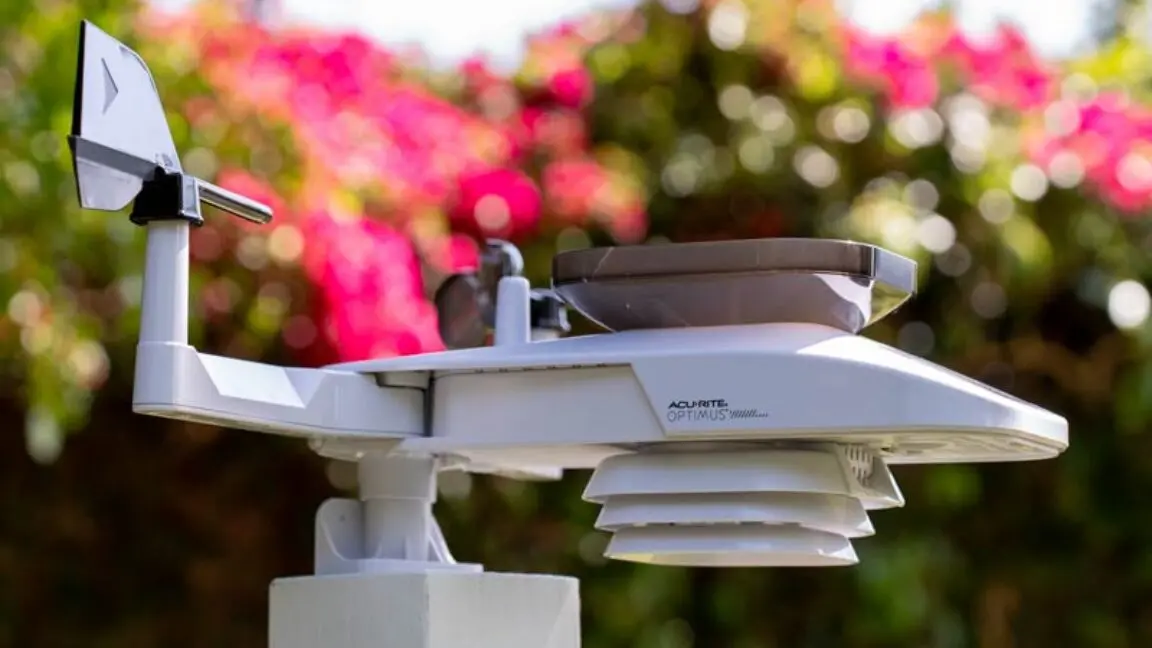
AcuRite, a prominent vendor of smart weather-monitoring devices, has postponed the forced transition of its customers from the My AcuRite app to the newly launched AcuRite NOW app. The company had originally set May 30 as the shutdown date for the older app, but after an outpouring of criticism from long-time users, AcuRite is now delaying that deadline indefinitely. The decision reflects a broader challenge in the connected-device industry: how to modernize software without alienating a loyal user base that relies on familiar tools.
AcuRite’s product line includes weather stations, rain gauges, indoor thermometers, and other environmental sensors that have been popular among hobbyists, farmers, and weather enthusiasts for years. The My AcuRite app and web dashboard served as the primary interface for viewing real-time data, configuring sensors, and sharing readings with services like Weather Underground. However, the company felt that the legacy platform was reaching its technical limits and could not support the expansion into a broader connected-device ecosystem that includes third-party gadgets and integration with Tuya’s SmartLife IoT platform.
In June 2025, AcuRite launched AcuRite NOW for iOS and Android, positioning it as the future of its connected platform. The new app promised support for a wider range of devices, including smart home products from other manufacturers, and a modernized user experience. But users quickly discovered that AcuRite NOW lacked several core features that had made My AcuRite indispensable. Among the missing capabilities were the ability to rename multiple temperature sensors, report temperatures in non-integer values (e.g., 72.5°F instead of just 73°F), and access an online dashboard from a desktop browser. Additionally, users reported issues with uploading data to weather aggregation sites, a cluttered interface with wasted space, and inconsistent connectivity.
Jeff Bovee, AcuRite’s Vice President of Product Development, acknowledged the problems in a recent interview. “The transition from My AcuRite to AcuRite NOW has raised serious questions and concerns among many long-time users,” Bovee said. He confirmed that the company is now focusing on improving AcuRite NOW’s account setup, device onboarding, station connectivity, data visibility, app usability, notifications, and overall reliability before shutting down the old app. No new shutdown date has been announced, and Bovee emphasized that the priority is delivering a “better experience” rather than hitting a deadline.
One of the most contentious changes is the introduction of a subscription fee for sharing data with Weather Underground, a real-time weather service. In My AcuRite, this functionality was free; in AcuRite NOW, users must pay a recurring fee. This has frustrated many customers who feel that a feature they once enjoyed without cost should remain accessible. Bovee defended the move by noting that the legacy platform was no longer receiving updates and that the new platform requires ongoing investment. “For years our users lamented the lack of updates to the My AcuRite website and app, and our hands were tied on how to make those improvements and updates. With the new AcuRite NOW app, the opportunities are wide open on how we can develop and improve the product, ensuring future sustainability for our users,” he said.
The company’s initial strategy of forcing customers onto an app with reduced functionality was risky, especially in light of recent industry missteps. Sonos, a leader in multi-room audio, faced a massive backlash in 2024 when it released a redesigned app that omitted many features users relied on. The Sonos app debacle led to delayed updates, lost sales, and damage to the brand’s reputation. AcuRite appears to have learned from that cautionary tale. By pausing the shutdown and committing to feature parity before forcing migration, AcuRite has given itself a chance to avoid a similar crisis.
Bovee confirmed that a web-based dashboard for AcuRite NOW is in development, though he could not provide a release date. “The planned web experience is intended to be part of the AcuRite NOW platform and to include new features rather than simply duplicate the legacy My AcuRite dashboard,” he explained. This is a critical addition, as many users prefer to monitor their weather data on a larger screen rather than on a phone. The absence of a web option has been a major pain point for those who use AcuRite devices for professional or educational purposes.
The delay in shutting down My AcuRite also gives current users time to adjust to the new platform and provide feedback. AcuRite has set up channels for users to report issues and suggest improvements. The company is reportedly prioritizing the restoration of missing features such as non-integer temperature display, multiple sensor renaming, and stable data uploads to third-party sites. Bovee noted that “many customers” have pointed out AcuRite NOW’s “shortfalls compared to” My AcuRite, and the team is actively working to close the gap.
From a technical perspective, the shift from a dedicated weather dashboard to a multi‑device IoT platform requires substantial architectural changes. My AcuRite was built as a cloud-based service specifically for AcuRite hardware, while AcuRite NOW is designed to support devices from multiple manufacturers using the Tuya ecosystem. This means that AcuRite is effectively migrating from a closed, proprietary system to a more open and interoperable one. While the long-term benefits—such as integration with smart lights, locks, and sensors—are appealing, the transition requires careful handling to ensure that existing devices continue to work seamlessly.
User forums have been filled with complaints about the new app’s interface. Many found the layout confusing, with large blocks of unused white space and information scattered across multiple screens. The lack of a comprehensive dashboard for viewing all sensors at a glance was a frequent criticism. In contrast, My AcuRite offered a straightforward list of sensors with their readings, charts, and configuration options all accessible from one page. AcuRite NOW, on the other hand, seems designed to encourage deeper exploration of individual devices, which can be tedious for users with multiple sensors.
Another unresolved issue is the stability of the new app’s connection to AcuRite hardware. Some users reported that their weather stations would frequently disconnect from AcuRite NOW, requiring manual re‑pairing. This is a serious problem for a device that is meant to provide continuous environmental monitoring. Bovee acknowledged that connectivity improvements are a top priority, and the delay allows the engineering team to conduct more extensive testing before the old app is retired.
The decision to delay also has financial implications for AcuRite. Maintaining two platforms simultaneously incurs higher operational costs, but the potential cost of losing customers to competitors like Davis Instruments, Ambient Weather, or Netatmo could be even greater. AcuRite has built a loyal following over the years, and a botched migration could erode that trust. By listening to user feedback and postponing the shutdown, the company has demonstrated a willingness to adapt—a quality that customers appreciate.
AcuRite’s situation is not unique in the smart home industry. Many companies have faced the challenge of modernizing legacy software while keeping customers satisfied. The key lesson from both AcuRite and Sonos is that users value stability and feature completeness over novelty. Forced migrations that remove core functionality are almost always met with resistance. AcuRite’s current approach—delaying the shutdown, communicating transparently, and prioritizing feature parity—offers a template for other companies considering similar transitions.
As of now, My AcuRite continues to operate normally. Users can still access their weather data, configure sensors, and share information with Weather Underground without any subscription fee. AcuRite has not provided a timeline for when the old app will finally be retired, but Bovee stated that “when a new shutdown date is planned, AcuRite will communicate it clearly and provide users with time to complete their transition.” In the meantime, the company is expected to release periodic updates to AcuRite NOW, gradually adding features and fixing bugs. The ultimate goal is to create a platform that not only matches but surpasses the capabilities of My AcuRite, ensuring that long-time users feel their investment in AcuRite hardware remains worthwhile.
Source: Ars Technica News