

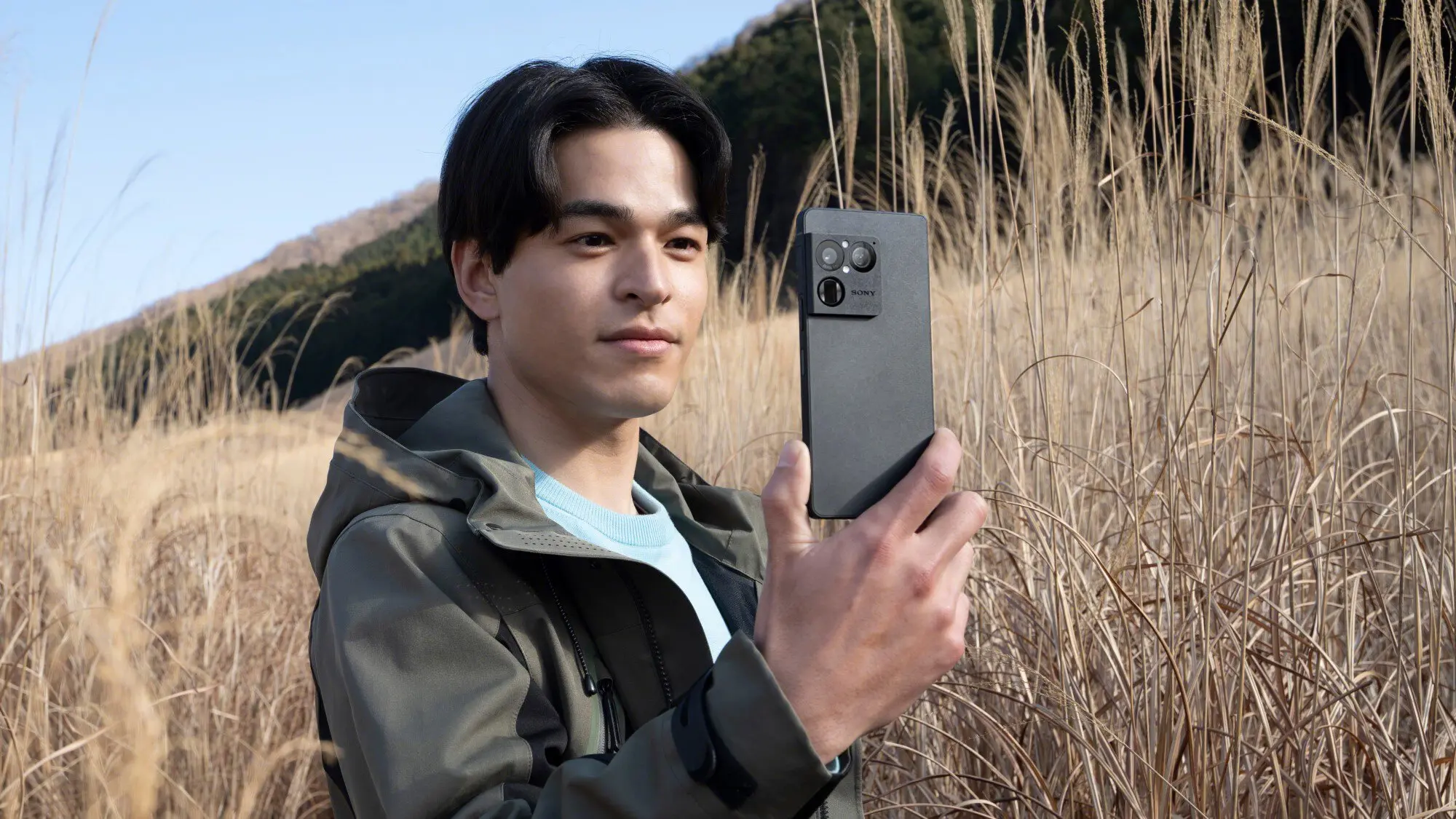
Sony recently found itself at the center of an online storm after it attempted to promote its new AI Camera Assistant feature for the Xperia 1 VIII. The feature, which uses artificial intelligence to suggest four different camera settings based on the scene and subject, was supposed to demonstrate how the phone can help users take better photos. However, the marketing backfired spectacularly when Sony shared side-by-side comparisons on social media. In every single example, the AI-generated suggestion looked noticeably worse than the original photo — washed out, overexposed, or just plain unappealing. The internet, as it often does, united in mockery, with tech industry figures like Carl Pei and Marques Brownlee joining the chorus of jokes. Sony, to its credit, did not delete the offending images or remain silent. Instead, the company issued a response on X (formerly Twitter) that included new examples and a deeper explanation of the tool. But as we will see, this response may have only deepened the mystery surrounding Sony's decision-making.
The Initial Backlash
When Sony first posted the comparison shots, the reaction was swift and brutal. The original photos — presumably taken with the Xperia 1 VIII's standard camera mode — looked vibrant, well-exposed, and natural. The AI assistant's suggestions, on the other hand, appeared dull, with highlights blown out and colors desaturated. One particularly damning example showed a portrait where the AI had turned the subject's skin tone an unnatural shade of gray. Users immediately questioned whether Sony's AI was actually a downgrade, and some even speculated that the feature might be intentionally sabotaging images to encourage manual photography. The jokes came fast and furious, with memes comparing the AI output to Instagram filters from a decade ago or suggesting that Sony had accidentally trained its model on photos taken through a window. Even Sony's rivals couldn't resist taking a jab, as Nothing CEO Carl Pei tweeted a laughing emoji in response to the images.
Sony's Official Response
In a statement posted on X, Sony explained that the AI Camera Assistant does not edit photos after they are taken. Instead, the feature analyzes the scene and subject in real time and offers four different settings in various creative directions. The user can then choose any of the suggestions or stick with their own settings. To support this explanation, Sony shared new comparison images that, admittedly, looked much better than the first batch. These newer examples showed the AI suggestions matching or even improving upon the originals in terms of exposure, color balance, and composition. For instance, one landscape shot showed richer greens and a more dramatic sky in the AI version, while a food photo had better contrast and more appetizing tones. Sony emphasized that the feature is designed to help users who may not be familiar with manual camera controls, offering them a starting point for their photography.
The Unanswered Questions
While Sony's clarification clears up some confusion, it also raises new questions. The most glaring issue is why Sony would use such unflattering examples in its initial marketing. If the AI is capable of producing decent results, why did the company choose to showcase images that made the feature look like a failure? This is especially puzzling given Sony's long-standing reputation as a leader in camera technology. From its Alpha mirrorless cameras to the sensors used in many smartphones, Sony is synonymous with high-quality imaging. Yet this misstep suggests either a breakdown in internal review processes or a disconnect between the marketing department and the engineering team.
Another question revolves around the consistency of the AI. If the first set of examples was truly representative of the feature's output, then perhaps Sony's new examples were cherry-picked to show the best possible results. Alternatively, the initial images may have been taken in unusual lighting conditions that confused the AI. But without a clear explanation, users are left to wonder whether they can trust the tool to perform well in everyday situations.
Historical Context: Sony Xperia's Camera Struggle
This is not the first time Sony Xperia phones have faced criticism for their camera performance. Despite being the world's largest supplier of image sensors (used in iPhones, Samsung Galaxy phones, and many others), Sony's own Xperia lineup has often lagged behind competitors in computational photography. While Xperia phones offer excellent manual controls and raw capture capabilities, their out-of-the-box auto modes have historically been inconsistent — producing images that are sometimes over-sharpened, or with unnatural color science. The company's focus on hardware prowess (like 4K HDR displays and headphone jacks) has sometimes come at the expense of software polish. The AI Camera Assistant was supposed to address this gap, but the initial reaction suggests that Sony still has a long way to go in convincing users that it can compete with the likes of Google Pixel, Samsung Galaxy, and Apple iPhone in automated photography.
In fact, the very concept of an AI suggesting settings is not new. Google's Pixel phones have long used machine learning to optimize camera parameters, but they do so transparently, without requiring user intervention. Apple's computational photography pipeline applies adjustments in the background, producing consistently good results. Sony's approach of surfacing multiple options may feel more complicated to the average user, and the inconsistent examples only add to the perception that the feature is half-baked.
Deep Dive: What Could Have Gone Wrong?
Technical experts have speculated about the reasons behind the poor initial examples. One possibility is that Sony trained its AI on a dataset that did not account for the specific sensor and lens characteristics of the Xperia 1 VIII. The phone uses a custom 48MP sensor with a unique color filter array, and if the training data was generic, the AI might have made incorrect assumptions about white balance and exposure. Another factor could be the presence of the viewfinder display: the AI might have analyzed a pre-capture frame that differed slightly from the final captured image. Furthermore, the marketing team may have mistakenly used images taken in a mode that applied additional processing on top of the AI suggestions, resulting in a double-processing artifact. Sony's response did not address these technical possibilities, leaving the field open for further speculation.
It is also worth noting that the new examples were posted alongside a verbal explanation, but Sony did not formally apologize for the initial images. The tone of the response was matter-of-fact, explaining the feature's intent rather than acknowledging the embarrassment. This has led some observers to criticize Sony for being tone-deaf, as the internet expected at least a hint of humility. However, others have praised Sony for not taking down the original post and for providing follow-up while the incident was still fresh.
Broader Implications for Sony's Brand
The AI Camera Assistant debacle comes at a time when Sony is trying to rebuild its smartphone business. The Xperia 1 series has been a niche offering, appealing to professionals and enthusiasts who want manual control and a headphone jack, but it has struggled to gain mainstream traction. The company has slim margins in mobile and has even considered exiting the market in the past. A misstep like this could reinforce the perception that Sony's mobile division is out of touch with consumer expectations. However, if the feature actually works well once users get their hands on it, the initial backlash might be forgotten.
Meanwhile, competitors are not resting. Google's Pixel 9 series is rumored to introduce even more advanced AI photography features, while Samsung continues to refine its Galaxy AI capabilities. Sony needs to demonstrate that its AI can bring unique value, perhaps by leveraging its expertise in professional cinema cameras. The fact that the Xperia 1 VIII also supports 4K 120fps video and has a variable telephoto lens suggests that Sony's hardware is still top-notch, but the software has to catch up.
Expanding the Context: AI in Photography
The use of AI in smartphone photography is now ubiquitous. From scene detection to portrait mode and night mode, machine learning algorithms analyze pixels and make micro-adjustments that improve image quality. Sony's approach of presenting multiple stylistic choices is reminiscent of the concept of 'generative photography,' where the AI offers creative alternatives rather than just one optimized output. This is similar to how the Google Pixel's 'Photo Unblur' or 'Magic Eraser' work, but with a different interface. Some photographers appreciate having a choice, while others find it distracting. The key, however, is that the AI suggestions must be at least as good as the user's own default settings. The initial Sony examples failed that test spectacularly.
Interestingly, Sony has a long history of using AI in its cameras. The Alpha series includes features like Real-time Eye AF for animals and humans, which uses machine learning to track subjects. Those implementations have been widely praised. The mobile division seems to be trying to replicate that success, but the execution has been bumpy. It is possible that the AI Camera Assistant was developed by a different team or that it relies on a different underlying model. In any case, the disparity in quality between the two product lines is striking.
What Users Can Expect Going Forward
Sony's response suggests that the AI Camera Assistant will be a tool for experimentation. Users can try out the four suggestions and then revert to their own settings if they dislike all of them. This flexibility is a good thing, but it also puts the onus on the user to make the final decision. For many people, the whole point of AI is to reduce the burden of choice, not increase it. Sony seems to be targeting prosumers who want to learn about different looks, which aligns with its overall Xperia philosophy. The problem is that the initial marketing did not convey this nuance effectively.
As the Xperia 1 VIII rolls out to more markets, early reviews will be crucial. If independent tests show that the AI Camera Assistant actually produces good results in a wide range of conditions, Sony may be able to turn this negative into a positive. However, if the initial examples turn out to be representative, then the feature could become a laughingstock that lingers for years. Given Sony's engineering resources, the former scenario is more likely, but the company needs to communicate transparently about the limitations and best use cases.
Analysis of Sony's New Examples
The new examples posted by Sony on X indeed look improved. One shows a sunset scene where the AI version has deeper oranges and better shadow detail. Another depicts a flower macro shot with more vibrant yellows and a softer background. These images are what one would expect from a competent auto mode. However, they were likely captured in ideal conditions — good lighting, stable composition, and with a cooperating subject. The original examples may have been taken in tougher conditions, such as harsh midday sun or with moving subjects. Sony did not disclose the shooting parameters for either set, leaving room for doubt.
It is also worth noting that the new examples were posted as JPEG files on social media, which have their own compression artifacts. The differences might be less pronounced on the phone's HDR display. Still, the fact that Sony had to provide a second batch of examples underscores the failure of the first batch. In a world where first impressions matter, Sony made a significant error in judgment.
In the end, the story of Sony's AI Camera Assistant is more than just a social media blunder. It highlights the challenges legacy hardware companies face when trying to compete in the software-driven smartphone market. Sony has the engineering talent and the brand recognition, but it needs to ensure that its marketing reflects the actual quality of its products. The response did not fully clarify why the first photos were so bad, but it did show that Sony is willing to engage with criticism. Whether that will be enough to restore confidence remains to be seen. For now, the tech community watches closely as the Xperia 1 VIII reaches consumers, ready to put the AI Camera Assistant to the ultimate test — real-world use.
Source: Android Authority News