
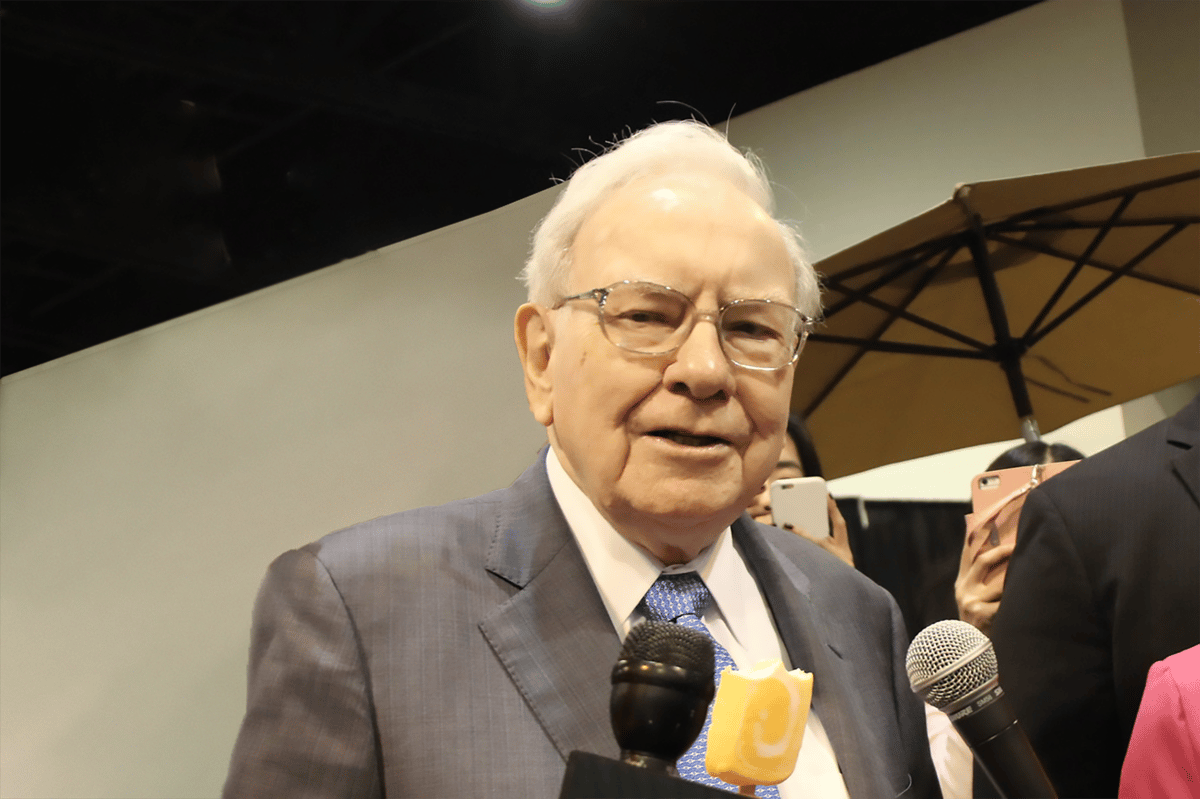
Warren Buffett, the legendary investor and chairman of Berkshire Hathaway, has made yet another massive charitable transfer of his personal stake in the company. He donated approximately $6 billion in Berkshire Hathaway Class B shares to five family-designated foundations. The donation, which was disclosed in a regulatory filing and accompanied by a personal letter to shareholders, marks a meaningful departure from Buffett's recent giving pattern. Notably, the Bill & Melinda Gates Foundation was not included among the recipients, making this the first time in two decades that the foundation has been absent from his annual largesse.
The recipient organizations are the Susan Thompson Buffett Foundation, named after his late wife; the Howard G. Buffett Foundation, led by his son; the Sherwood Foundation; the NoVo Foundation; and the Hesse Foundation. These foundations have been regular beneficiaries of Buffett's generosity for years. However, the exclusion of the Gates Foundation has caught the attention of investors and philanthropy watchers alike. For much of the last 20 years, the Gates Foundation received the largest single share of Buffett's Berkshire stock contributions, with cumulative gifts exceeding $55 billion. His latest move suggests a deliberate transition away from that long-standing arrangement, though the reasoning has not been explicitly stated by Buffett himself.
Key Facts
- Warren Buffett donated about $6 billion in Berkshire Hathaway Class B shares to five family-linked foundations.
- The Bill & Melinda Gates Foundation was excluded for the first time in 20 years.
- The five recipients are the Susan Thompson Buffett Foundation, Howard G. Buffett Foundation, Sherwood Foundation, NoVo Foundation, and the Hesse Foundation.
- Berkshire Hathaway holds a cash position exceeding $300 billion, fueling the dividend debate.
- The donation is part of Buffett's pledge to give away more than 99% of his wealth.
What This Means for Berkshire's Dividend Debate
The donation raises a pertinent investment question: will Berkshire Hathaway eventually pay a dividend, and what pressure do major shareholders' charitable giving patterns place on the company's board? The rationale is straightforward. Large shareholders who rely on donations to fund foundations need cash or stock. Buffett has been giving away stock, not cash, so his philanthropy does not directly require Berkshire to pay dividends. But as he ages, the structure of ownership is expected to shift significantly. His heirs and the trustees of his estate may have different liquidity needs and preferences than Buffett himself.
Institutional investors and analysts have repeatedly hypothesised that Berkshire will initiate a dividend at some point after Buffett relinquishes control. Vice Chairman Greg Abel, who is widely expected to succeed Buffett as CEO, has said publicly that he supports returning more capital to shareholders when the opportunity set for reinvestment is insufficient. With the cash pile exceeding $300 billion and limited mega-deals on the horizon, the argument for a dividend becomes more compelling. A payout measurement, even a modest one, would not only signal confidence in the durability of Berkshire's earnings power but also reduce the agency cost associated with hoarding cash.
Historical Context: Buffett's Giving Pledge and Evolution
Buffett announced in 2006 that he would gradually give away his entire fortune, then valued at approximately $44 billion, mostly to the Bill & Melinda Gates Foundation and four family charities. His plan was to convert his Berkshire A shares to B shares and donate them annually in a fixed allocation. At that time, the Gates Foundation was designated to receive about five-sixths of the total. Over the subsequent 18 years, the foundation has received enormous sums, becoming one of the most consequential philanthropic bodies in the world, with a focus on global health, poverty, and education.
The shift away from the Gates Foundation may be related to Melinda French Gates' departure from the foundation in 2024, after her divorce from Bill Gates was finalized in 2021. The structure and priorities of the foundation have evolved, and Buffett reportedly maintained a close relationship with Bill and Melinda. Buffett stepped down from the Gates Foundation board in 2021, and Melinda left in May 2024. It is plausible that Buffett reevaluated his giving strategy following these changes. However, Buffett has not publicised the exact rationale for the exclusion. In a letter accompanying his latest donation, he stressed that he remains fully committed to his pledge and thanked the foundations for their work, but he did not mention the Gates Foundation at all.
Analysis: The Investment Case for Berkshire
From an investment perspective, the mere fact that Buffett is donating stock does not change the intrinsic value of Berkshire Hathaway. The company's operating businesses include insurance, railroads, utilities, manufacturing, and retail. Its portfolio of publicly traded equities includes heavyweights like Apple, Bank of America, American Express, and Coca-Cola. The operating performance of these subsidiaries and holdings determines the company's earnings growth and intrinsic value. Charitable giving by a founder does not directly affect those fundamentals.
However, the shifting philanthropic patterns can be viewed as a proxy for the inevitable transition of ownership and leadership. Buffett is 94 years old. His partner and vice chairman Charlie Munger passed away in November 2023. The management transition is already underway, with Greg Abel overseeing non-insurance operations and Todd Combs and Ted Weschler managing the investment portfolio. Investors are increasingly valuing Berkshire as a stable, defensive conglomerate rather than a growth vehicle. The stock's valuation multiple has historically traded at a premium to the market when Buffett's reputation was a dominant factor, but that premium has narrowed in recent years.
The question of dividends is central to the future investment case. Buffett has repeatedly said that Berkshire will only pay a dividend if management believes the stock is not worth buying back or if there are no investment opportunities that meet the company's return thresholds. In other words, dividends are the last resort. Given that Berkshire has bought back a record number of shares in each of the last few years, it is not yet at that last resort. But with the cash pile growing faster than available buybacks, the day of a dividend may be approaching.
What Shareholders Should Watch
Investors should monitor a few signals in the coming quarters. First, the pace and magnitude of Berkshire's share repurchases. If buybacks tail off as the stock price rises, pressure for a dividend will increase. Second, the size of Berkshire's operating earnings and cash generation. Record earnings give management more flexibility. Third, any statements from Greg Abel or other senior executives about capital allocation priorities. Finally, the ongoing evolution of Buffett's philanthropic structure may force a discussion among the board about the liquidity needs of the founding family. Historically, the Buffett family has never sold a single Berkshire share for personal consumption, and they have stated that they will not be forced sellers. That promise is credible as long as the company's financial strength is secure.
In the meantime, the $6 billion donation is a reminder that big shareholders have a big voice at companies. Buffett's foundation holdings may not demand dividends, but future trustees and beneficiaries may not share his legendary patience. The absence of the Gates Foundation from this year's donation list simply underscores that change is at the doorstep of Berkshire Hathaway. How the company, its board, and its next generation of shareholders respond to that change will shape the investment thesis for decades to come.
Source: The Motley Fool News