

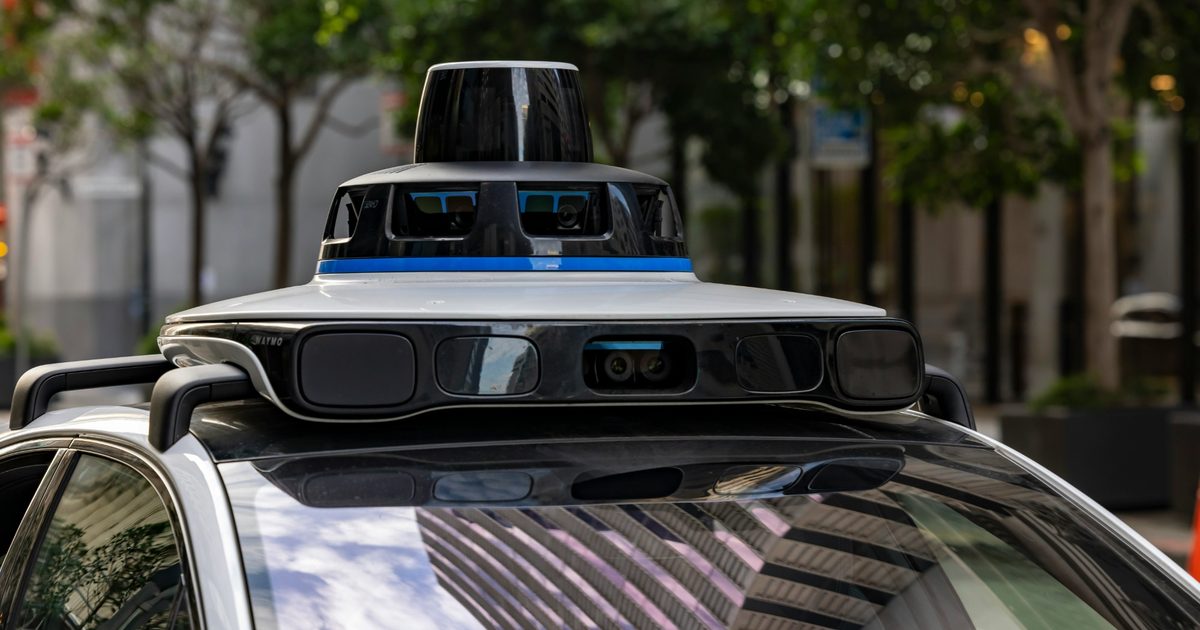
Self-driving cars have become remarkably adept at navigating roads under normal conditions. They can follow lanes, obey traffic lights, and anticipate the actions of other vehicles with increasing precision. Yet the most difficult challenge remains: teaching them to handle unforeseen emergencies where standard driving patterns break down. We have all heard the horror stories—autonomous vehicles behaving erratically when confronted with debris, construction, or first responders blocking the road, sometimes even delaying emergency vehicles from reaching the scene.
Professor Jun Won Choi and his team at Seoul National University’s Department of Electrical and Computer Engineering believe they have made significant progress on this front with a new AI model named SafeDrive. This research has been recognized as a highlight paper at the Conference on Computer Vision and Pattern Recognition (CVPR) 2026, an honor that goes to only about 3% of all submissions. The selection underscores the novelty and potential impact of the work.
How SafeDrive Reimagines Decision-Making
Most state-of-the-art end-to-end autonomous driving systems rely on learning from vast datasets of human driving behavior. They effectively mimic what drivers do on the road—braking when the car ahead slows, turning when the lane curves, and so forth. This approach works well in routine scenarios but fails in edge cases. More critically, these models are often black boxes: engineers cannot easily determine why the car chose a particular action, making it difficult to debug or trust the system in safety-critical moments.
SafeDrive addresses this by introducing a technique the researchers call Fine-grained Safety Reasoning. Instead of outputting a single driving trajectory, the AI first generates multiple plausible paths. It then fuses these trajectories with real-time sensor data from cameras, LiDAR, radar, and ultrasonic sensors. Each candidate path is scored on a safety metric that accounts for factors like obstacle proximity, predicted movement of other agents, road boundaries, and risk of collision. Finally, the system selects the trajectory with the highest safety score.
This approach directly tackles the two biggest weaknesses of current end-to-end models: safety and explainability. Because the reasoning is based on explicit scoring, engineers can inspect why one path was preferred over another—perhaps because it avoids a pedestrian darting into the street, or because it leaves more room for an oncoming emergency vehicle. The explainability also builds trust with regulators and the public, a crucial step for wider adoption of autonomous vehicles.
Why This Matters for Korea’s Autonomous Driving Ambitions
According to coverage by TechXplore, the SafeDrive paper represents the first time a Korean-developed end-to-end autonomous driving paper has earned a highlight spot at CVPR, one of the world’s premier conferences for AI and computer vision. This is a significant milestone for South Korea, which has long been perceived as trailing behind the United States and China in the race to commercialize self-driving technology.
Korea’s automotive industry has historically focused on hardware and manufacturing, but in recent years both the government and private sector have invested heavily in software-defined vehicles and AI. Companies like Hyundai, Kia, and Samsung have established research centers, while the Ministry of Trade, Industry and Energy has funded initiatives such as the Electronic Automotive Driving (EAD) reference model. SafeDrive has already been integrated into EAD, providing a real-world testbed for the technology.
From Lab to Real Roads
Professor Choi’s team is not keeping SafeDrive confined to simulation. The model is now being tested with domestic autonomous driving companies in actual vehicles on South Korean roads. The goal is to validate performance in a variety of conditions—congested urban streets, expressways, rural routes, and unpredictable weather. Early results are promising, but the team acknowledges that real-world driving presents infinite variations that no dataset can fully capture.
The researchers plan to iteratively improve SafeDrive by feeding it larger and more diverse datasets, including challenging scenarios collected from their own test vehicles. They also aim to push the model toward full commercialization. This involves not only refining the safety scoring algorithm but also building a robust software stack that can run efficiently on the embedded hardware of production cars, meeting real-time latency requirements.
Broader Context: The Safety Gap in Autonomous Driving
The challenge of handling unexpected situations is not unique to SafeDrive; it is one of the central problems holding back Level 4 and Level 5 autonomy. Several high-profile accidents have occurred when self-driving cars failed to recognize unusual obstacles or misinterpreted the intentions of human drivers. For instance, a pedestrian crossing with a bicycle, a construction zone with temporary lane markings, or a driver waving another car to proceed—all of these confound systems trained solely on typical patterns.
Researchers around the world are exploring various strategies to close this safety gap. Some focus on building larger, more exhaustive training datasets. Others develop probabilistic models that weigh multiple hypotheses about the future state of the environment. SafeDrive belongs to the latter camp, but its innovation lies in explicitly coupling trajectory generation with a safety-cost function that is interpretable. The team behind SafeDrive argues that this approach not only improves outcomes but also accelerates certification, because regulators can more easily verify that the system meets safety standards.
Implications for the Industry
The recognition from CVPR 2026 is likely to attract additional attention and investment to Korean autonomous driving research. It also signals that explainable AI (XAI) is becoming a critical component of safety-critical systems, not just a research curiosity. As more companies deploy self-driving taxis, delivery robots, and automated trucks, the ability to explain decisions will become a competitive advantage, especially in markets with strict liability laws.
SafeDrive also highlights a shift toward hybrid architectures that combine learned models with explicit reasoning. In the long term, this could lead to more robust systems that handle the “long tail” of rare events—situations that may never appear in training data but still need to be navigated safely. Professor Choi’s team intends to explore how the model can adapt to new environments with minimal retraining, a step toward truly generalized autonomy.
Technical Foundation: Fine-grained Safety Reasoning
The core of SafeDrive is its safety scoring mechanism, which the researchers have designed to be both precise and computationally efficient. The model processes raw sensor data through a perception module that identifies objects, lanes, and free space. It then generates a set of candidate trajectories—each representing a possible future path the vehicle could follow—using a sampling method that covers a broad range of steering angles and accelerations.
For each trajectory, SafeDrive computes a risk value based on multiple components: distance to the nearest obstacle at each time step, time-to-collision if the obstacle behaves unpredictably, compliance with traffic rules (e.g., staying within lane boundaries), and a prediction of what other road users are likely to do. These components are weighted and combined into a single safety score. The trajectory with the highest score is executed, while the others are retained for debugging and transparency.
The model also outputs a visualization of the safety map—a heatmap overlay on the car’s view that highlights high-risk areas. This is useful for both engineers tuning the system and for passengers who may want reassurance that the car is taking reasonable precautions.
Comparing with Other Approaches
Other recent advances in autonomous driving safety include reinforcement learning with safety constraints, adversarial training to harden models against rare events, and attention-based networks that focus on the most relevant parts of the scene. SafeDrive differentiates itself by making the safety evaluation an explicit step that is decoupled from the perceptual and trajectory generation modules. This modularity simplifies upgrades and allows each component to be tested independently.
Moreover, the explicit scoring enables what the team calls “counterfactual reasoning”—the car can answer questions like “What would have happened if I had taken that other path?” This is a powerful tool for post-incident analysis and for training the system on its own mistakes without requiring real-world accidents.
What’s Next for SafeDrive
The integration with Korea’s EAD reference model is a critical step toward standardization and broad adoption. EAD provides a common platform for Korean autonomous driving research, and having SafeDrive as a building block means that startups and OEMs can leverage the safety reasoning module without building it from scratch. The team is also working on a lighter version of SafeDrive that can run on consumer-grade hardware, potentially enabling aftermarket retrofits for older vehicles.
Professor Choi has stated that the eventual goal is full commercialization using data collected from their own autonomous fleet. This includes not just technical refinement but also collaboration with insurance companies, regulatory bodies, and urban planners to ensure that SafeDrive meets real-world needs. The team is also exploring partnerships with international automakers to bring the technology to global markets.
The field of autonomous driving is notoriously difficult, with many companies scaling back their timelines or exiting the race entirely. Yet breakthroughs like SafeDrive suggest that the path to safer self-driving cars is not necessarily through bigger models or more data, but through smarter integration of perception, prediction, and explicit reasoning. The success of this research at CVPR 2026 is a clear indication that Korean AI research is making significant contributions to solving one of the hardest problems in robotics.
Source: Digital Trends News