

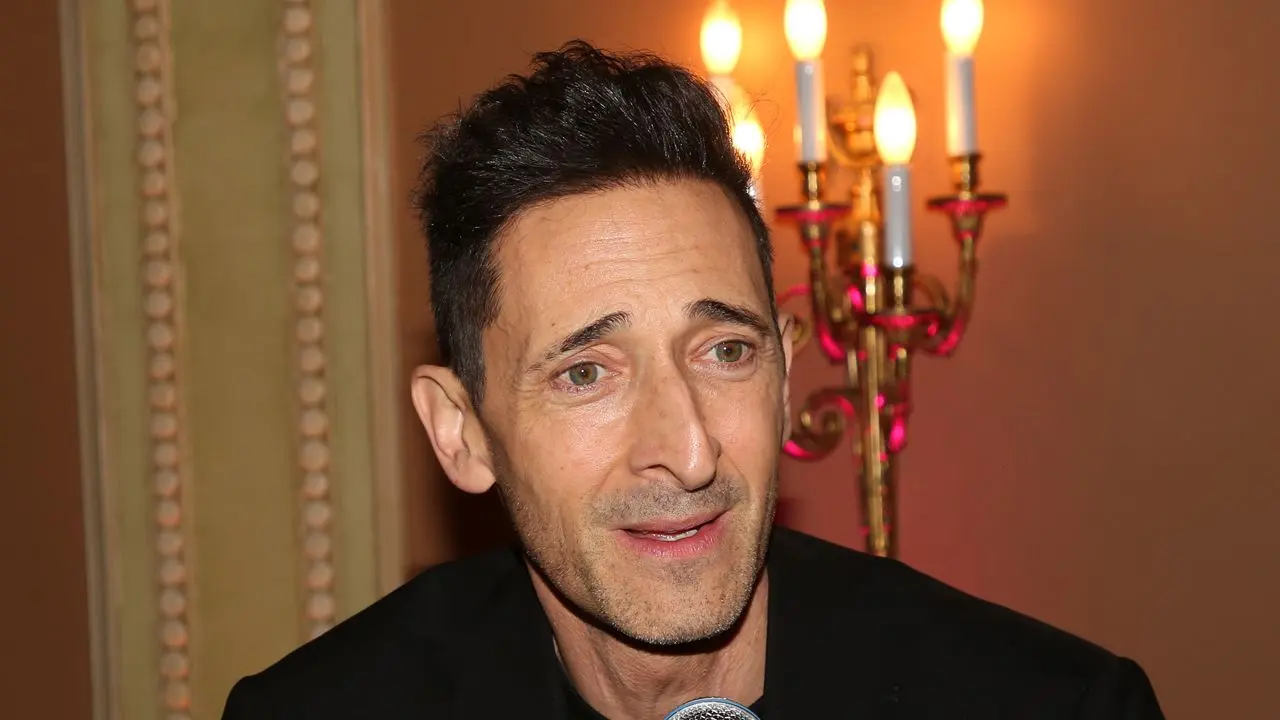
Adrien Brody spent nearly five months in almost total isolation in a New York hotel room. He decided to sequester himself to prepare for his Broadway debut in The Fear of 13, a play based on the true story of Nick Yarris, a man who spent 22 years on death row for a murder he did not commit. The role demanded a profound emotional and psychological immersion, and Brody believed that only by replicating the physical and social conditions of Yarris's confinement could he truly honor the real-life story on stage.
“It is lonesome, of course,” the actor told Interview Magazine. “But I’m playing a man who has lived far deeper in that isolation. What I experience is only scratching the surface.” Nick Yarris, the character he played, spent his time reading compulsively and writing. He also fell in love with and married a prison justice advocate. Brody worked to replicate Yarris’s experience from the hotel. “I basically have to hole up here on my own, away from family and away from my loved ones in order to do this work. Most of my downtime is trying to decompress and rest up to be ready to work. To be in a space to do the work properly and be prepared requires isolation.”
A Role That Demands Everything
Brody is known for going to extremes to embody his characters. Before he began filming his Oscar-winning role in Roman Polanski’s 2002 film The Pianist, he left his apartment to move to Europe, learned to play the piano, and lost so much weight that he put his health at risk. That role, which earned him the Academy Award for Best Actor at age 29, remains one of the most striking examples of method commitment in modern cinema. But his preparation for The Fear of 13 proved just as demanding, if quieter in its physical transformation. Instead of shedding pounds or learning an instrument, Brody had to strip away the comforts of normal life and sit with the silence of a hotel room.
The play, adapted from the documentary of the same name, tells the harrowing true account of Nick Yarris, a Pennsylvania man who was wrongly convicted of the rape and murder of Linda Mae Craig in 1982. Yarris spent over two decades on death row before DNA evidence exonerated him in 2003. During those years, he became an autodidact, reading law, philosophy, and literature, and even falling in love with a British woman named Rosemary, who became his wife while he was still incarcerated. His story is a testament to resilience and the power of the human spirit to find meaning in the face of unimaginable adversity. For Brody, bringing this story to Broadway was not just a professional challenge but a personal mission.
Working on Broadway: An All-Consuming Experience
Working on the Broadway show, which closed on June 28, was an all-consuming experience, with rehearsals lasting 11 hours a day, six days a week. He had no time left to “really decompress,” he said, and as a result, he changed many of his “personal habits.” “It comes and goes in an actor’s life when you have certain roles that require a great deal of commitment, and they’re all-consuming, especially through rehearsals, tech, previews.” The production required not only emotional stamina but also physical endurance, as Brody had to navigate the intense demands of a Broadway schedule while maintaining the psychological depth of a man who had been locked away for years.
The decision to isolate himself in a hotel was deliberate. Unlike a film set, where scenes are often shot out of order and actors have time between takes to step back into their normal lives, theater requires an unbroken arc of performance every night. The rehearsal process, too, is prolonged and intense, forcing actors to live inside their characters for weeks before previews even begin. Brody realized early on that to play a man who had been denied freedom for two decades, he needed to experience a form of voluntary deprivation. But he was careful to acknowledge the limits of his sacrifice. “I’m playing a man who has lived far deeper in that isolation,” he said. “What I experience is only scratching the surface.”
The Real-Life Story of Nick Yarris
Nick Yarris’s life is one of extraordinary hardship and improbable triumph. Born in Delaware County, Pennsylvania, he had a troubled youth and a history of drug abuse. In 1981, he was arrested for a minor offense and, while in police custody, was accused of the kidnapping and murder of Linda Mae Craig, a young mother who had been abducted, raped, and shot. The evidence against Yarris was thin, largely based on a coerced confession and faulty eyewitness testimony. Nevertheless, he was convicted and sent to death row in 1982. For 22 years, Yarris maintained his innocence, studying law and writing prolifically. He also became a vocal advocate for other inmates, helping to expose the injustices of a system that had failed him. It was during a prison visit that he met Rosemary, a British campaigner against the death penalty, and the two fell in love. They married in 2002, while Yarris was still on death row.
In 2003, DNA testing finally proved Yarris’s innocence, and he was released after spending 22 years, 10 months, and one day in prison. His case became a rallying point for death penalty abolitionists and a stark reminder of the fallibility of the American justice system. Yarris moved to the United Kingdom with his wife, where he wrote a memoir and later became the subject of the 2016 documentary The Fear of 13, directed by David Sington. The title refers to a superstition that Yarris reportedly held while on death row. The documentary received critical acclaim for its haunting interviews and inventive visual storytelling, and it was only a matter of time before someone adapted it for the stage.
For Brody, the opportunity to play Yarris felt like a natural progression in a career defined by extreme transformations. He had already played a Polish Jewish musician struggling to survive the Holocaust, a gorilla-loving filmmaker in King Kong, and a multifaceted architect in The Brutalist. But the role of a death row inmate required a different kind of stillness—an internal confinement that could be projected across the footlights of a Broadway theater.
Brody’s History of Extreme Preparation
Brody’s reputation for method acting precedes him. For The Pianist, he locked himself away from the world for months, learning Chopin on a piano in a silent apartment and losing nearly 30 pounds. He described the experience as one of the most difficult things he had ever done, both physically and mentally. He later told journalists that he felt a deep connection to the suffering of those he was portraying, and that the role changed his perspective on his own life. But he also acknowledged the toll it took on his health. “I was so weak that I could not even carry a bag of groceries,” he recalled.
That willingness to sacrifice has been a hallmark of his career. In The Village, he played a man with a developmental disability and immersed himself in research, visiting communities and speaking with experts. For King Kong, he trained extensively to handle the physical demands of the action sequences. And in The Brutalist, a film about a Hungarian-Jewish architect who emigrates to America, he reportedly stayed in character on set, speaking with an accent even when the cameras stopped rolling. His dedication has earned him comparisons to actors like Daniel Day-Lewis, who famously remains in character for the entirety of a shoot. But Brody insists that his approach is not about method acting as a performance—it’s about finding the truth of the character and honoring the real people whose stories he tells.
A Personal and Political Mission
Bringing the story to New York, the city where he grew up, holds both political and personal significance for him. “We as Americans are quite intimate with [the prison system]. Not just how much incarceration is a part of our consciousness, but the US is quite unique to other Western prison systems. We have the death penalty, and the UK currently does not. We have all sorts of complex ways in which you can end up on the death penalty in this country. As a New Yorker, telling the story in New York is special to me. And doing Broadway as an actor, there’s many layers to it that feel very important, both personally and creatively, and to provide a light and some kind of awareness of the circumstances that are existing all around us that many of us are not keyed into.”
Indeed, the issue of wrongful convictions and the death penalty remains alarmingly relevant. According to the Innocence Project, over 3,500 people have been exonerated in the United States since 1989, including many who were on death row. The death penalty itself is still legal in many states, and studies have shown that racial bias, prosecutorial misconduct, and inadequate legal representation are endemic. By bringing Yarris’s story to Broadway, Brody hoped to shine a light on these systemic failures and spark conversations about criminal justice reform. His performance, steeped in the reality of a man who experienced the ultimate injustice, was meant to humanize the statistics and remind audiences that behind each number is a person with dreams, fears, and a desire to be free.
A Newfound Appreciation for Life
When asked if there’s a moment in the story that strikes him more than others, Brody replied: “There are numerous moments. Toward the end, when he recognizes that everything still goes on, there’s this sense that despite it all, there’s so much beauty in being alive. It’s the gift of that, alongside the loss, this immense gratitude and clarity, like cleaning the lens and finally seeing what we take for granted every day. The simple things: being able to buy a cup of coffee, or kissing a dog, or going for a bike ride. Those really move me. I’ve had similar realizations in other roles too, moments that made me aware of how much I took for granted as a young man, freedoms we assume are guaranteed but aren’t.”
It has given him a new sense of awareness about the value of everyday life. “If anything resonates,” he said, “it’s that reminder to live with respect for others and for the life we’re fortunate to have.” Those words carry added weight when one considers the privilege Brody enjoys as a celebrated actor. Yet his years of immersion in difficult stories have taught him that happiness is often found in the mundane. He has spoken in interviews about how fatherhood has grounded him and how he now finds joy in the rituals of daily life—morning coffee, reading a script in the park, playing with his dog.
The isolation he experienced in that hotel room was, in a sense, a gift. It stripped away distractions and forced him to sit with his thoughts, much like Yarris had to do in a cell. It gave him a taste of what it means to lose your freedom, and in doing so, it made him appreciate everything he had. As the play closed and he stepped back into the world, Brody carried with him a renewed sense of purpose and gratitude. “We all have the capacity to take things for granted,” he said. “But if you ever get a glimpse of the other side—even a small glimpse—you realize how precious it all is.”
For audiences who saw The Fear of 13, Brody’s performance was a reminder of the power of theater to foster empathy and provoke thought. The play may have closed, but its themes remain urgently relevant. And for Brody, the five months of isolation in a New York hotel were not just a professional methodology but a transformative personal journey—one that reinforced his belief in the resilience and dignity of the human spirit.
Source: Vanity Fair News