

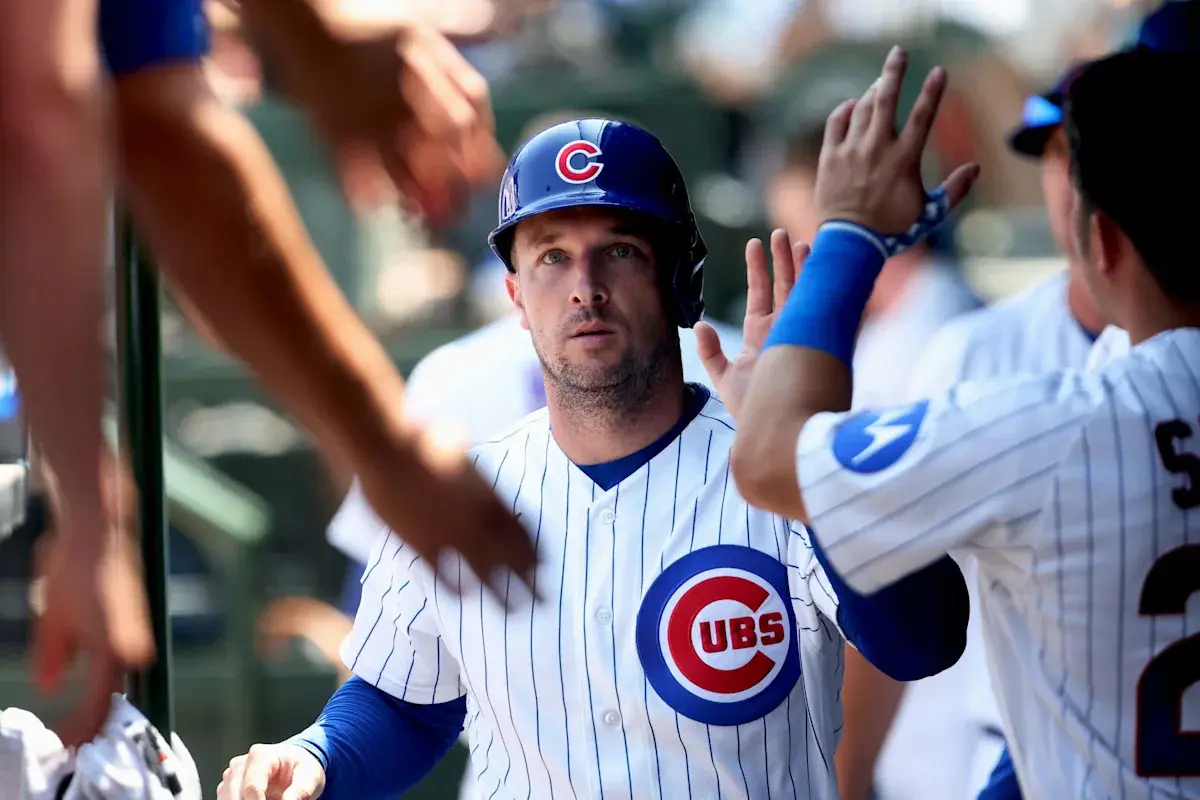
In the midst of the Boston Red Sox's dramatic surge to competitiveness, an unexpected hero has emerged: infielder Caleb Durbin. The 27-year-old, signed for just $796,000 this season, has quietly matched the production of Chicago Cubs' former All-Star Alex Bregman—and done so in significantly fewer opportunities. According to a comparison shared widely on social media, Durbin and Bregman both sport a .699 OPS, with 10 home runs each. However, Durbin has amassed 42 RBIs in 305 at-bats, while Bregman has 43 RBIs in 386 at-bats. That means Durbin has matched Bregman's output in 81 fewer plate appearances, a discrepancy that raises serious questions about value and performance in modern baseball.
The context of this comparison is critical. Alex Bregman, a two-time All-Star and key member of the Houston Astros' 2017 World Series championship team, signed a five-year, $175 million contract with the Chicago Cubs before the 2025 season. The deal was seen as a cornerstone move for a franchise desperate for leadership and consistent offensive production. Bregman had been one of the most reliable hitters in baseball during his prime, posting an OPS+ of 130 or higher in five of his seven full seasons. But in 2026, his numbers have regressed to average: a .241 batting average, .337 on-base percentage, and .362 slugging percentage. For a player earning $35 million annually, such production is far below expectations.
On the other hand, Caleb Durbin is a journeyman who was acquired from the Milwaukee Brewers in a trade that sent pitcher Kyle Harrison to the Brewers. Durbin had shown promise in the minor leagues, with a career .280 average and a knack for getting on base, but he had never been projected as a star. His salary of $796,000 makes him one of the lowest-paid players on the Red Sox roster. Yet, since late May, Durbin has been one of the most productive hitters in the American League. After a disastrous start to the 2026 season—in which he slashed .163/.241/.238 with a 32 wRC+—Durbin was benched for three days in late May. That reset proved to be a turning point.
Upon returning to the lineup, Durbin worked with a new hitting coach to refine his approach at the plate. The changes were dramatic: he began pulling the ball in the air more frequently, leveraging the Green Monster at Fenway Park to his advantage. In the 44 games following his benching, Durbin hit .304 with a .353 on-base percentage and a .551 slugging percentage. He smashed nine home runs, drove in 26 runs, and stole seven bases in eight attempts. His wRC+ during that stretch was an elite 144, placing him among the league's best hitters. The transformation has been nothing short of remarkable, and it has coincided with the Red Sox's stunning 15-game winning streak—the longest in franchise history, tying a mark set in 1946 by Ted Williams and the American League champions.
The Red Sox entered June with a mediocre record and were widely expected to be sellers at the trade deadline. Instead, Durbin's emergence, combined with contributions from other role players, ignited a run that vaulted the team into playoff contention. The winning streak captivated Boston fans and drew national attention. During that stretch, Durbin delivered several clutch hits, including a go-ahead home run in the eighth inning of a critical game against the Baltimore Orioles. That homer, which broke a tie and propelled the Red Sox to a 6-3 victory, was a moment that defined the team's newfound resilience.
Meanwhile, in Chicago, the Cubs are struggling to replicate Boston's magic. Alex Bregman's inability to produce at an All-Star level has been a glaring issue. Despite his defensive prowess and clubhouse leadership, his bat has been erratic. Fans have voiced frustration, pointing to the enormous contract as a burden on the payroll. Some have questioned whether the Cubs could have used that money more effectively elsewhere, especially given the emergence of cheaper alternatives like Durbin. The contrast is stark: a $796,000 infielder is providing the same offensive value as a $35 million star.
Statistically, the similarity between the two players extends beyond OPS. Both have identical home run totals (10) and nearly identical RBI totals (42 for Durbin, 43 for Bregman). Durbin's on-base percentage is lower (.301 vs .337), but his slugging percentage is slightly higher (.400 vs .362). And crucially, Durbin plays a younger, faster game: he has 11 stolen bases compared to Bregman's three. In terms of Wins Above Replacement (WAR), Durbin has compiled 1.8 fWAR in 76 games, while Bregman sits at 1.5 fWAR in 95 games. The efficiency gap is clear.
Social media reactions have ranged from amazement to incredulity. Fans have noted that Durbin's mid-season turnaround is a testament to the value of player development and mental reset. One analyst pointed out that Durbin's approach at the plate has completely changed: he is now pulling the ball in the air 35% of the time, compared to 22% before his benching. This adjustment has allowed him to utilize Fenway's short porch in left field, turning warning-track fly balls into home runs. The Green Monster, once a daunting obstacle for the right-handed hitter, has become an ally.
For Bregman, the struggles are more puzzling. He has not suffered any major injury, and his launch angle and exit velocity remain in line with career norms. However, his hard-hit rate has dipped slightly, and he is pulling the ball less frequently. Opposing pitchers have attacked him with high fastballs and breaking balls away, a strategy that has neutralized his ability to drive the ball to right-center. At 32 years old, it is possible that Bregman is simply experiencing age-related decline, but the Cubs are counting on him to be a cornerstone for the next three seasons.
The broader implications of this comparison extend beyond two players. It underscores the unpredictable nature of baseball, where small investments can yield huge returns and big contracts can become albatrosses. For the Red Sox, Durbin's performance is a boon: they have uncovered a cost-controlled asset who can provide above-average production at a critical position. For the Cubs, Bregman's struggles are a cautionary tale about the risks of free-agent spending. As both teams look toward the playoffs, the story of Durbin vs. Bregman will continue to be a talking point.
In July 2026, the Red Sox are buyers at the trade deadline, thanks in large part to Durbin's bat. The team is in the thick of the wild-card race, and their historic winning streak has given them momentum. Meanwhile, the Cubs are hovering around .500, with Bregman's performance a key variable in their postseason hopes. If Bregman can rediscover his form, Chicago could still make a run. If not, the contrast with Durbin will remain a painful reminder of what might have been.
Source: Yahoo Sports News