

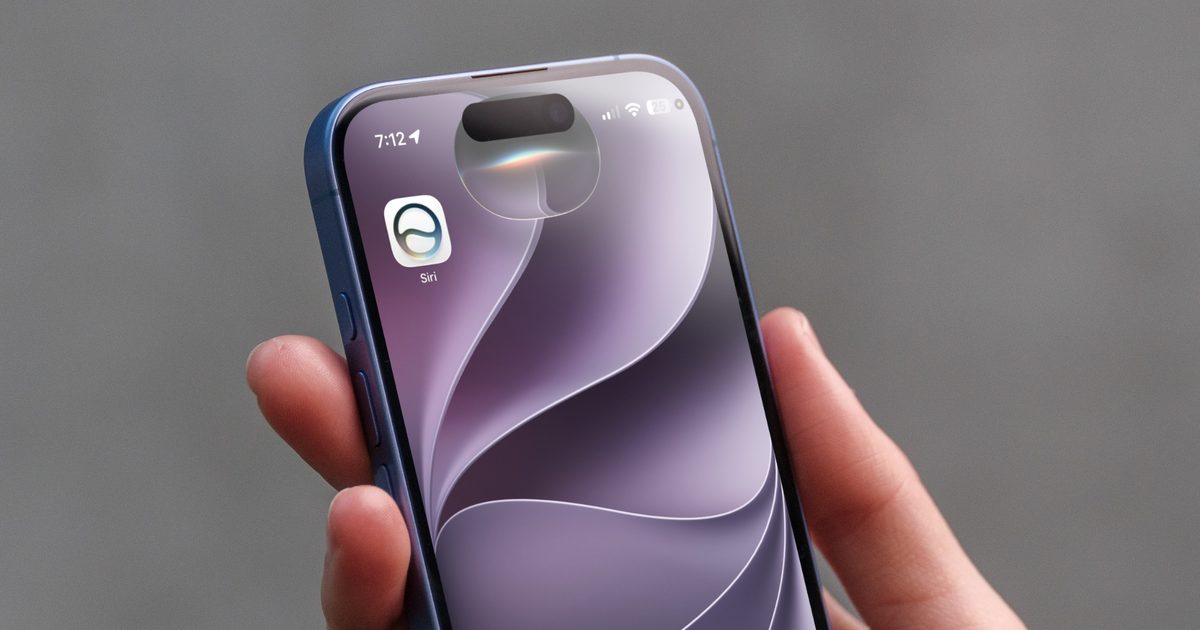
Apple’s latest earnings call was packed with upbeat headlines: record iPhone revenue, a strong June quarter, and plenty of enthusiasm about the company’s ambitious push into generative AI with Siri. But beneath the celebratory numbers, there was a quieter detail that deserves attention. During the analyst Q&A session, Apple essentially confirmed that users who lean heavily on Siri’s new AI capabilities may eventually be asked to pay for a larger iCloud+ plan to keep enjoying the service smoothly.
That statement marks a notable shift for a company that has long marketed its software services as either free or bundled with premium hardware. As Apple races to catch up with Google, Microsoft, and OpenAI in the AI assistant arena, the question of how to pay for the enormous computing resources required by large language models has become unavoidable. Apple’s initial answer, it seems, is to lean on its existing iCloud+ subscription ecosystem rather than introduce a standalone AI service fee.
Will heavy Siri AI users need to pay more?
During the earnings call, an analyst asked how Apple plans to recover the substantial compute costs behind Siri AI, especially given that usage during the beta period has reportedly been strong. CEO Tim Cook did not shy away from the question. He acknowledged that Apple expects to see a segment of users who want to use the feature extensively, and he confirmed that the company will introduce “some kind of upgrade possibilities on iCloud+ where people can buy up the stack.” In plain language, if you push Siri AI hard, Apple wants you on a higher iCloud+ tier to help offset the expense.
This was not a passing remark. Later in the same call, when a different analyst asked whether Siri AI would affect Apple’s overall capital spending plans, Cook returned to the same theme. He noted that heavy usage gives people “the ability to move up on an iCloud plan as well.” He also admitted that the balance between Apple absorbing those AI costs itself versus passing them on to customers through iCloud+ upgrades remains “a bit uncertain at the moment.” That uncertainty suggests Apple is still testing the waters, but the direction is clear: the era of completely free, unlimited AI assistants from Apple may be short-lived.
A precedent already exists
Apple is not stepping into this territory blindly. Earlier this year, the company released a new set of AI-powered features for its Home app, including intelligent scene suggestions and enhanced face recognition for HomeKit cameras. Those features are locked behind the 2TB iCloud+ plan, which costs $9.99 per month. That move set an important precedent, showing that Apple is willing to reserve its most computationally expensive AI features for subscribers who pay for the top tier of its cloud storage service.
The 2TB iCloud+ plan is currently the most expensive individual tier offered by Apple, sitting above the 50GB and 200GB options. It is also the only tier that supports features like HomeKit Secure Video with multiple cameras, and now, advanced AI processing for the Home app. By tying Siri AI upgrades to iCloud+ rather than creating a separate subscription, Apple keeps its ecosystem simple. Instead of a confusing add-on, users simply buy more cloud storage, which they may already need anyway.
What does this mean for you?
Nothing is locked in yet. Apple has not announced usage caps, specific pricing tiers, or a timeline for any of these changes. But reading between the lines, it sounds like the free tier of Siri AI could come with some kind of ceiling. Once you hit that ceiling, Apple would love for you to upgrade your iCloud+ subscription to continue using the feature without interruptions. For light users, the free tier may remain enough. But for power users who rely on Siri AI for daily tasks, content generation, or advanced automation, the cost could become a serious consideration.
If you are already paying for iCloud+, this probably will not sting too much. A premium plan costs a few dollars a month, and many users already pay for 200GB or 2TB to store photos, backups, and device data. For those users, adding Siri AI to the mix is a natural benefit. But for users who currently enjoy iCloud+ at the 50GB level, or who have avoided cloud storage subscriptions altogether, the prospect of paying more for an assistant that once seemed free could be surprising.
The rising cost of AI compute
To understand why Apple is moving in this direction, it helps to look at the broader economics of generative AI. Building and operating a large language model like the one powering Siri AI is expensive. It requires data centers filled with thousands of specialized chips, massive amounts of electricity, and a team of engineers to keep everything running smoothly. Every time a user asks Siri to summarize a document, generate a response, or analyze a photo, Apple incurs a small but real cost in computing power.
According to industry estimates, processing a single query on a state-of-the-art AI model can cost anywhere from a fraction of a cent to several cents, depending on the complexity of the request. Multiply that by millions of users across the globe, and the costs become staggering. Microsoft and Google have already started charging for AI services. Microsoft offers Copilot Pro as a $20-per-month subscription, while Google includes AI Premium features with its Google One plans at a similar price point. Apple’s decision to funnel Siri AI costs into iCloud+ upgrades is consistent with this broader industry trend.
Apple’s on-device approach
Apple has long positioned itself as a privacy-focused company, and that extends to its AI strategy. Many basic Siri AI features will run entirely on-device, which means they do not require cloud processing and therefore cost Apple next to nothing. For example, simple commands like setting reminders or sending text messages can be handled by the phone’s hardware. However, more advanced features, such as generating long-form text, summarizing entire email threads, or answering complex queries, need to be processed in the cloud.
This hybrid approach gives Apple a unique advantage. It can offer a genuinely free tier for basic on-device AI, then charge only for the heavy lifting that requires cloud resources. It is also a way to justify the higher price of iCloud+ without making users feel like they are paying for a separate AI subscription. The question is how Apple will define the boundary between the free tier and the paid tier. Will there be a daily query limit? Will certain features require the premium plan? Cook’s comments suggest that Apple is still working through those details.
Why Apple is moving slowly
Apple has been criticized for being slower than its rivals in bringing generative AI to market. The company did not make a major AI announcement until its Worldwide Developers Conference in June, and even then, many of the features were still in beta. Part of the reason for that caution is technical. Apple wants its AI to be accurate, private, and deeply integrated with its ecosystem, which takes time. But part of the reason is also financial. Once Apple commits to offering a feature for free, it is hard to take that away later.
By first releasing Siri AI as a free beta, Apple can gauge how much people actually use it and how much it costs to run. Then, based on real-world data, the company can design a pricing structure that makes sense. Cook’s statement that the balance is “a bit uncertain” reflects exactly that. Apple is watching user behavior right now and will likely make an announcement in the coming months about how the paid tiers will work.
The future of Siri AI and iCloud+
So what should you expect? For the next year or so, Siri AI will likely remain free to use, with no immediate caps. Apple will need to keep the beta free to attract users and gather feedback. But as the features become more stable and perhaps more powerful, the likelihood of limitations grows. It is entirely possible that Apple will introduce a new 4TB or 6TB iCloud+ plan, or add a premium tier specifically designed for AI users. The company could also bundle Siri AI with Apple Music or Apple News, creating a kind of super-subscription that appeals to the most devoted users.
For now, the key takeaway is that Siri AI is not going to be a free, unlimited service forever. Apple’s business model depends on recurring revenue, and services are arguably its most profitable segment. With iPhone sales maturing, the company is looking for ways to grow its services business, and AI is the perfect vehicle. If you want to use Siri AI extensively, you should start budgeting for a possible iCloud+ upgrade. Even if the free tier remains generous, the most advanced features and the ability to use the assistant without hitting a monthly cap will likely require a larger plan.
Apple is not the only company facing this challenge, nor is it the only one choosing to bundle AI expenses into existing subscriptions. The economics of generative AI simply do not allow for free, unlimited use at scale. Charging for heavy usage is a business necessity, and users will eventually have to decide how much they value a powerful AI assistant. If you are an avid Siri user, the smartest move is to keep an eye on your usage patterns and be prepared to pay up when Apple finally flips the switch.
Source: Digital Trends News