

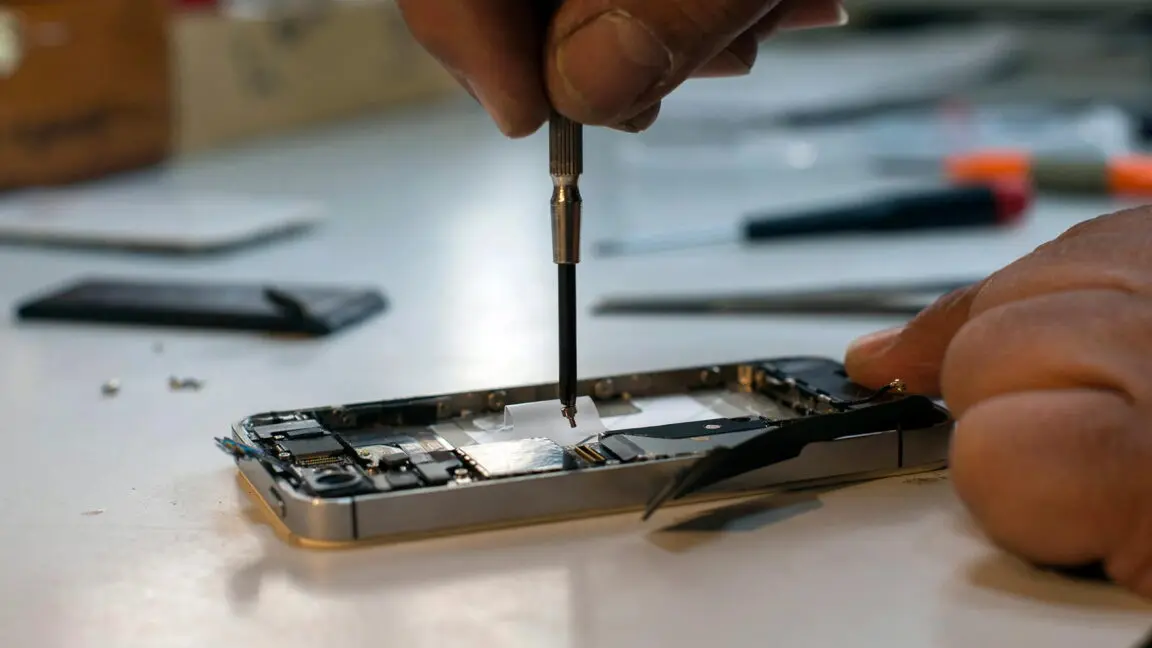
A highly contested bill in Colorado that sought to weaken the state's landmark right-to-repair law failed to advance, marking a significant victory for repair advocates who feared it would set a dangerous precedent across the United States. The bill, designated SB26-090, was introduced in the Colorado Senate on April 2, 2026, and quickly passed that chamber, but it was ultimately defeated in the House State, Civic, Military, and Veterans Affairs Committee by a 7-to-4 vote on April 28, 2026, and declared postponed indefinitely.
Background: Colorado's Right-to-Repair Law
Colorado's Consumer Right to Repair Digital Electronic Equipment, enacted in 2024, went into effect on January 1, 2026. This law mandates that manufacturers of digital electronics—including smartphones, computers, tablets, and Wi-Fi routers—must provide owners and independent repair shops with access to necessary tools, parts, and documentation required to diagnose, maintain, and repair devices. It was hailed as one of the most comprehensive state-level repair laws in the country, designed to combat the planned obsolescence and repair monopolies that have long frustrated consumers and generated e-waste.
The Proposed Exemption: 'Critical Infrastructure'
SB26-090 aimed to carve out an exception for any technology designated as “critical infrastructure.” The term was loosely defined, leading critics to argue that it could be applied to virtually any device a manufacturer deemed sensitive. Major tech companies such as Cisco and IBM lobbied heavily in support of the bill, arguing that requiring them to share repair tools and documentation could expose proprietary security mechanisms to malicious actors. They claimed that if hackers could reverse-engineer routers or other networking equipment using publicly available repair guides, they could compromise vital communications and networks.
Cybersecurity Expert Testimony
During the House committee hearing, which stretched into the evening and included dozens of public comments, cybersecurity experts challenged the tech companies' arguments. Billy Rios, a well-known white-hat hacker, testified that the vast majority of cyberattacks are conducted remotely, not through physical hardware tampering. He stated, “There is no time. It doesn’t work that way,” emphasizing that defenders need immediate access to make changes without seeking manufacturer permission. The idea that withholding repair tools would improve security was largely dismissed as a red herring.
Another point of contention arose when Representative Chad Clifford, a Democrat and committee vice chair who co-sponsored the bill, pointed to Cloudflare's use of lava lamps to generate random encryption keys as an example of why security methods must remain secret. However, experts noted that such analogies miss the mark: encryption methods and security through obscurity are not the same as withholding repair documentation. The core principle of modern cybersecurity is transparency, as the public and experts need to evaluate systems for vulnerabilities.
Economic Arguments and Broader Implications
Supporters also warned that companies might simply stop selling certain products in Colorado if forced to comply with the repair law. Representative Clifford argued, “They’re not going to comply and give away the keys to their kingdom… they’re going to just not have commerce on those items here.” But this threat did not sway committee members. Representative Naquetta Ricks, a Democrat, expressed confusion about the bill's intent, asking, “What are we really trying to do here? Are we protecting just one company, or are we looking at really critical infrastructure? I’m not convinced.”
The failure of SB26-090 is a clear win for the right-to-repair coalition, which included nonprofits like CoPIRG, Repair.org, iFixit, Consumer Reports, and environmental groups such as Blue Star Recyclers and Environment Colorado. Danny Katz, executive director of CoPIRG, noted that the battle was a group effort and that public testimony from a broad range of stakeholders made a big difference. Nathan Proctor, senior director of US PIRG’s Campaign for the Right to Repair, expressed relief but acknowledged that the fight is far from over. He expects lobbyists to continue efforts to undermine repair laws in Colorado and other states.
National Context and Future Battles
The Colorado dispute reflects a broader national trend. Right-to-repair laws have gained momentum across the United States, with states like Iowa passing similar legislation. However, tech giants have increasingly sought to carve out exceptions, often citing security concerns. Experts argue that these claims are often exaggerated to preserve control over repair markets. The Federal Trade Commission has previously taken action against companies that restrict repair options, and the issue remains a bipartisan concern for consumers.
The impact of the Colorado law is already being felt. Consumers now have legal access to repair manuals and tools for a wide range of electronics, reducing e-waste and lowering costs. Local repair shops report increased business, and environmental groups highlight the reduction in discarded electronics ending up in landfills. The defeat of SB26-090 reinforces that these gains may be protected for the foreseeable future.
Nonetheless, the legislative battle in Colorado is indicative of ongoing tensions. As more states consider repair legislation, the tech industry is expected to escalate lobbying efforts. The fundamental question—whether consumers should control the devices they own—remains unresolved at the federal level, leaving statehouses as the primary battleground. For now, Colorado stands as a bulwark against efforts to weaken repair rights, but advocates warn that vigilance is necessary to prevent future attempts to erode the law.
Source: Ars Technica News