
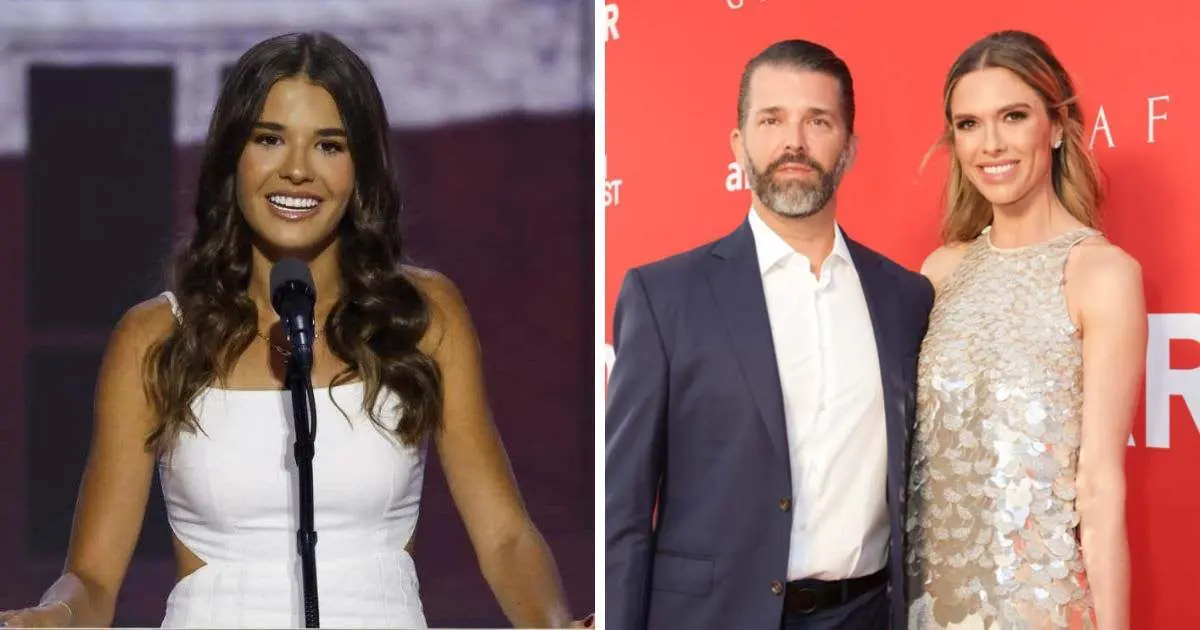
A recent viral video claiming that Kai Trump, the eldest daughter of Donald Trump Jr., has publicly refused to accept Bettina Anderson as her mother has been revealed as a fabrication. The video, which surfaced on social media platform X on April 22, 2026, from an account named @BrittanyinTexas, purported to show Kai Trump making a statement rejecting Anderson, who is engaged to her father. However, subsequent investigations have confirmed that the video was generated using artificial intelligence and contains no factual basis. This incident highlights the growing problem of deepfake content aimed at public figures, particularly those associated with the politically prominent Trump family.
Origin of the Claim
The claim first appeared in a post that quickly garnered attention due to the high profile of the Trump family. In the post, it was alleged that Kai Trump explicitly stated she would never accept Bettina Anderson as her mother, instead expressing a preference for Kimberly Guilfoyle, Donald Trump Jr.'s former partner and later the U.S. ambassador to Greece under President Donald Trump. The attached video showed Kai Trump speaking directly to the camera, stating that Kimberly Guilfoyle understood the family's rhythm and had been a constant presence for seven years, while Bettina Anderson lacked a genuine connection to the family. The video appeared convincing at first glance, but careful analysis revealed telltale signs of AI generation.
The AI Watermark and Community Verification
Soon after the video started circulating, a community note was added to the original post, pointing out that the footage contained AI-generated watermarks and was not a real statement from Kai Trump. The note emphasized that no credible news reports had confirmed such a statement. In fact, the video’s digital artifacts, including unnatural lip movements and slight distortions around the face, were consistent with deepfake technology. Social media platforms have increasingly relied on community-driven fact-checking to combat misinformation, and this case demonstrates the effectiveness of such measures. The note also referenced that Kai Trump has appeared publicly with her father and Bettina Anderson on multiple occasions, suggesting a harmonious relationship rather than conflict.
Real Relationship Dynamics
Contrary to the fabricated narrative, sources close to the Trump family have revealed that Kai Trump has developed a warm bond with Bettina Anderson. An insider told Page Six that Kai genuinely likes Bettina and enjoys spending time with her. The two have even created TikTok videos together in the past, demonstrating a playful and affectionate dynamic. Furthermore, Bettina Anderson reportedly befriended Vanessa Trump, Donald Trump Jr.'s ex-wife, before she even became romantically involved with Don Jr. Vanessa has expressed full approval of the relationship, describing Bettina as a great match for her former husband. This triangulation of friendships — between Bettina, Kai, and Vanessa — suggests a stable and blended family environment, far removed from the drama portrayed in the fake video.
Background on the Individuals Involved
Kai Trump, born in 2007, is the eldest child of Donald Trump Jr. and Vanessa Pergolizzi. She has grown up in the intense media spotlight that follows the Trump family. Despite her youth, she has maintained a relatively private life, though she appears occasionally on social media platforms. Her father, Donald Trump Jr., is a prominent political figure and businessman, often involved in his father’s political campaigns. Bettina Anderson, a 39-year-old Palm Beach socialite, became romantically linked to Donald Trump Jr. after rumors surfaced during the Ambani wedding in India in 2025. She is known for her presence in high-society circles and has a background in modeling and social events. Kimberly Guilfoyle, the other woman mentioned in the fake video, is a former prosecutor and Fox News anchor who served as a senior advisor on the Trump campaign and later was nominated as ambassador to Greece. She and Donald Trump Jr. were in a long-term relationship that ended amicably, and she remains on good terms with the family.
The Growing Threat of AI-Generated Misinformation
This incident is part of a broader trend of AI-generated content being used to create false narratives about public figures. With the rapid advancement of deepfake technology, videos can now be produced that are increasingly difficult to distinguish from authentic footage. The viral spread of this particular fake video underscores the need for robust verification tools and media literacy among social media users. In the past year alone, multiple deepfake videos have targeted political families, including video of President Joe Biden and his family. The implications for public trust are significant, as such content can influence public opinion, damage reputations, and fuel unnecessary controversies. Platforms like X have implemented community notes and automated detection systems, but the arms race between creators and detectors continues.
Response from the Trump Camp
As of the time of writing, neither Kai Trump nor Donald Trump Jr. has issued a formal statement regarding the fake video. However, the absence of any denial or correction from official sources is typical in cases where the claim is clearly baseless. In previous instances of false rumors involving the Trump family, they have often chosen not to amplify the falsehood by engaging directly. Instead, they rely on fact-checking organizations and community notes to set the record straight. Bettina Anderson has also remained silent, presumably because the claim is so obviously fabricated that it does not warrant a response. The most effective countermeasure against such deepfakes may be the public's growing skepticism and the quick work of online fact-checkers.
Analyzing the Video’s Content
The fake video portrayed Kai Trump offering detailed praise for Kimberly Guilfoyle, describing her as a former prosecutor, Fox News anchor, and finance chair for her grandfather’s campaign. Kim Guilfoyle was indeed nominated as ambassador to Greece, as mentioned in the video. However, the specific phrasing and the emotional tone were inconsistent with Kai’s known public demeanor. Additionally, the video claimed that Bettina Anderson had only a brief, undefined connection to Donald Trump Jr. from rumors at the Ambani wedding, which is not accurate. Actually, Bettina and Don Jr. have been photographed together at several events, and their relationship was publicized in early 2025. The video also asserted that even if Aunt Ivanka approved of Bettina, Kai would still reject her. This level of specific family detail in a supposed spontaneous statement raised red flags. Authentic interviews or statements from Kai Trump are rare, and when she speaks publicly, it is usually through her father’s team or in carefully curated social media posts. The amateur quality of the video — with unstable lighting and a monologue that seemed rehearsed — further pointed to its artificial origin.
Historical Context: The Trump Family Under Scrutiny
Since Donald Trump’s entry into politics in 2015, his family has been subject to relentless scrutiny and unsubstantiated rumors. From allegations about marital infidelity to fabricated quotes, the Trump family has been a target for disinformation campaigns. In 2022, a fake photo of Ivanka Trump in a compromising situation went viral, and it was later proven to be digitally manipulated. The emergence of AI-generated content has only accelerated the spread of such falsehoods. This latest hoax follows a pattern of using family dynamics to create sensational stories. The Trump family’s resilience in the face of such attacks is notable; they have often turned scrutiny into a platform for reinforcing their brand. For Kai, who is just beginning to navigate adulthood, this fake video serves as an early introduction to the pitfalls of public life in the digital age.
Legal and Ethical Implications
The creation and dissemination of deepfake videos without consent can have legal consequences, particularly if they defame the subject. In the United States, laws regarding deepfakes are still evolving, with some states implementing measures to criminalize malicious deepfakes. The account @BrittanyinTexas may face liability if it is proven that the video was intentionally deceptive. However, tracing the original creator can be challenging due to the anonymous nature of many social media accounts. From an ethical standpoint, sharing such content without verification contributes to the erosion of factual discourse. News organizations and journalists have a responsibility to verify authenticity before reporting on viral claims. In this case, the original post did not provide any sources or evidence, and it was correctly flagged by community fact-checkers. The incident underscores the importance of maintaining skepticism and using verification tools before accepting any video as genuine.
The Role of Traditional News Media
While this fake video went viral on social media, traditional news outlets have been cautious in their coverage. Most reputable publications have either ignored the story or have explicitly debunked it. The few that mentioned it did so in the context of an AI-generated hoax, ensuring that their reporting did not inadvertently amplify the false claim. This responsible approach is crucial as the line between real and fabricated content blurs. News editors are increasingly training their staff to recognize deepfakes and to prioritize confirming video authenticity through metadata analysis and forensic examination. In the future, newsrooms may need to adopt specialized tools to automatically detect AI-generated content before it influences reporting.
Conclusion of the Fact-Check Process
The specific claim that Kai Trump refused to accept Bettina Anderson as her mother is unequivocally false. The video is a product of AI generation and does not reflect reality. In fact, evidence points to a positive relationship between Kai, Bettina, and even Kai’s mother Vanessa. The fake narrative appears designed to create familial discord and attract attention. For consumers of news, this case serves as a reminder to verify the source and look for signs of manipulation before sharing emotional content. As AI technology becomes more sophisticated, the collective effort of platform moderation, community fact-checking, and individual skepticism will be key to preserving truth in public discourse. The Trump family, like many others in the public eye, will continue to be targets, but the tools to fight back are also evolving.
Source: MEAWW News News