
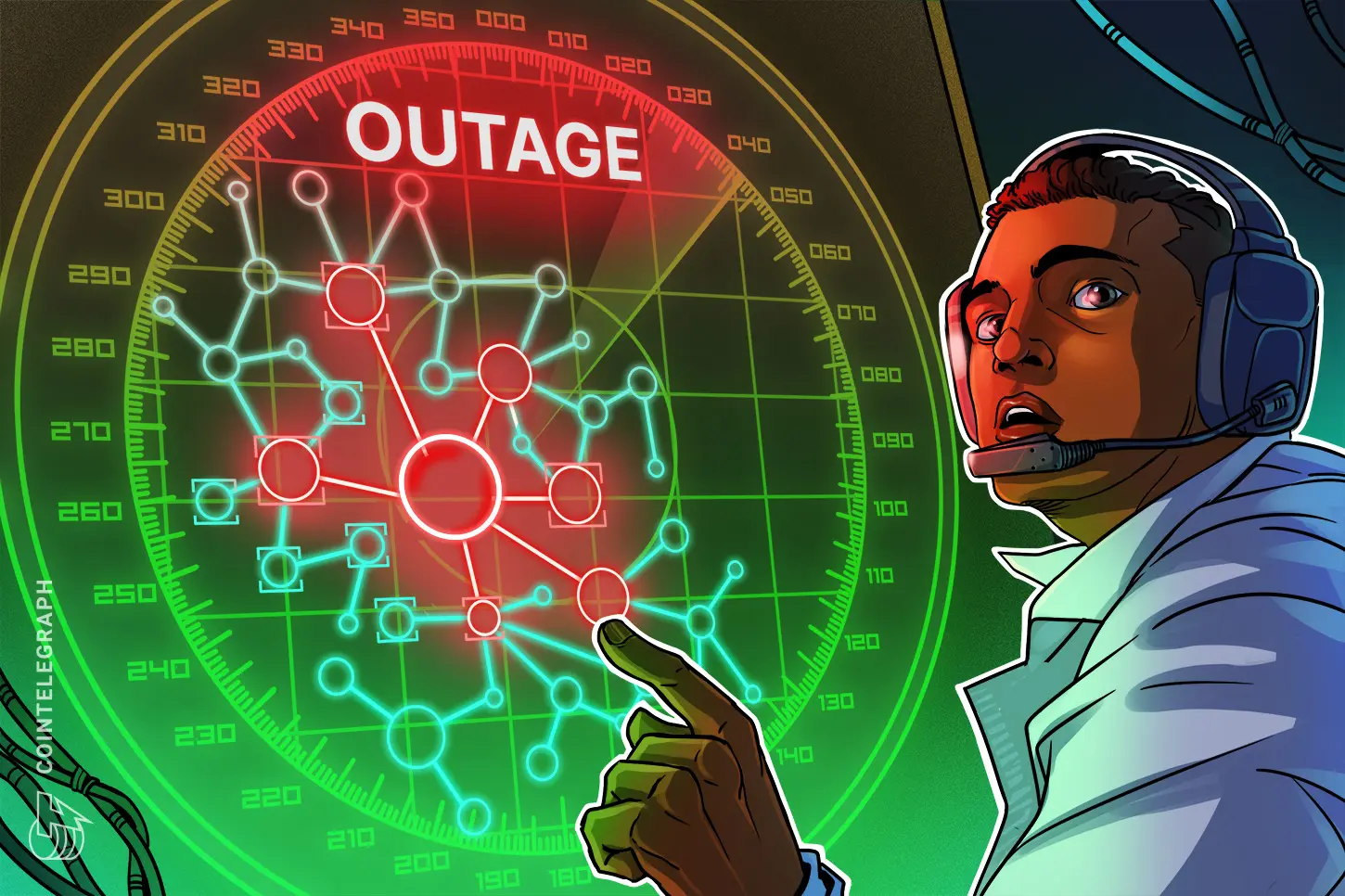
Coinbase's Layer-2 network Base suffered two separate outages in June 2026, both traced back to a critical sequencer bug. The incidents, occurring on Thursday and Friday, halted block production for 116 minutes and 20 minutes respectively. The Base engineering team published a post-mortem on Saturday, detailing the root cause and the steps taken to restore network functionality. This event highlights the vulnerabilities inherent in single-sequencer architectures, a design choice that prioritizes simplicity and speed but introduces a single point of failure.
The post-mortem revealed that the bug resided in the sequencer's block-building logic. Specifically, when the block builder encountered an invalid transaction, it correctly failed during execution but erroneously failed to clear the journal state containing accessed accounts and storage slots. This "stale journal state" persisted, causing subsequent valid transactions to be processed on an inconsistent state, leading to the network's inability to produce new blocks. The team described this as a critical flaw that allowed the state to diverge from the expected outcome after a transaction validation failure.
In response, the Base engineering team quickly deployed a patch to the sequencer to ensure that the journal state is properly updated during execution, even when transactions are invalid. However, the mitigation process was hampered by "infrastructure conditions unrelated to the original bug," which extended the first outage to nearly two hours. Compounding the issue, a "race condition" emerged after the system reset, preventing the sequencers from catching up and triggering the second, shorter outage that lasted 20 minutes. This sequence of events underscores the complexity of fault tolerance in blockchain systems, where a single bug can cascade into multiple failures.
Base is the second-largest Layer-2 network by total value secured, with over $11 billion according to L2Beat. It operates a single sequencer, a centralized component that orders transactions before they are posted to Ethereum. This architectural choice has been adopted by other major L2s like Arbitrum, OP Mainnet, and zkSync Era, all of which have experienced similar outages. The reliance on a single sequencer simplifies transaction ordering and reduces latency, but it also creates a critical single point of failure. When the sequencer fails, the entire network stops producing blocks until the issue is resolved.
The Base outage is not an isolated incident. The network previously stopped producing blocks for 17 minutes in September 2024 and around 30 minutes in August 2025. These recurring issues highlight the ongoing challenge of balancing decentralization, security, and performance in Layer-2 solutions. While optimism and rollup technologies promise scalability, their reliance on sequencers—whether centralized or decentralized—introduces new risks that must be managed through rigorous testing and robust fallback mechanisms.
Going forward, the Base engineering team has outlined several improvements to prevent future outages. These include enhancing protocol "fuzz testing," which involves bombarding the system with random, malformed, or unexpected inputs to uncover bugs before they can affect production. Additionally, they aim to build "graceful recovery" capabilities so that validator nodes do not require manual restarts during future incidents. This would reduce downtime and improve the overall resilience of the network. The team also plans to review the infrastructure conditions that exacerbated the first outage, likely focusing on monitoring, alerting, and automated response systems.
The broader implications of this incident touch on the maturation of the Ethereum Layer-2 ecosystem. As more value and user activity migrate to L2 networks, their reliability becomes paramount. Developers and users alike need assurance that these networks can withstand bugs and infrastructure failures without prolonged downtime. The Base outage also reignites discussions about sequencer decentralization. While Ethereum itself is highly decentralized, many L2s rely on a single entity to operate the sequencer. Projects like Arbitrum and Optimism have explored decentralized sequencers, but these are still in experimental stages. The Base incident may accelerate these efforts, as the industry seeks to reduce dependency on single points of failure.
In terms of technical details, the bug was identified in the block builder component of the sequencer. The "stale journal state" issue is a classic programming error where a temporary data structure is not properly reset after an exceptional condition. In blockchain contexts, such errors can have severe consequences because the state is the source of truth for all transactions. The race condition that followed the system reset is another common issue in distributed systems, where multiple processes compete for shared resources without proper synchronization. The Base team's ability to identify and patch these issues within hours demonstrates the advantages of a centralized development team, but it also underscores the risks associated with centralized control.
From a user perspective, the outages did not result in any loss of funds, as the network's underlying Ethereum security remained intact. However, they disrupted applications built on Base, including DeFi protocols, NFT marketplaces, and games. Users experienced delayed transactions and inability to interact with dApps during the outage window. For a network that has experienced multiple such incidents, building trust will require a track record of reliability and transparency. The prompt publication of the post-mortem is a positive step, but users may demand more robust guarantees and perhaps compensation for downtime in future.
The incident also sheds light on the interdependence of infrastructure in the crypto ecosystem. While the sequencer bug was the primary cause, infrastructure conditions—likely related to cloud providers, monitoring systems, or manual intervention processes—delayed the fix. This suggests that even well-engineered blockchain solutions are only as reliable as the underlying IT infrastructure. As the industry grows, there will be increasing pressure to adopt best practices from traditional high-availability systems, such as redundancy, automated failover, and comprehensive incident response playbooks.
In conclusion, the Base sequencer bug outage serves as a cautionary tale and a learning opportunity for the Layer-2 ecosystem. It highlights the need for rigorous testing, decentralized sequencer designs, and robust infrastructure to ensure continuous operation. While Base remains a leading L2 network, its recent history of outages suggests that significant work remains to be done. The engineering team's planned improvements, including enhanced fuzz testing and graceful recovery, are steps in the right direction, but only time will tell if they are sufficient to prevent future incidents.
As the crypto industry matures, the expectation of "always-on" services will become the norm. Networks that fail to meet this standard risk losing market share to more reliable alternatives. For Base and its parent company Coinbase, maintaining high availability is not just a technical challenge but a business imperative. The post-mortem's candid explanation and clear action plan are commendable, but the true test will be in the implementation and long-term stability of the network.
Source: Cointelegraph News