

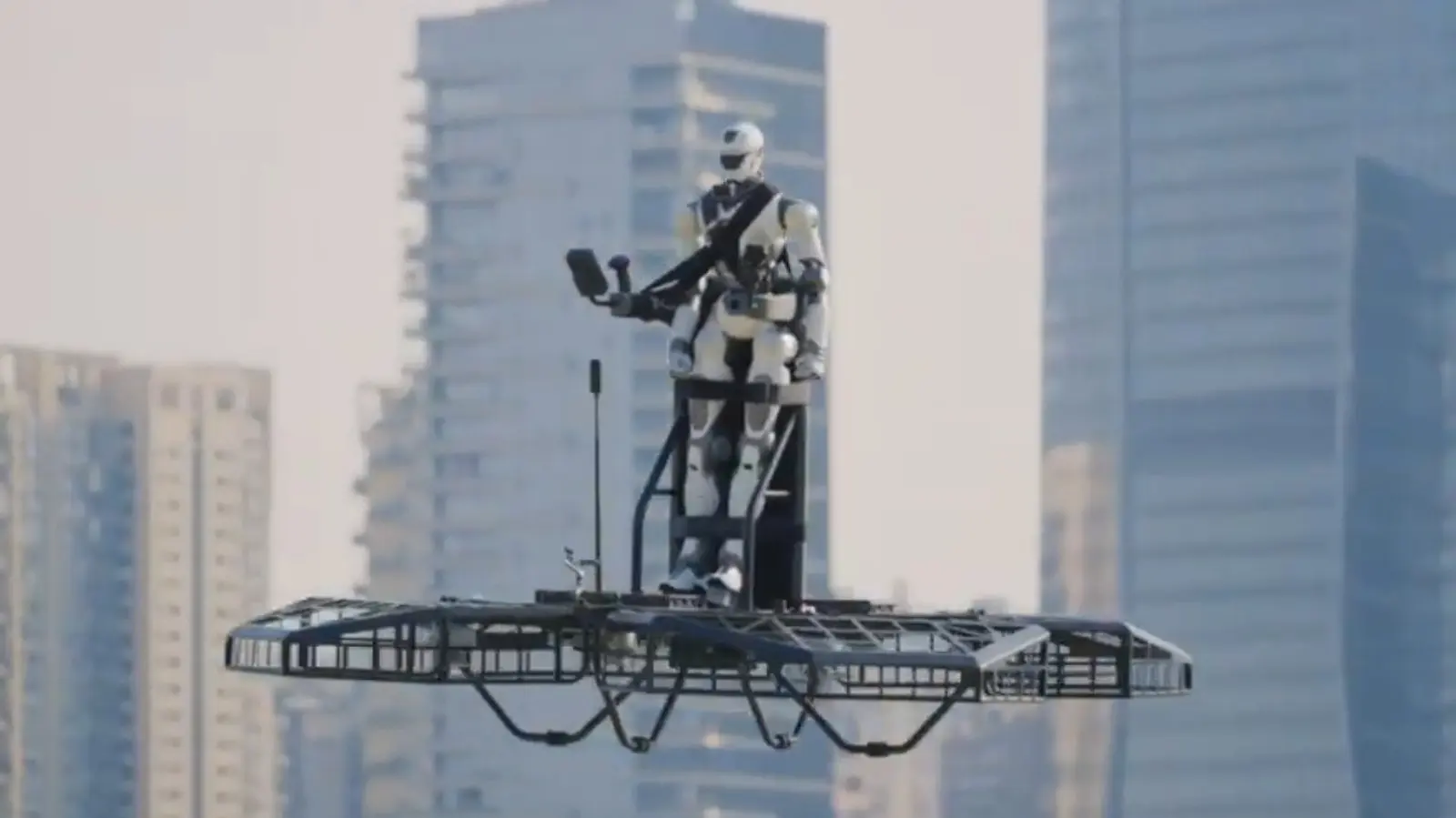
CoolFly, a Chinese startup focused on compact personal aircraft, has introduced a new electric vertical takeoff and landing vehicle named Urban. The company calls it an air skateboard and says it could be the first-ever standing-position personal aircraft. CoolFly also believes the flight controls are intuitive enough that a first-time pilot can learn to operate the machine in about 10 minutes. With a price tag of $99,999 and deliveries scheduled for 2027, the Urban is targeting early adopters who want something closer to a future hoverboard than a traditional airplane.
What is the Urban?
The Urban is a battery-powered eVTOL, or electric vertical takeoff and landing aircraft. Unlike most personal flying vehicles, which have seats and enclosed cabins, the Urban is designed for the rider to stand on a flat platform, much like a skateboard. The machine uses multiple ducted fans to generate lift, and its control layout is deliberately minimal. Riders press a takeoff button to ascend, use a control stick to steer, and rely on built-in sensors to remain stable in the air. According to CoolFly, the entire flight experience feels closer to a ride at a theme park than to conventional piloting.
Company materials describe the Urban as part of CoolFly's longer-term goal of exploring lightweight personal aircraft. The startup wants to make vehicles that are lighter, more compact, easier to operate and more practical for individual users. That statement reflects a growing obsession among technology startups with making flight personal and accessible rather than confining it to airports and licensed pilots.
Designed around automated balance
At the center of the Urban's simplicity is an in-house-developed flight control system called the NA80. The controller processes data from sensors that track the rider's body position and center of gravity. If the rider leans in one direction, the system automatically adjusts the thrust from the fans to keep the platform balanced and moving the way the rider intends. This automation is intended to reduce the learning curve for people who have never flown an aircraft before. The rider is not manually commanding each motor; instead they give high-level inputs and let
Source: SlashGear News