

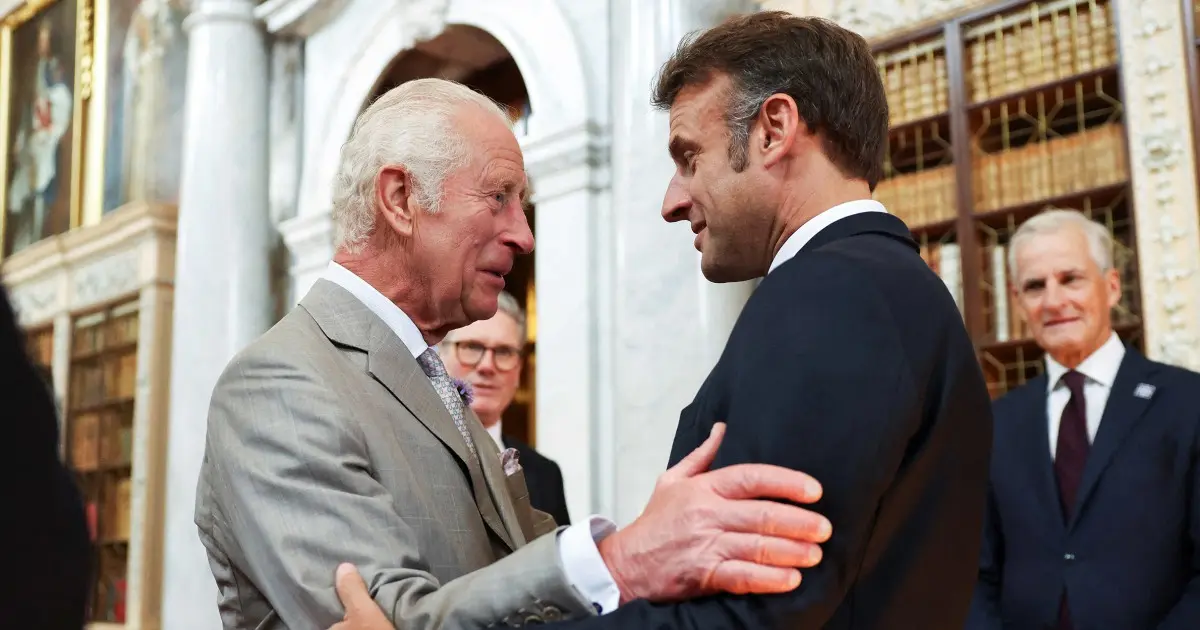
French President Emmanuel Macron arrives in Britain on Tuesday for a three-day state visit that combines royal pageantry with urgent political negotiations. At the heart of the agenda are two of the most pressing challenges facing Europe: stemming the flow of migrants crossing the English Channel in small boats and bolstering Ukraine's security after any future ceasefire with Russia.
A Historic Visit and a Symbolic Reset
The visit, hosted at the invitation of King Charles III, is the first state visit to the United Kingdom by a European Union head of state since Brexit. It carries heavy symbolic weight for the British government under Prime Minister Keir Starmer, who has made resetting relations with the EU a cornerstone of his foreign policy. The acrimonious departure from the bloc in 2020 left deep scars, and this visit is seen as an opportunity to mend fences.
Macron and his wife, Brigitte Macron, will be driven to Windsor Castle by horse-drawn carriage, welcomed by a military honor guard, and treated to a state banquet hosted by the king and Queen Camilla. The British royals made a state visit to France in September 2023, and this reciprocal visit underscores the enduring strength of the bilateral relationship beyond mere politics.
Beyond the ceremonial splendor, Macron will address both houses of Britain's Parliament in the Royal Gallery, a room famed for its ornate Victorian frescoes and gold leaf. That speech is expected to signal a new chapter in Franco-British cooperation, with calls for deeper defense and security ties in the face of Russian aggression and shared challenges at home.
The Migration Challenge
The most immediate and politically sensitive issue on the table is the persistent flow of migrants crossing the English Channel. Britain receives fewer asylum-seekers than Mediterranean European countries, but tens of thousands of people attempt the journey each year from northern France. They use small boats, often inflatable dinghies, to traverse one of the world's busiest shipping lanes, leading to repeated tragedies and ongoing humanitarian concerns.
At a UK-France summit on Thursday, senior government officials from both countries will focus on small-boat crossings. This issue has bedeviled successive governments on both sides of the Channel for years. The UK has struck a series of deals with France to increase patrols and share intelligence, but the impact has been limited. In 2024, about 37,000 people were detected crossing the Channel in small boats, the second-highest annual figure after 46,000 in 2022. More than 20,000 people made the crossing in the first six months of 2025, a jump of roughly 50% compared with the same period last year. Dozens of people have died attempting the journey.
Prime Minister Starmer, whose center-left government was elected a year ago, has pledged to "smash the gangs" behind organized people-smuggling. His strategy relies on closer cooperation with France and countries along the migrants' routes from Africa and the Middle East. The UK is also seeking bilateral agreements with individual nations to facilitate the return of failed asylum-seekers.
British officials have been pushing French police to intervene more forcefully, and recently welcomed images of officers slashing rubber dinghies with knives. UK Home Secretary Yvette Cooper said the French are "bringing in important new tactics to stop boats that are in the water." Britain is also urging France to allow officers to operate against boats in deeper waters, a change Paris is considering. However, migrants' rights campaigners and a police union have warned that such moves could endanger both migrants and officers. Starmer's spokesperson Tom Wells acknowledged that some of the tactics under discussion are "operationally and legally complex, but we're working closely with the French."
Ukraine and the Security Force Debate
Macron and Starmer have worked together closely to rally support for Ukraine, although they have sometimes taken contrasting approaches to former U.S. President Donald Trump. Macron has been more willing to challenge the American leader, while Starmer has adopted a more emollient tone. The two European leaders have led efforts to form an international peacekeeping force for Ukraine to reinforce a future ceasefire with European troops and equipment, backed by U.S. security guarantees.
Trump showed little enthusiasm for the idea during his presidency, and a ceasefire remains elusive. Nevertheless, British officials insist the "coalition of the willing" approach remains viable. Macron and Starmer are due to join an international videoconference on Thursday to discuss planning for the force. Starmer spoke with Ukrainian President Volodymyr Zelenskyy on Monday about the "significant progress being made by military planners," according to a statement from the British leader's office.
The proposed force would be a major undertaking, potentially involving thousands of troops from several European nations. It would aim to secure key cities, ports, and nuclear power plants, while allowing Ukraine to rebuild its own military. However, many details remain unresolved, including the command structure, rules of engagement, and the crucial question of U.S. backing. Without American air cover or intelligence support, the force could be vulnerable to Russian pressure.
Macron has repeatedly stressed that Europe must take greater responsibility for its own security. The war in Ukraine has exposed the continent's overreliance on the U.S. military umbrella. A state visit that includes deep discussions on defense and investment is an opportunity for France and the UK to present a unified front. Both countries are Europe's only nuclear powers and permanent members of the U.N. Security Council, giving them unique roles in shaping the continent's future security architecture.
Trade and Investment in the Background
Beyond migration and defense, the visit also covers trade and cross-channel investment. The UK and France are deeply economically intertwined, with billions of pounds and euros in goods and services flowing between them each year. Macron and Starmer are expected to announce measures to boost cooperation in technology, energy, and infrastructure. The UK has been eager to strengthen its trading relationship with the EU outside the single market, and a smooth relationship with France is key to that goal.
Post-Brexit tensions have gradually eased since the signing of the Windsor Framework, which clarified Northern Ireland's status. The state visit is part of a broader process of rebuilding trust. Starmer's government has sought a more cooperative tone with EU institutions, and Macron's visit is a tangible sign that the era of open antagonism may be behind both sides.
The Human Dimension
While the official agenda focuses on policy, the human dimension is never far away. The Channel migration crisis is a story of desperation and peril. People fleeing war, poverty, and persecution pay thousands of dollars to smugglers for a place on unseaworthy boats. French and British coastguard crews risk their own lives to rescue those in difficulty. The politics of migration have fueled populist movements across Europe, forcing mainstream parties to adopt tougher stances.
At the same time, the plight of Ukraine remains a humanitarian catastrophe. Millions of people have been displaced, and cities continue to come under attack. The proposed security force is not just a military exercise; it is an expression of solidarity with a country invaded by its larger neighbor. The presence of a European peacekeeping force would be a powerful symbol that the international community will not allow Russia to redraw borders by force.
The state visit is also a moment for the British and French people to reflect on their shared history. From the Entente Cordiale of 1904 to the wartime alliance of the 20th century, the relationship has weathered many crises. The inauguration of the high-speed rail link between London and Paris, the Channel Tunnel, brought the two capitals to within a few hours of each other. Economic, cultural, and family ties bind the two nations in ways that go far beyond the political headlines.
Macron's itinerary is packed. After the carriage procession and royal banquet, he will meet political leaders, business executives, and cultural figures. His address to Parliament will be scrutinized for signals on how Europe should respond to the dual challenges of Russian revanchism and unchecked migration. The UK-France summit on Thursday will provide the concrete deliverables, but the atmosphere created by the state visit could shape the tone of those negotiations.
Observers note that both leaders come from different political traditions. Macron, a centrist technocrat, has often spoken of Europe's need for strategic autonomy. Starmer, a pragmatic social democrat, has emphasized security and stability. Yet their agendas align closely on the two top items of this visit. Both want to stem the Channel crossings without sacrificing human rights. Both want to support Ukraine without provoking a wider war. And both recognize that international cooperation is the only way to solve problems that no single country can address alone.
The British public's view of France has shifted over the years, with past disagreements over fisheries, trade, and migration creating tensions. But a state visit of this kind provides an opportunity to highlight common interests and shared values. The royal pageantry is not just decoration; it is a diplomatic tool that creates a platform for difficult conversations in a more amicable atmosphere.
As the visit unfolds, all eyes will be on the joint statements and press conferences. The details of any new migration deal or Ukraine security package will be closely analyzed. But the overarching message is likely to be one of cooperation. As one British official put it, "France is our closest neighbor and one of our most important allies."
The three days of talks, dinners, and ceremonies will culminate in a series of agreements that could shape the future of European border security and defense. For now, the immediate task is to manage the expectations of both publics while making progress on the ground. The Channel and the war in Ukraine are tests of Europe's ability to act together. The Franco-British relationship, despite its ups and downs, remains one of the most important partnerships on the continent.
Source: NBC News News