

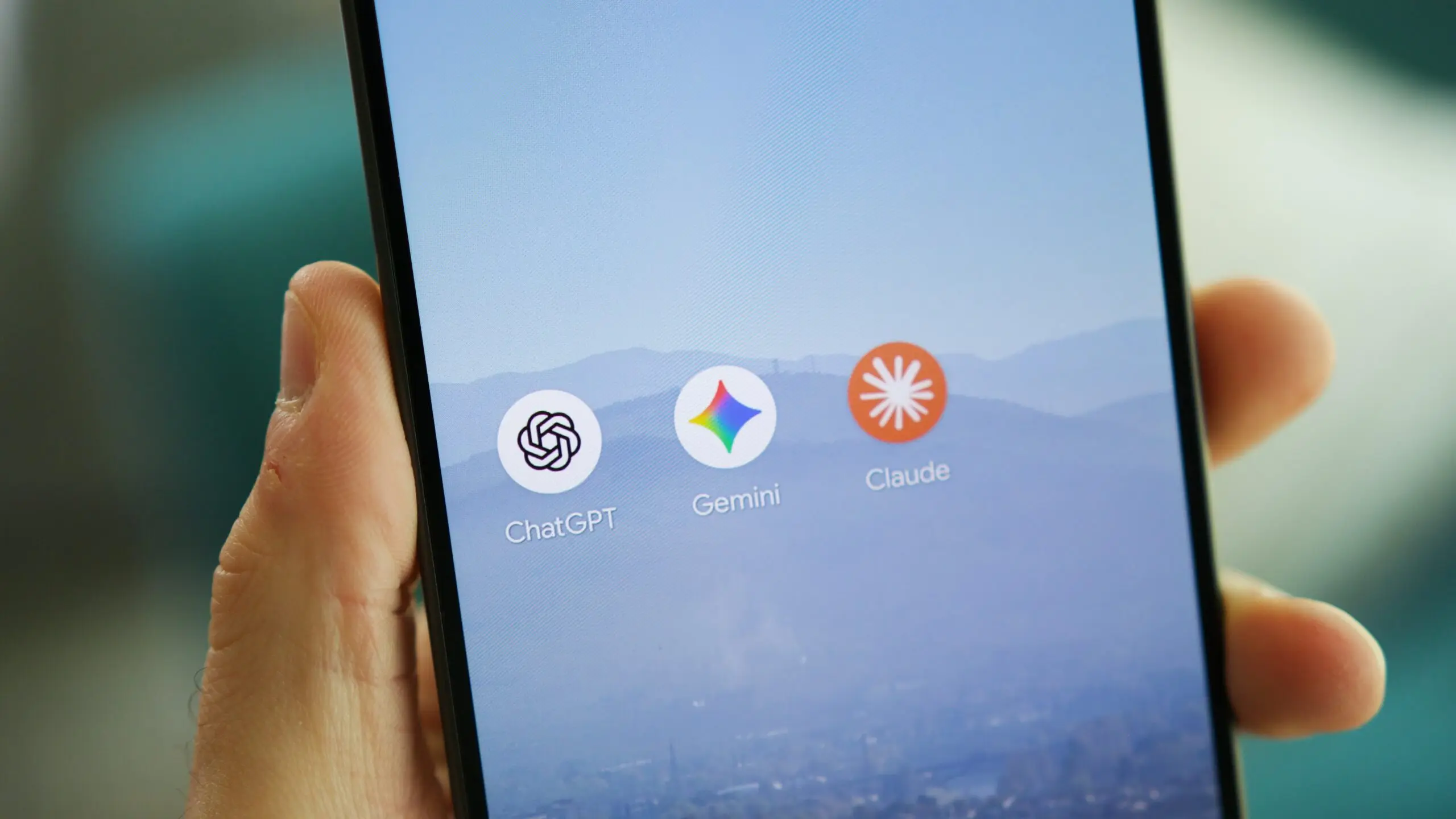
Google is reportedly on the verge of launching Gemini 3.8 Flash, a model that could reshape the vibe coding landscape and give DeepMind a stronger foothold in the competitive AI coding market. People familiar with internal testing have described the model as a major step forward, with coding performance better than an unspecified version of Anthropic's Opus in at least one internal comparison. The launch might happen as soon as September 2, which means it could land only weeks after Gemini 3.7 Flash reached developers. If the reported performance holds up, Google could finally close the gap with Claude Fable, GPT-5.6 Sol, and DeepSeek V4, three models that have dominated recent coding benchmarks.
Key facts at a glance
- Google is reportedly close to launching Gemini 3.8 Flash, possibly on September 2.
- Internal tests reportedly show Gemini 3.8 Flash outperforming an unspecified version of Anthropic's Opus on coding tasks.
- Google has reportedly dropped plans for Gemini 3.5 Pro because it did not offer enough improvement over its Flash models.
- The next major Pro model from Google may arrive only with the Gemini 4.0 generation.
A new wave of vibe coding
The emergence of Gemini 3.8 Flash comes at a moment when vibe coding has moved from a niche phrase to a central product strategy across the AI industry. Vibe coding typically refers to building software by writing natural-language prompts that instruct an AI model to generate or edit code, rather than manually typing out every function and class. It allows developers to describe what they want in plain English, review the output, and make adjustments through follow-up prompts. The approach has become increasingly popular because it lowers the barrier to software creation and speeds up prototyping, though it also raises important questions about code quality, security, and maintainability.
Google has leaned into this trend openly. Earlier in March, Google CEO Sundar Pichai said that 75% of Google's own code is vibe coded and approved by engineers. That statement was striking not only because it highlighted how quickly vibe coding has been adopted inside one of the world's largest technology companies, but also because it signaled a broader shift in how AI models are evaluated. Instead of simply scoring well on multiple-choice benchmarks or mathematics problem sets, modern frontier models are increasingly judged by how well they behave in agentic coding workflows, where they must plan, write, debug, and refactor software across many turns.
Gemini 3.7 Flash already improved Google's position in this area, with coding capabilities that were described as better than Claude's Sonnet 5. But the competition has not stood still. Anthropic has pushed its Claude family into coding tools such as Claude Cowork, which can be powered by models like Fable or Mythos. OpenAI has made ChatGPT's Codex a central part of its coding assistant experience. Cursor, now owned by xAI, has also become a favorite among developers who want an AI-native editor. Against this backdrop, a mid-tier Flash model from Google needs to do more than just generate snippets; it needs to function as a reliable pair programmer that can handle real-world repositories, reason about project structure, and execute multi-step tasks.
Why Gemini 3.8 Flash matters now
The reported timing of Gemini 3.8 Flash is important for several reasons. First, the model would arrive just weeks after Gemini 3.7 Flash, which suggests a unusually fast release cadence for DeepMind. Second, it would be one of the first major tests of DeepMind's new organizational direction following a rejig that moved co-founder, CEO, and Nobel laureate Demis Hassabis into a broader role overseeing AI development across Alphabet. Third, the launch would come at a time when developers have more high-quality coding models to choose from than ever before, making differentiation difficult.
The pressure on Google is particularly visible on community-driven leaderboards. According to BencLM's vibe coding leaderboard, Anthropic's Claude Fable and OpenAI's GPT-5.6 Sol both sit inside the top 10 best-performing frontier models for coding tasks. Gemini 3.7 Flash, by contrast, ranks 17th. A jump from 17th into the top tier would be a meaningful achievement, especially for a Flash model that Google may position as a fast and cost-efficient option rather than a heavyweight Pro system. If Gemini 3.8 Flash can deliver near-flagship coding performance at Flash-level speed, it could change how developers weigh Google's AI offerings against Claude, GPT, and other rivals.
The release could also be a direct response to z.AI's GLM-5.3-Flash, a model that recently gained widespread attention after being previewed as a stealth model under the codename Ox Alpha on OpenRouter. Stealth previews have become a common tactic in the AI industry because they allow a model to be tested by real users under a neutral name, avoiding brand bias and giving researchers a clearer sense of how the model performs in the wild. GLM-5.3-Flash reportedly impressed developers with strong coding ability and fast response times, adding yet another competitive entry to the market. Google may see Gemini 3.8 Flash as a way to reclaim attention and reassure developers that it can move quickly when the landscape shifts.
A changing competitive field
The vibe coding race is no longer limited to a handful of familiar names. Anthropic's Claude models have long been praised for their careful reasoning and strong code generation, and the company has extended that reputation into agentic workflows with Claude Cowork. OpenAI has responded by turning Codex into a more complete assistant and by releasing GPT-5.6 Sol, which appears to have been optimized for long-horizon coding tasks. DeepSeek V4 has also become a notable force in open-weight AI, giving researchers and startups a way to run competitive models on their own infrastructure. In this environment, Google needs a model that can appeal both to individual developers using web-based tools and to enterprises that need scalable, secure coding assistance.
Google's broader Gemini assistant strategy has often positioned the model as general-purpose technology. Gemini is integrated into Android, Search, Workspace, Cloud, and many other products, making it less of a specialist and more of an ambient intelligence layer. That breadth can be an advantage, but it can also make it harder for Google to win focused comparisons in specific domains such as coding. A dedicated push with Gemini 3.8 Flash suggests that Google understands the importance of winning over the developer community. Developers tend to be early adopters, influential voices, and powerful distribution channels for new AI tools. If they recommend Gemini for coding, that sentiment can spill over into many other products.
What happened to Gemini 3.5 Pro?
One of the more surprising details in the reporting around Gemini 3.8 Flash is the apparent cancellation of Gemini 3.5 Pro. Internal evaluations reportedly found that Gemini 3.5 Pro did not offer enough meaningful upgrades over the Flash lineup to justify a separate release. That decision may seem counterintuitive, since Pro models are typically expected to be larger, slower, and more capable than Flash models. But if the speed and efficiency of Flash models have improved enough to close the capability gap, Google may no longer need to ship a dedicated Pro model for every generation.
The decision could also reflect a changing view of what matters in AI product design. For coding assistants, latency and cost can matter just as much as raw benchmark scores. Developers often prefer a model that responds quickly and cheaply over one that produces marginally better code but takes too long or costs too much to use at scale. Flash models are designed to be lightweight versions of Gemini, optimized for faster responses and lower operational overhead. By skipping Gemini 3.5 Pro and concentrating on Flash, Google may be signaling that it wants to win the practical developer experience battle rather than the theoretical frontier benchmark battle.
That said, the Pro line is not dead. Reports indicate that Google might hold off until Gemini 4.0 to release its next Pro model. The same reports caution that Gemini 4.0 Pro seems far from complete, which suggests that Google's product roadmap may shift again before the end of the year. For now, Gemini 3.8 Flash is the near-term release that matters most, and it is expected to shoulder much of the coding-focused momentum for the company.
Wider implications for Google and DeepMind
The launch of Gemini 3.8 Flash would come at a sensitive moment for DeepMind. Hassabis has moved into a broader role overseeing AI development across Alphabet, a change that gives him more influence but also spreads his focus across many different teams and research programs. A strong release from DeepMind could help justify that reorganization and reassure Alphabet executives that the company can maintain its momentum in frontier AI. On the other hand, a disappointing launch could intensify scrutiny and invite questions about whether the organizational changes have created unnecessary friction.
There is also the question of enterprise adoption. Many companies are still evaluating which AI coding assistant to standardize on. Some are attracted by OpenAI's ecosystem, others by Anthropic's safety-focused brand, and still others by open-weight models that can be deployed inside private cloud environments. Google's advantage is that it already controls a massive cloud business and can offer Gemini through Google Cloud with enterprise-grade security, compliance, and administrative controls. If Gemini 3.8 Flash is genuinely competitive with the best coding models available, Google Cloud could become a more obvious choice for organizations that want to bring AI into their software development life cycle without relying on a third-party startup.
The educational side of vibe coding also matters. As more non-professional developers experiment with AI code generators, the quality and safety of these models become crucial. A model that is great at producing small scripts may still struggle with larger codebases, subtle bugs, or security vulnerabilities. Google has an opportunity with Gemini 3.8 Flash to demonstrate that vibe coding can be both fast and reliable. The reported performance gains over Opus, if real, suggest that Google has invested heavily in training techniques that improve code comprehension, planning, and debugging behavior.
What to watch next
Several signals will determine whether Gemini 3.8 Flash actually changes the market. The first is availability: if the model rolls out broadly through Google AI Studio and the Gemini API shortly after announcement, developers can quickly test its coding abilities against their own workloads. The second is price: Flash models are expected to be cheaper than Pro models, but pricing still needs to be attractive enough for high-volume coding use cases such as automated code review, test generation, and batch refactoring. The third is third-party integration: tools such as Cursor, Claude Cowork, and ChatGPT's Codex have built strong user habits, and Google needs to make Gemini available through the interfaces developers already use, not just through its own chatbot.
Another important factor is the model's agentic capabilities. Modern coding assistants are expected to read files, run commands, inspect errors, edit multiple files, and ask clarifying questions. A model that only writes code in response to a prompt is no longer enough. Developers want an assistant that can complete entire tasks, manage context windows effectively, and produce changes that fit the existing style and architecture of a project. The reported internal comparisons with Opus suggest that Gemini 3.8 Flash may have made real progress in these areas, but the public will need to see consistent behavior on real-world repositories before drawing firm conclusions.
The response from competitors will also shape the story. Anthropic and OpenAI are unlikely to leave the top of the coding leaderboard unchallenged for long, and xAI's ownership of Cursor gives it a direct channel to developers. DeepSeek, z.AI, and other fast-moving labs have shown that smaller or newer teams can disrupt the market with clever training methods and aggressive pricing. Google's decision to release Gemini 3.8 Flash now may be an attempt to get ahead of the next wave of announcements and establish a stronger foothold before the field becomes even more crowded.
There is also the broader user experience question to consider. Google has spent years folding Gemini into Android, Search, Workspace, and other consumer products. A better coding model can improve all of those experiences, especially as users ask their phones or laptops to help them automate tasks, build small applications, or analyze spreadsheets. Vibe coding may have started as a developer trend, but it is quickly becoming a mainstream AI skill. If Gemini 3.8 Flash makes coding feel more natural, accessible, and productive, it could help Google remind both consumers and businesses that Gemini is more than a chatbot. It could become a reliable digital collaborator for turning ideas into software. That prospect, more than any single benchmark, may be why Gemini 3.8 Flash is shaping up to be a launch worth watching.
Source: Android Authority News