
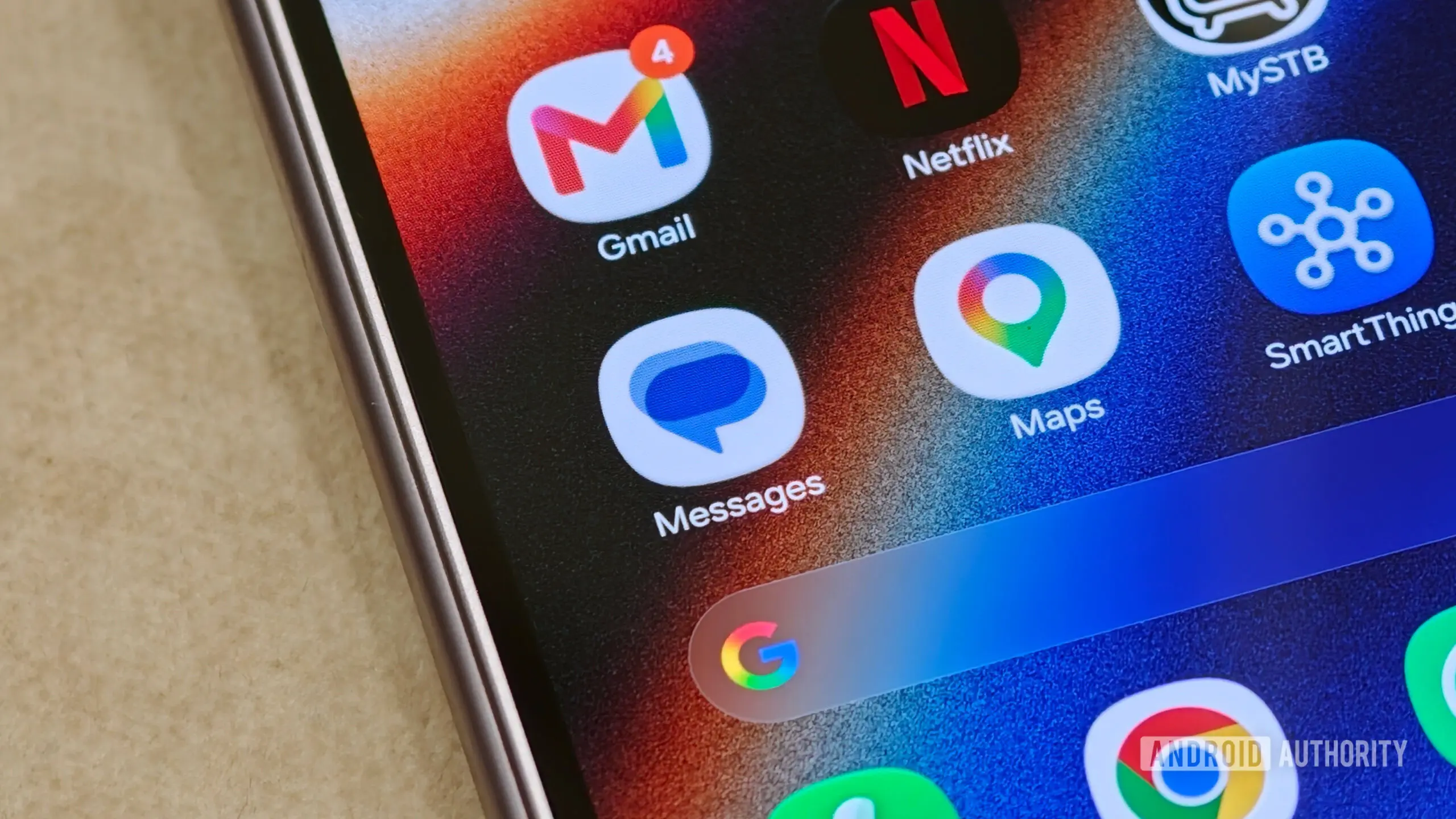
Google Messages is rolling out a significant privacy and transparency tool for the AI age. The app now supports Content Credentials, a technical standard that lets users inspect the origin and editing history of photos, videos, and audio files shared in conversations. With AI-generated images becoming increasingly convincing, this feature offers a practical way to see whether a file was edited or generated using artificial intelligence tools.
The feature was first spotted in development a couple of months ago, and it has now reached users on Android. It is designed to answer a question that has become common in group chats around the world: was this image captured by a camera, edited with software, or created entirely by AI? While Content Credentials do not provide a definitive verdict on authenticity, they give a crucial piece of the puzzle by showing the record attached to the file itself.
What are Content Credentials?
Content Credentials are based on the C2PA standard, which stands for Coalition for Content Provenance and Authenticity. This initiative was developed by a consortium of technology companies, media organizations, and camera manufacturers to create a common way to trace where digital content comes from and how it has been altered.
Think of Content Credentials as a digital paper trail encapsulated within the file. When a photograph is taken with a camera that supports the standard, details like the camera model and capture time can be recorded. If that image is later edited in software that also supports Content Credentials, the editing history is appended to the file. This information travels with the image as it is shared, copied, or downloaded, meaning that recipients can inspect the chain of custody when the feature is supported by their apps.
For example, imagine that a friend sends you a stunning sunset photo. In Google Messages, you can now check the file's details to see whether it started as an unedited JPEG from a smartphone camera or went through multiple rounds of generative AI enhancement. The metadata can show that an image was edited with AI tools, or in some cases, that it may have been edited by AI even if the software doesn't specify which tools were used.
How to check AI editing history in Google Messages
Google has made checking Content Credentials simple. You do not need to dig through complex settings or install third-party applications. According to the rollout, the entire process can be completed within the Google Messages app on an Android phone.
- First, open the Google Messages application on your Android device.
- Navigate to the conversation that contains the photo, video, or audio file you want to inspect.
- Press and hold the message containing the media item.
- Tap the Info option from the menu that appears.
- Scroll down in the details screen until you find the section labeled How this was made.
- If Content Credentials are available, you will see information about the file's origin and editing history, including whether AI tools were involved.
When the credentials are present, the app can display a range of outcomes. You may see that the file was captured using a camera or microphone. It might indicate that the media was edited using AI tools, edited using non-AI software, or that the app cannot confidently determine whether AI was involved. In ambiguous cases, Google Messages will tell you that the file may have been edited with AI tools.
If you do not see the How this was made section at all, that simply means the file in question does not have compatible Content Credentials attached to it. This can happen for many reasons, such as when the file was created by software that does not support the C2PA standard or when the metadata was stripped during sharing. The absence of this section is not proof that the file is authentic or unmodified.
Important limitations to understand
Google Messages is not a truth detector. Content Credentials only show the history that has been recorded with the file. If a creator deliberately removed the credentials or if a piece of software does not write them in the first place, the app will have no information to display. This means that just because you see no editing history does not guarantee that a photo is real.
Conversely, the presence of Content Credentials showing AI editing does not necessarily mean the image is entirely fake. A perfectly innocent TikTok video may have been edited using an AI background remover, or a photographer may have used a generative fill tool to remove a stray object from an otherwise genuine camera shot. Content Credentials provide context about the file's provenance, not a simple judgment about truth or falsehood.
The feature is also limited by platform support. At the time of this rollout, Content Credentials are available only in the Google Messages app on Android. You cannot check this information through Google Messages for web, which syncs your conversations to a desktop browser. If you want to investigate a suspicious photo or video, you will need to pull out your Android phone and access the conversation there.
Another practical limitation is that most media files shared today do not yet carry Content Credentials. The overall ecosystem is still in the early stages of adoption. Major camera makers, photo editing applications, and social media platforms are gradually adding support, but there is no guarantee that every photograph taken or edited in 2026 will include this metadata.
The importance of content provenance in the AI era
AI-generated and AI-edited media have become sophisticated enough that the old visual cues are no longer reliable. Images and videos that used to give themselves away through odd finger counts, garbled text, or unrealistic shadows can now look indistinguishable from standard camera captures. In group chats, this trend has created an environment where misinformation and AI-fabricated content can spread quickly, often without any warning to the recipient.
Content Credentials offer a more structured solution than relying on human perception. As the standard gains traction, you could eventually check the provenance of news images, user-generated videos, and even audio clips before deciding whether to trust them. This has broad implications for journalism, where verifying the authenticity of user-submitted content is a major challenge. It also matters for personal communication, especially as synthetic media becomes a tool for scams, identity theft, and online harassment.
There are also important questions about the future of image editing. Professional photographers and digital artists often use AI tools as part of their workflow. Content Credentials allow them to disclose that process without making their work look deceptive. A photojournalist can show that their image was edited for exposure and color correction but not altered in any other meaningful way. A marketing team can confirm that a product render was AI-generated from the start, setting clear expectations for audiences.
The system is not perfect, and there are legitimate concerns about privacy and over-disclosure. Some users may not want every detail of their photo editing process to be visible to others. But Content Credentials are ultimately a disclosure mechanism, not a surveillance system. The standard does not share personal information about the user, only technical details about the file's creation and modification history. For that reason, it could serve as a valuable trust layer in digital communication.
What the launch means for Google Messages users
For everyday users, the addition of Content Credentials is a practical step forward in media literacy. It shifts the focus from attempting to spot flaws in AI-generated images to investigating the data attached to the file. That is a more reliable method, even if it does not work for every image you receive.
Imagine a breaking news event where a friend forwards you a supposed photo of a car accident near your neighborhood. Before sharing it further, you can now check whether the file contains Content Credentials showing that it was created by an AI generator rather than a camera. If the credentials are missing, you at least know that you cannot establish its history through this method, which is useful information in its own right.
The convenience of the in-app experience is also a positive sign for broader adoption. Users do not need to leave Google Messages to download a special tool or visit a website. The feature integrates directly into the existing messaging workflow, making it easy to use in the moment when you encounter something suspicious. That frictionless design could encourage more people to check media before they hit forward, reducing the spread of misleading content in personal chat networks.
There is still a long way to go before Content Credentials are found on every photograph, video, and audio recording. The standard needs support not just from messaging apps but from the entire chain of media production and distribution. Cameras need to embed credentials at capture time, editing software needs to preserve and append them, and platforms need to display them to users. Google Messages is one important link in that chain, but it is not the only one.
The broader tech industry has also shown interest in content provenance. Several major companies have already signed on to support C2PA, and some social media platforms have begun displaying Content Credentials on AI-generated images. Over the next few years, we can expect to see this metadata become more common in everything from smartphone photos to high-end studio productions.
For now, the Google Messages implementation gives Android users a head start. If you receive a suspicious media file in a chat, the ability to explore its history in a few seconds is a meaningful improvement over squinting at an image and wondering whether a weird reflection is a sign of artificial generation. It may not fix the challenge of AI misinformation overnight, but it points in a useful direction for the future.
Source: Android Authority News