

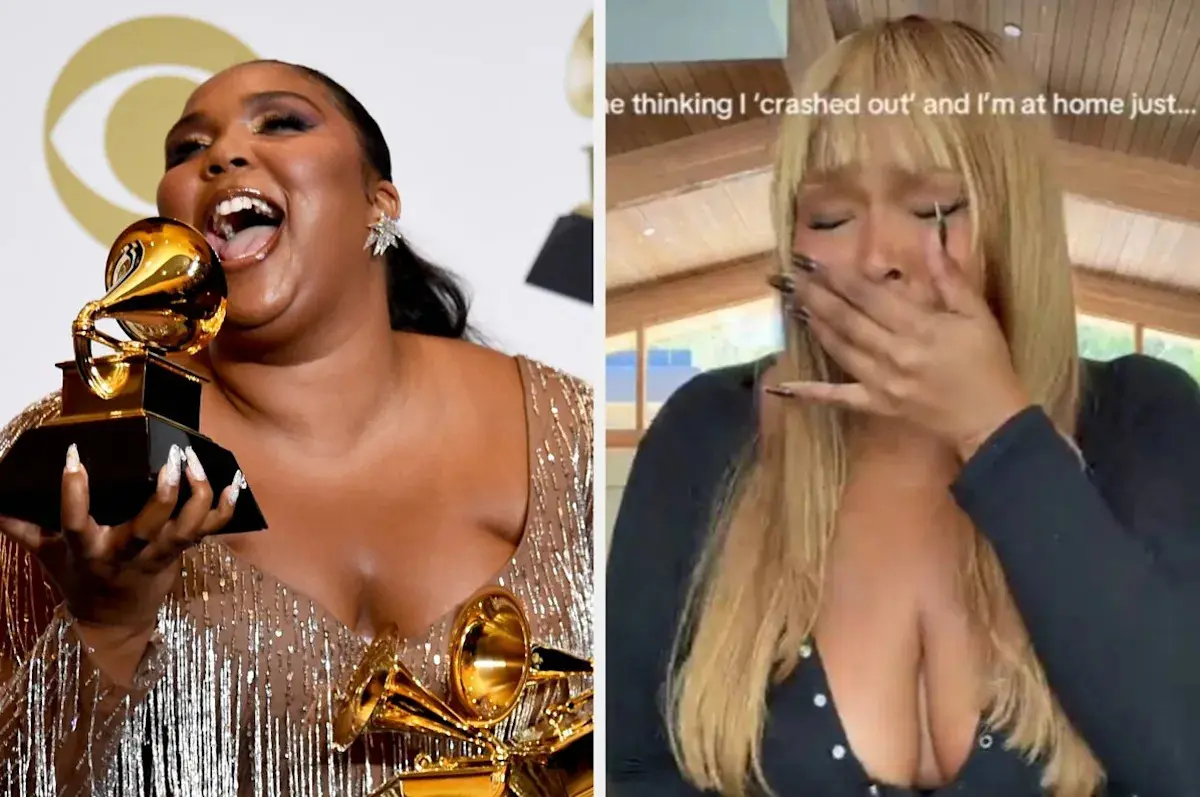
Lizzo Defies Criticism With Joyful TikTok Video After Rolling Stone Report Flags Album Flop
Lizzo is back in the headlines, but this time it's not for her music – well, not entirely. The Grammy-winning artist has responded to a damning report from Rolling Stone that detailed the commercial underperformance of her latest album, Bitch. And her response, as usual, is anything but expected.
Earlier this week, Rolling Stone published a piece examining why Lizzo's fifth studio album, released on June 5, 2026, failed to chart on the Billboard 200. The magazine spoke to multiple record executives and industry insiders, who offered various theories for the album's lackluster reception. According to the report, Bitch sold only 2,649 copies in its first week, with less than 2.7 million streams. In its second week, streaming numbers dropped below a million, and sales tumbled to 650 copies.
Experts quoted in the article cited several possible reasons for the decline, including that Lizzo may have never developed a core fanbase willing to follow her through controversy, that her music no longer delivers the same energy as her earlier hits, and that ongoing lawsuits have eroded public trust in her image.
On Wednesday, Lizzo took to TikTok to share a video of herself dancing and smiling to one of her new songs. The caption read: "Imagine thinking I 'crashed out' and I'm at home just…" The message was clear: she's not letting the negative press get her down.
But the public reaction to her defiant stance was mixed. One of the top comments on the video read: "Not you trying to convince us you are unbothered." Another commenter jibed: "How she got more likes then album sales." However, others came to her defense, with one fan asking: "y'all are bullies. what's your goal by telling her her album flopped?" and another observing: "Hating is soo normalised this days."
Lizzo's career trajectory has been a roller coaster. She first burst onto the mainstream scene in 2019 when her 2017 single "Truth Hurts" finally caught fire after being featured in the Netflix film Someone Great. The song topped the US Billboard Hot 100, becoming the longest-leading solo song by a female rapper at the time. That same year, she released hits like "Juice" and "Tempo," while her 2016 song "Good As Hell" also climbed the charts three years after its initial release. At the 2020 Grammys, Lizzo received eight nominations, the most of any artist that year, and took home three awards, including Best Pop Solo Performance for "Truth Hurts."
Her success continued with the 2022 single "About Damn Time," which won Record of the Year at the 2023 Grammys, making her the first Black female singer since Whitney Houston in 1994 to win that category. She sold out arenas worldwide and became a symbol of body positivity and self-love. But the fairy tale began to unravel in August 2023, when three former backup dancers filed a lawsuit against Lizzo, her production company, and her dance captain Shirlene Quigley. The suit alleged sexual, religious, and racial harassment, disability discrimination, assault, false imprisonment, creating a hostile work environment, and body-shaming.
Lizzo denied all allegations, but the damage was done. A second similar lawsuit was filed shortly afterward, though it was later dismissed when a judge ruled the plaintiff could not sue Lizzo personally because she technically worked for Lizzo's tour company. Parts of the first lawsuit have also been thrown out, including the body-shaming claims, but the case remains ongoing with no final verdict.
The controversy took a toll on Lizzo's public image and, by extension, her music career. Her 2025 single "Love in Real Life" and the mixtape My Face Hurts From Smiling failed to replicate the commercial success of her earlier work. When her album Bitch dropped in June 2026, it was met with little fanfare. The lead single, "Don't Make Me Love U," and the follow-up, "Bitch," both failed to chart on the Billboard Hot 100.
In response to a viral tweet questioning where her fanbase had gone, Lizzo offered a candid explanation on June 7, 2026. She wrote on X: "I actually can answer this: the industry changed so much in the last 3 yrs. streaming replaced radio & I was a radio darling. That's how my fans discovered my music. Not to mention the very obvious & public attack on my career changed things. But I'm out here doing my absolute best and u can't knock a bitch for that." The tweet raised eyebrows, with many noting that while streaming has indeed altered the music landscape, other artists have successfully transitioned from radio to streaming by building loyal fanbases through social media and touring.
The Rolling Stone report added fuel to the fire by publishing a series of quotes from anonymous record executives, some of whom questioned whether Lizzo ever had a sustainable core audience. One executive said her music "no longer delivers the same joy," while another suggested the lawsuits caused people to "lose faith" in her as a person. The report also noted that the album's poor performance was not entirely surprising given the lack of promotional push from her label and the absence of major radio play.
Lizzo's TikTok video response seems to be an attempt to reclaim the narrative, showing herself enjoying life and making music on her own terms. But the mixed reactions suggest that the public is still divided. Some see her carefree attitude as a sign of resilience, while others view it as a lack of accountability or awareness of the gravity of the allegations against her.
It's worth noting that Lizzo has faced scrutiny beyond the lawsuits. In late 2023, she was criticized for a series of comments about her former dancers, and she has occasionally clashed with fans and critics on social media. However, she has continued to produce music and perform, albeit on a smaller scale. Her recent shows have been at smaller venues, a stark contrast from the arena-filling tours of 2022.
The entertainment industry has seen many stars experience dramatic rises and falls, but Lizzo's case is particularly notable because of the speed with which her fortunes changed. Just a few years ago, she was one of the most celebrated artists in the world, winning Grammy after Grammy and headlining major festivals. Now, her new album struggles to move even a few thousand units. The question on many minds is whether she can rebuild her career and regain the trust of her audience, or if this marks the beginning of a permanent decline.
Lizzo's defiance in the face of criticism may be a strategic choice. By posting a video of herself dancing and looking happy, she signals that she is unbothered by the negative press. But as some commenters pointed out, the video garnered more likes than her album did sales, highlighting the disconnect between her social media presence and her actual commercial performance.
Beyond the numbers, there is a deeper conversation about how the music industry treats artists who fall from grace. Lizzo's situation touches on issues of race, body image, and the pressures of fame. Many of her fans still see her as a trailblazer for body positivity and self-acceptance, even if the lawsuits have complicated that image. Others argue that the allegations should not be dismissed, and that her career decline is a natural consequence of the public losing trust in her.
For now, Lizzo appears to be focusing on the positive, at least publicly. She continues to engage with fans on TikTok and other platforms, sharing snippets of new music and moments from her daily life. Whether her next release will perform better remains to be seen, but one thing is certain: the former pop powerhouse is not ready to give up without a fight.
As the music industry evolves and listeners' tastes shift, artists must adapt or risk being left behind. Lizzo's theory about the transition from radio to streaming is valid, but it's also true that many artists have thrived in the streaming era by building direct connections with their audiences through social media, exclusive content, and consistent engagement. Lizzo has a large social media following, but that hasn't translated into album sales or streams. The disconnect suggests that her digital presence may not be enough to overcome the negative publicity surrounding her legal battles.
The road ahead for Lizzo is uncertain. She still has a loyal core of supporters who cheer her on, but the broader music-buying public appears to have moved on. Whether she can stage a comeback or will fade into obscurity is a story that will unfold in the coming years. For now, she's dancing to her own beat, regardless of what anyone else thinks.
Source: Yahoo Entertainment News