

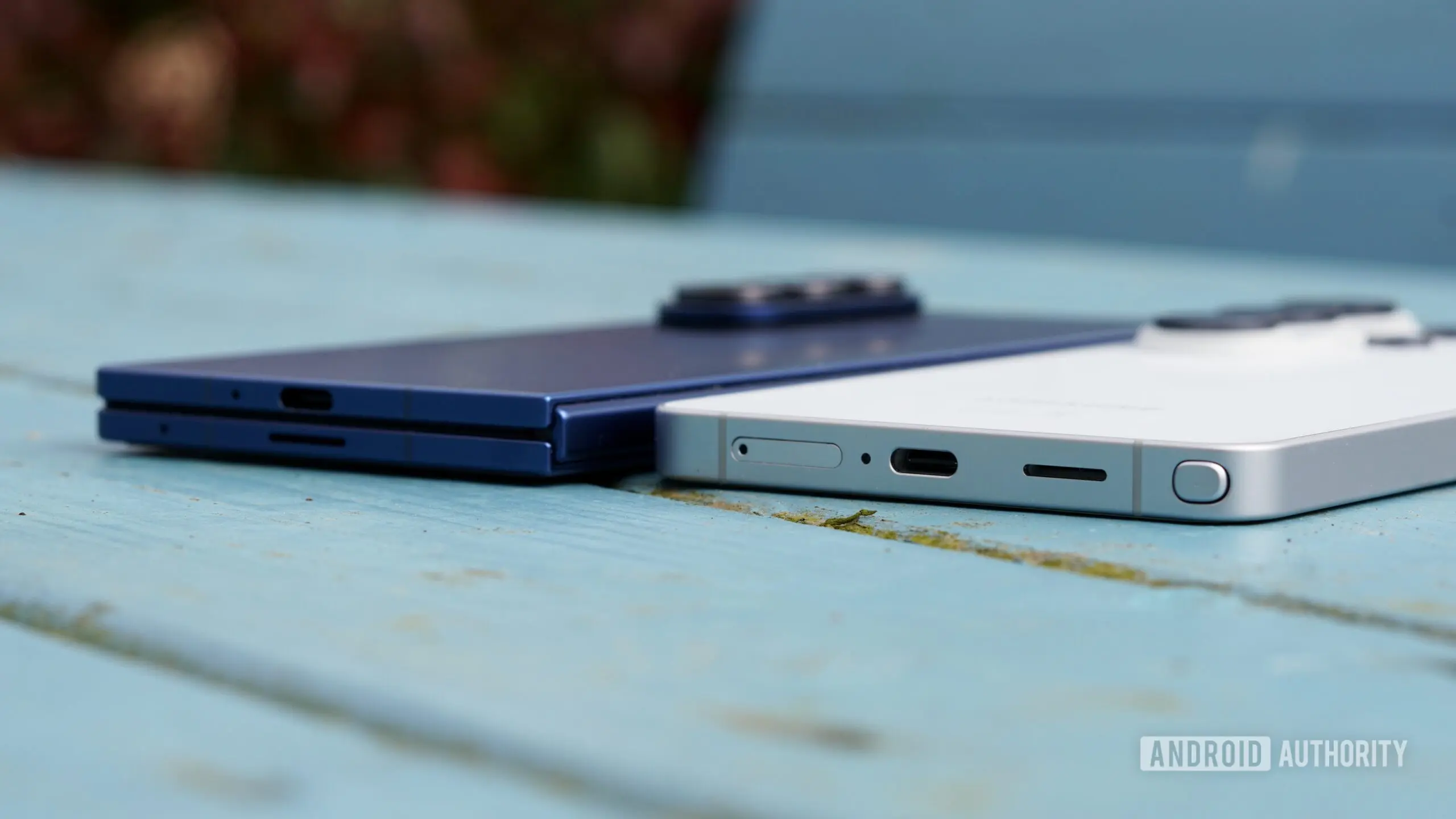
Leaks have been pouring in for Samsung's upcoming Galaxy Z Fold 8, and the latest renders offer a compelling reason to consider this foldable over a traditional slab phone like the Galaxy S26 Ultra. Two new images shared by a reliable tipster showcase the device in both folded and unfolded states, as well as a direct side-by-side comparison with the S26 Ultra. While no new specifications accompanied these renders, they confirm previous rumors about a major design evolution.
What the Renders Reveal
The first render displays the Galaxy Z Fold 8 from multiple angles, highlighting its shorter and wider footprint compared to its predecessor, the Galaxy Z Fold 7. When folded, the device measures 123.9 x 81.9 x 9.7 mm, making it notably more compact in height but broader in width. Unfolded, it expands to 123.9 x 161.4 x 4.5 mm, offering a nearly square inner display that is ideal for multitasking and media consumption. The second render places the Fold 8 next to the Galaxy S26 Ultra, showing that the foldable is significantly shorter and wider than the flagship slab phone. The S26 Ultra, by contrast, measures 163.6 x 78.1 x 7.9 mm and weighs 214 grams, while the Fold 8 tips the scales at just 201 grams.
This shift in proportions is a deliberate move by Samsung to address one of the most persistent criticisms of foldable phones: their narrow, tall cover screens. The Galaxy Z Fold 8's wider form factor promises a more natural typing experience and a better grip when closed, bringing it closer to the feel of a traditional smartphone. When open, the aspect ratio moves away from the nearly square shape of previous models, providing a larger canvas for apps and video content. This design choice echoes feedback from users who found the Fold 7's cover screen too cramped.
Comparing to the Galaxy Z Fold 7
To appreciate the Fold 8's evolution, it helps to look at its direct predecessor. The Galaxy Z Fold 7 measured 158.4 x 72.8 x 8.9 mm when closed and 158.4 x 143.2 x 4.2 mm when opened, weighing 215 grams. The Fold 8 is 34.5 mm shorter but 9.1 mm wider, making it more pocketable while offering a larger unfolded display area. It is also 14 grams lighter, a significant reduction that improves one-handed usability. Interestingly, the Fold 8 is 0.8 mm thicker than the Fold 7 when folded, which could accommodate a larger battery or improved hinge mechanism. The overall result is a device that feels sturdier and more balanced.
This redesign puts the Fold 8 in a unique position against the Galaxy S26 Ultra. The S26 Ultra is a traditional slab phone with a 6.9-inch display, a built-in S Pen, and a powerful camera system. However, its tall and narrow body can be cumbersome for some users, especially when trying to reach the top of the screen. The Fold 8's wider shape offers a more ergonomic hold, and its foldable screen provides a tablet-like experience when needed. For those who prioritize a compact folded footprint and immersive multitasking, the Fold 8's geometry may be more appealing than the Ultra's elongated design.
Background and Context
The Galaxy Z Fold series has undergone significant changes since its debut in 2019. The first model, the Galaxy Fold, featured a 4.6-inch cover display and a 7.3-inch inner screen, but suffered from durability issues. Over successive generations, Samsung refined the hinge, strengthened the screen, and increased the cover display size. The Fold 7 represented a major leap with a 6.2-inch cover screen and a 7.6-inch inner display, but its tall aspect ratio remained a point of contention. With the Fold 8, Samsung appears to be listening to critics by embracing a shorter, wider design that aligns with the form factor of the popular Galaxy S24 Ultra and S25 Ultra.
This redesign also hints at a broader strategy: making foldables more mainstream by eliminating the compromise of a narrow cover screen. According to industry analysts, foldable phone shipments are expected to grow 50% year-over-year in 2025, driven by lower prices and better designs. Samsung, which holds the largest share of the foldable market, is under pressure to innovate as competitors like OnePlus, Google, and Huawei release compelling alternatives. The Fold 8's form factor could be a key differentiator.
Leak Details and Reliability
The renders were shared by Ice Universe, a tipster with a strong track record for Samsung leaks. While the images are likely based on CAD files or prototype schematics, they should be treated with caution until official confirmation. However, they align with earlier leaks detailing the Fold 8's dimensions and weight. A previous leak also revealed camera specifications for all three upcoming Samsung foldables, including a 200 MP main sensor for the Fold 8, up from the Fold 7's 50 MP. This suggests Samsung is not sacrificing camera performance in pursuit of a new shape.
Beyond the renders, whispers about the launch date have intensified. The Galaxy Unpacked event is rumored to take place on July 22, 2025, and a voucher recently spotted in Samsung's Members app for Malaysia appears to have inadvertently confirmed this date. The event is expected to introduce the Galaxy Z Fold 8, the Galaxy Z Flip 8, and possibly the Galaxy S26 Ultra. The Fold 8 will likely be the star of the show, showcasing Samsung's latest advancements in foldable technology.
One of the most talked-about aspects of the Fold 8 is its weight. At 201 grams, it would be among the lightest foldable phones on the market, rivaling the OnePlus Open (185 grams) but undercutting the Google Pixel Fold (283 grams). This weight reduction was achieved by using a new, more robust yet lighter hinge design and optimizing the internal components. For users who carry their phone all day, every gram matters, and the Fold 8's weight is a notable improvement over its predecessor.
Multitasking and Productivity
The wider inner display of the Fold 8 opens up new possibilities for productivity. When unfolded, the 123.9 x 161.4 mm screen provides ample real estate for running three apps side by side, taking advantage of Samsung's enhanced multitasking mode. The nearly 1:1.3 aspect ratio means that video content will appear larger without excessive letterboxing, and reading documents or browsing the web feels more natural. The cover screen, now wider, can handle most everyday tasks without needing to open the phone, reducing wear on the hinge.
Battery life is another area of improvement. The Fold 8 is expected to pack a 4,400 mAh battery, slightly larger than the Fold 7's 4,200 mAh, thanks to the thicker chassis. Combined with the more efficient Snapdragon 8 Gen 4 processor, the device could offer all-day battery life even with heavy use. Charging speeds are rumored to stay at 45W wired and 15W wireless, which is adequate but not industry-leading.
Camera performance, historically a weak point on foldables, may see a significant upgrade. Leaks suggest a triple camera system: a 200 MP main sensor, a 12 MP ultrawide, and a 10 MP telephoto with 3x optical zoom. This setup would rival the Galaxy S26 Ultra's camera, though the Ultra may still have an edge with additional lenses and more advanced software processing. The Fold 8 also includes a 10 MP under-display camera on the inner screen and a 10 MP punch-hole camera on the cover.
The design evolution of the Galaxy Z Fold 8 underscores Samsung's commitment to perfecting the foldable form factor. By making the phone shorter, wider, lighter, and slightly thicker, the company addresses key ergonomic and usability concerns. The renders provide a clear visual argument for why some users might prefer this shape over a traditional slab like the Galaxy S26 Ultra. As the July 22 launch approaches, more details will emerge, but for now, the Fold 8 appears to be a compelling alternative that could sway even die-hard flat-screen fans.
Source: Android Authority News