

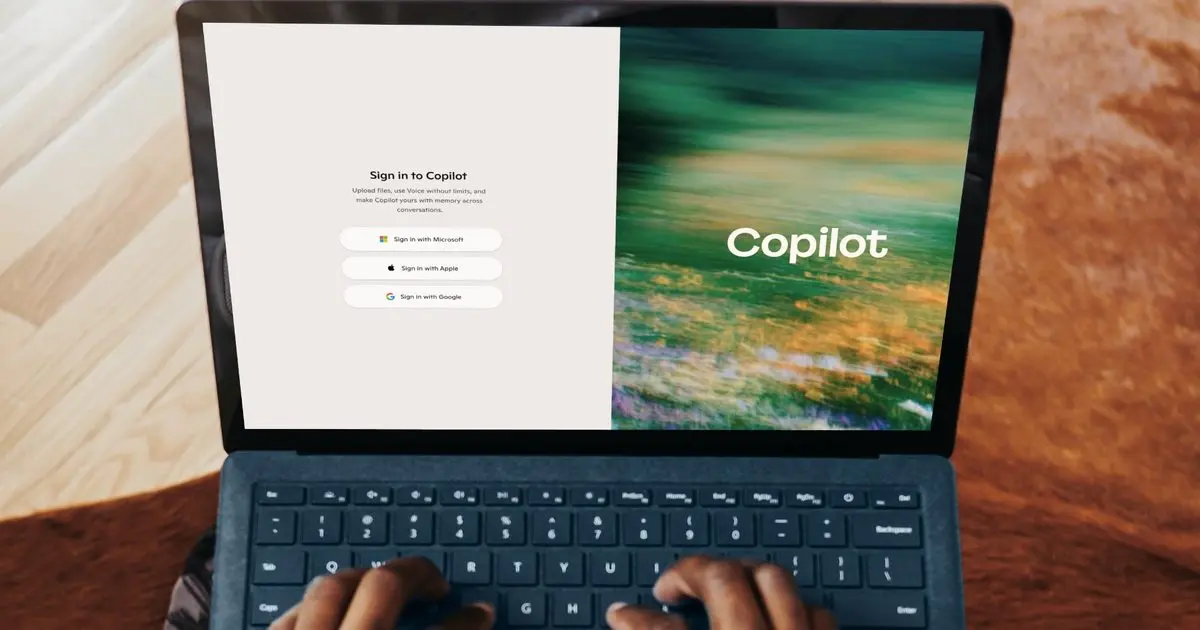
Microsoft is taking its sprawling Copilot ecosystem and cramming it into one application. During Wednesday's earnings call, CEO Satya Nadella revealed that the company is building what he called a “super app” that will unify every Copilot experience into a single interface. The announcement lands as Microsoft pushes Copilot into every corner of its product lineup, from chat and workplace collaboration to coding assistants and autonomous agents that can run long tasks independently.
What exactly is Microsoft building?
Nadella explained that Copilot has evolved swiftly since its introduction. What began as a simple AI chat tool has grown into Cowork, a collaborative workspace offering, and now extends to Autopilots, Microsoft's name for autonomous agents that can handle multi-step operations without constant human oversight. The super app is designed to bring all these capabilities together so that users no longer need to hop between separate apps for different types of AI assistance.
According to Nadella, the super app will serve both regular consumers and business customers. It will act as the flagship application that people across various roles in a company can rely on daily, whether they are drafting documents, managing email, generating code, or delegating tasks to AI agents. While he did not offer a precise launch date, he stated that the app would arrive “this year” and described it as a “major step forward.”
The idea is not new. Fortune reported back in May that Microsoft had been quietly working on a super app concept, and Nadella's comments effectively confirm that earlier reporting. His repeated references to the project during the earnings call suggest that the company views this consolidation as critical to its AI strategy, likely in response to similar moves by rivals.
Why should you care about another AI app?
For anyone who currently juggles multiple Microsoft AI tools, the appeal is straightforward. Imagine having Copilot for writing, GitHub Copilot for coding, and a separate agent tool for automating busywork. That means switching between three or four applications, each with its own interface and behavior. A super app would collapse those experiences into one consistent environment, reducing friction and making it easier to combine tasks, such as writing a proposal and then asking an agent to schedule follow-up meetings.
Microsoft says it already has over 30 million paid Copilot seats across its business and consumer offerings. That is a substantial user base that would feel the impact directly. For those users, the promise is not just convenience but also a more integrated workflow: the same AI that helps write a report could also analyze data, generate pivot tables, and handle calendar coordination without leaving the app.
The rise of the AI super app
Microsoft's move is part of a broader trend in the AI industry. Several major players are racing to consolidate their tools into a single entry point, betting that the future belongs to an “everything app” for AI. Anthropic's Claude already offers an application that brings together various tools, including chat, document analysis, and code execution. OpenAI recently unveiled its own ChatGPT Work app, which merges ChatGPT with Codex, its coding assistant, into a single workspace designed for professional users.
This competition reflects a fundamental shift in how AI companies think about distribution. Early in the generative AI boom, companies released point solutions: a chatbot here, a code generator there. But as the technology matured, it became clear that users prefer seamless continuity over fragmented utilities. The winners in this space are likely to be the platforms that can offer the broadest range of capabilities without forcing users to change context.
Microsoft has a distinct advantage in this race because of its deep integration with Windows, Office, and enterprise cloud services. The company can embed the super app directly into the workflow of millions of organizations, potentially making it the default AI interface for business users. That possibility has not been lost on investors, who see Copilot as a key driver of future revenue from Microsoft 365 and Azure.
A closer look at Copilot's evolution
To understand the significance of the super app, it helps to trace Copilot's journey. Microsoft launched Copilot in early 2023 as a chatbot named after the AI features built into Windows and Edge. The initial version relied on OpenAI's GPT-4 and specialized in answering questions, summarizing content, and generating text. It quickly expanded to Microsoft 365 apps, where it could draft emails, create slides, and analyze spreadsheets.
In early 2025, Microsoft introduced Cowork, a collaborative workspace that allows teams to use AI agents alongside shared documents and tasks. Cowork was positioned as a reinvention of the traditional productivity suite, with a chat-first interface and persistent agent threads. Around the same time, Microsoft announced Autopilots, which are designed to handle longer, autonomous workflows, such as researching a market, producing a report, and sending it to stakeholders without manual approval at every step.
GitHub Copilot, the coding-focused variant, has become one of the most widely adopted AI programming tools in the industry. It integrates with popular development environments and can generate code, explain existing code, suggest fixes, and even run tests. With over 30 million paid seats across the Copilot family, Microsoft has now reached a scale that makes a unified front end commercially attractive and technically feasible.
What this means for users and competitors
If Microsoft delivers on its super app vision, the immediate benefit for users is a single point of control for all Copilot capabilities. Instead of remembering which app does what, they could simply open Copilot and ask it to switch contexts naturally. The same interface might let you say, “Help me write an email,” then follow up with, “Now generate a Python script to parse this attachment,” and later say, “Find me more sources and draft a brief.”
For businesses, the implications are even larger. Companies already using Microsoft 365 would find it easier to deploy AI across their workforce, with consistent security policies and administrative controls. IT departments could manage one application rather than overseeing multiple AI subscriptions. That could strengthen Microsoft's position in enterprise software and create a moat against startups trying to win over business users with standalone assistants.
But the competitive landscape is heating up quickly. OpenAI's ChatGPT Work is specifically designed to compete in the professional domain, and Anthropic's Claude has gained a following among developers and researchers for its long-context capabilities. Google, meanwhile, is integrating Gemini across its Workspace suite, and Apple is building system-level AI features into iOS and macOS. Every major tech company recognizes the importance of being the first AI app people open when they sit down to work.
Pricing and rollout details remain scarce. Microsoft has not said whether the super app will replace the existing standalone Copilot apps or simply layer them under a new interface. It is also unclear what will happen to the current Copilot subscriptions, including the free tier and the Pro tier with GPT-4 access. During the earnings call, Nadella gave no specifics on pricing, but he suggested that more information would be forthcoming in the coming months.
The reported 20% to 30% price increases for Nvidia GPUs, driven by AI demand, may also affect Microsoft's cost structure and, eventually, its pricing decisions. However, the company has not indicated any immediate plans to adjust Copilot subscription fees. The focus, for now, appears to be on demonstrating the value of a unified AI experience that can justify a premium price over time.
As the AI industry consolidates, the super app arms race is only beginning. Microsoft has the advantage of scale, distribution, and enterprise trust. Yet OpenAI and Anthropic are moving just as quickly, and both have built loyal user communities that could resist switching to a single Microsoft hub. The next year will reveal whether Nadella's bold bet pays off and whether the era of juggling multiple AI apps is indeed coming to an end.
Source: Digital Trends News