

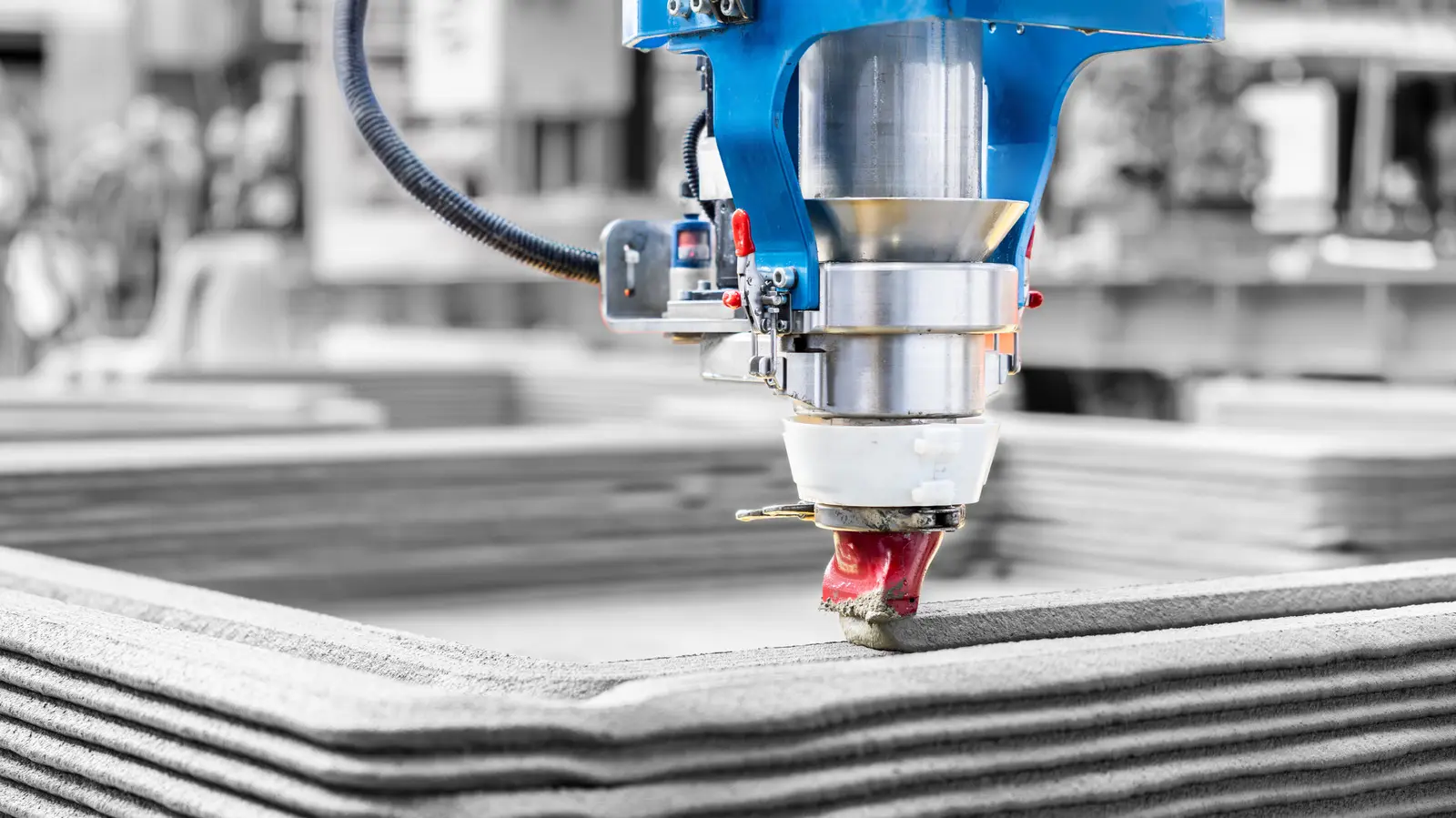
3D printing concrete has long been hailed as a potential game-changer for the construction industry, promising faster build times, reduced waste, and more design freedom compared to traditional molding techniques. However, until now, the process of optimizing designs to work with actual 3D printers has been painstakingly slow and often fraught with errors. A team of scientists at the Massachusetts Institute of Technology (MIT) has just announced a major breakthrough that could make this process exponentially quicker and easier, eliminating the need for humans to manually rework designs. Their findings were published in the journal Additive Manufacturing.
At the heart of the challenge is the gap between theoretical optimization algorithms and the physical constraints of large-scale concrete printers. Earlier design frameworks often produced models that looked ideal on a computer but were impossible to build in reality. The MIT team, working in collaboration with technicians at the Autodesk Technology Center in Boston, identified three critical limitations that previous frameworks failed to address. First, printers must extrude material in a continuous, unbroken line—a requirement that earlier software did not properly enforce. Second, printer nozzles have a limited turning radius; sharp corners or tight curves are physically unattainable. Third, the thickness of the extruded bead (the line of concrete laid down by the nozzle) is a consistent constraint that directly affects structural integrity and material usage.
By integrating these real-world constraints into a new computational framework, the researchers achieved a dramatic reduction in design time. What once took days—sometimes weeks—of manual adjustments and iterative testing now takes just minutes. Remarkably, the team accomplished this using only a standard laptop, with no need for specialized or expensive hardware. The framework automatically generates a printer-ready path that respects all physical limits, ensuring that the final design can be fabricated without delays. To demonstrate the capability, the team designed and printed a 2.3-meter-long concrete footbridge at the Autodesk facility.
The mathematics behind the framework is extraordinarily complex. Co-author Zane Schemmer noted that the solver they used would have been incapable of handling such optimization problems just a few years ago. "If you go back five, 10 years ago, the solver we used, even three years ago, could not solve these problems," he said. The new solver, coupled with an innovative algorithm, can rapidly compute feasible print paths that optimize for strength, material use, and printing speed. The team proved that faster printing speeds are not only possible but realistic and safe.
On the day the bridge was scheduled to be printed, the team discovered a last-minute issue: they needed to slightly reduce the bridge's dimensions. In a traditional workflow, such a change would have required days of recalculations and re-optimization, likely causing significant delays. With their new framework, the team updated the design in about ten minutes. The bridge was then printed without any further issues, and subsequent load tests confirmed it was as strong as predicted. Co-author Hajin Kim-Tackowiak said the bridge turned out to be "super over-engineered," easily supporting more than 2,000 pounds. She added that the framework could design far stronger structures, noting that only "after 200,000 pounds you can start to think about the physics."
Beyond immediate time savings, the research highlights how 3D printer hardware could be improved in the future. The team discovered that the width of the extruded bead makes a surprisingly large difference in material efficiency. The bridge was built using a 4-centimeter bead, but calculations showed that if a printer could lay a 1-centimeter bead, the amount of concrete needed could be reduced by as much as 76%—without compromising safety. This insight is particularly valuable for creating one-off designs or rebuilding infrastructure after natural disasters, where material savings and speed are critical. The team suggests that printer manufacturers could focus on developing nozzles capable of finer control, opening the door to even more efficient construction.
The potential applications of this technology extend far beyond single bridges. The construction industry is one of the largest contributors to global carbon emissions, largely due to the production of cement—a key ingredient in concrete. By reducing material usage and enabling faster construction, 3D printing with optimized frameworks can lower the environmental footprint of building projects. Moreover, the ability to quickly redesign and adapt structures on-site could be invaluable for disaster relief, where temporary housing, bridges, or retaining walls must be erected rapidly in challenging conditions.
Nevertheless, significant hurdles remain before 3D-printed concrete becomes commonplace for large-scale infrastructure. One of the biggest drawbacks is that current 3D printing technology cannot produce reinforced concrete—the material used in most modern buildings and bridges, which combines concrete with steel rebar to withstand tensile forces. The MIT team acknowledges this limitation and says they are now turning their attention to solving it. If they succeed, it could unlock the potential for 3D-printed multistory buildings, long-span bridges, and other critical infrastructure.
In the meantime, 3D-printed houses are already becoming a reality, with several companies around the world producing single-story dwellings using similar techniques. However, for large-scale infrastructure projects, the technology has yet to be widely adopted. The MIT framework could accelerate that adoption by reducing the time and expertise needed to create printable designs, making the technology more accessible to engineers and architects without specialized backgrounds.
The researchers also emphasize that their work is a starting point, not an end. The current framework is designed for printing in a single continuous path, which is optimal for most concrete structures, but future versions could incorporate multiple print heads, variable bead widths, or even on-the-fly adjustments based on real-time feedback from sensors. Such advances could bring the construction industry closer to a fully autonomous, sustainable building process.
As the global population grows and urbanization accelerates, the demand for rapid, efficient, and environmentally friendly construction methods will only increase. Innovations like the one from MIT are paving the way for a future where buildings and bridges can be printed on demand, with minimal waste and maximum strength. The bridge at Autodesk is a small but powerful proof of concept—a glimpse into a world where the only limit to construction is the imagination, and the time from design to reality is measured in minutes, not months.
Source: SlashGear News