

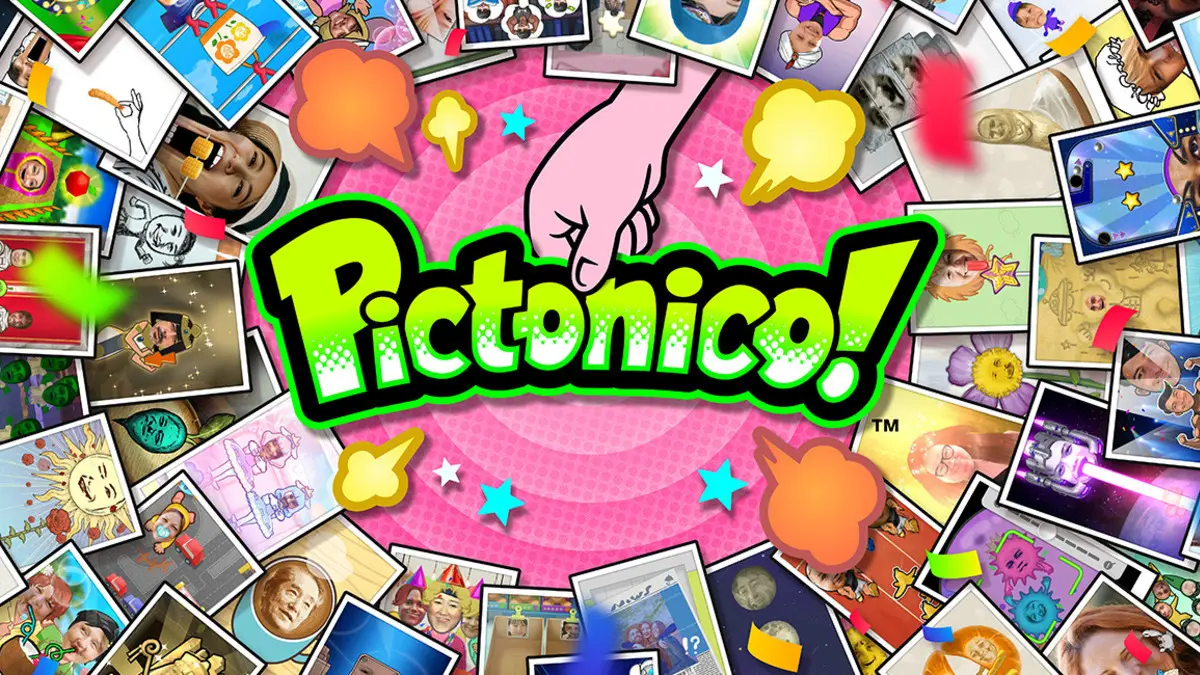
Nintendo has a long history of experimentation on mobile platforms, though success has often proved elusive. From the early days of Miitomo to the more recent puzzle adventures, the company's mobile strategy has been characterized by cautious steps and occasional missteps. Yet despite the ups and downs, Nintendo continues to invest in the mobile space, seeking to capture the attention of smartphone users worldwide. Their latest offering, a quirky title called Pictonico, represents another bold attempt to blend Nintendo's gaming DNA with the unique capabilities of mobile devices.
What is Pictonico?
Pictonico is a minigame collection that draws heavy inspiration from the beloved WarioWare series. However, instead of relying on original characters and pre-designed visuals, Pictonico turns the camera into the primary tool for gameplay. Players are encouraged to take photos of themselves, friends, or even random objects, and then those images are integrated into a series of rapid-fire microgames. The result is a personalized and often hilarious experience that feels both familiar and fresh.
The core concept is simple yet ingenious. You grant the app access to your device's photo gallery, or you can snap new pictures directly within the app. These images become the canvas for a variety of interactive challenges. For example, one minigame might require you to drag a person's mouth to chomp on falling fruit, while another involves lathering shampoo on a head by swiping repeatedly. Each game lasts only a few seconds, maintaining the breakneck pace that defines the WarioWare series.
From WarioWare to Pictonico
WarioWare first appeared on the Game Boy Advance in 2003 and quickly became a fan favorite for its absurdist humor, eclectic art styles, and relentless tempo. The series has since graced nearly every Nintendo console, always offering a bizarre mix of microgames that test reflexes, observation, and quick thinking. Pictonico channels that same spirit but adds a layer of personalization that was previously impossible on dedicated gaming hardware. By using the player's own photos, Nintendo ensures that each session is unique and tailored to the person holding the device.
The decision to leverage the camera—a feature that is standard on modern smartphones but often underutilized in games—shows Nintendo's willingness to adapt its design philosophy to new contexts. The company has dabbled with cameras before in the 3DS era (Face Raiders comes to mind), but Pictonico is arguably the most polished execution of that concept yet. It also aligns with a broader trend in mobile gaming, where titles like FaceApp and Snapchat have popularized photo-based interaction.
Pricing and Volume Structure
Nintendo has adopted a free-to-try model for Pictonico. The demo, available on both the Google Play Store and Apple App Store, grants access to three sample minigames, allowing potential buyers to evaluate the experience before committing. If you're hooked, you can purchase volume 1 for $7.99, which contains 50 minigames, and/or volume 2 for $5.99, which adds another 30. Together, that's 80 microgames to master.
Buying a volume unlocks extra features that extend replayability. These include challenge stages with specific objectives, a Score Attack mode that tracks high scores and encourages speed runs, and a Mix Mode that randomly draws games from both volumes simultaneously. The tiered pricing is reminiscent of other Nintendo mobile releases like Super Mario Run, which also offered a substantial free preview and a single upfront payment for the full game. However, Pictonico's two-volume approach introduces a degree of choice: you can sample volume 1 before deciding whether volume 2 is worth the extra investment.
Given the modular design, it's likely that Nintendo will release additional volumes in the future, especially if Pictonico finds an audience. The company has a track record of supporting successful mobile titles with content updates—Fire Emblem Heroes still receives new heroes and events years after launch—so a steady stream of new minigame packs would not be surprising.
Gameplay Mechanics and Variety
Each minigame in Pictonico is built around a simple action: tapping, swiping, dragging, or tilting. The complexity comes from the context and the way your photo is manipulated. Because the images are real photographs, the developers had to design minigames that can adapt to any face, object, or background. This likely required sophisticated image processing to identify key features such as eyes, mouth, or outlines. The result is a robust set of interactions that feel surprisingly reliable.
For instance, one minigame might show a face with an open mouth, and you must drag food items into it before they fall. Another could highlight a head of hair, and your task is to quickly rub shampoo foam across the scalp. Some games are more abstract, like solving simple puzzles where your photo is sliced into pieces that must be rearranged. Others lean into slapstick comedy, like inflating someone's cheeks until they pop.
The diversity across the 80 minigames is admirable. While many follow the same templates—tap, swipe, hold—the thematic presentation varies wildly. One moment you're picking a nose, the next you're wiping a dirty lens, then you're sorting coins by color. The frantic pacing ensures you never have time to get bored, and the short rounds make it perfect for on-the-go play.
Nintendo's Mobile Journey
To fully appreciate Pictonico's place in Nintendo's mobile portfolio, it's worth revisiting the company's history in the smartphone space. The journey began in 2016 with Miitomo, a social app that let players create Mii avatars and chat with friends. While it was initially popular, its addictiveness waned quickly. Later that year, Super Mario Run launched to massive fanfare but drew criticism for its high price point ($9.99) and limited free content. Despite strong download numbers, the app failed to convert a high percentage of users to paying customers.
Nintendo learned from those lessons. Fire Emblem Heroes (2017) adopted a free-to-play model with gacha mechanics, and it became one of the company's most successful mobile games, generating over a billion dollars in revenue. Animal Crossing: Pocket Camp (2017) also found a steady audience, though it never matched the mainstream appeal of its console counterpart. Since then, Nintendo has released a few more titles—Dr. Mario World, Mario Kart Tour, and Pikmin Bloom—each with varying degrees of success.
Pictonico represents a return to the premium model, but with a low initial barrier (free demo) and optional parts. It's a hybrid approach: players can enjoy a taste of the game without paying, but the full experience requires a purchase. This may appeal to users who are tired of microtransactions and loot boxes, but who are willing to pay once for quality content. The question is whether the minigame genre—which by nature offers limited depth—can sustain long-term engagement without constant updates and social features.
Technical Implementation and User Experience
The app itself appears well-optimized for modern smartphones. Performance is smooth, loading times are brief, and the interface is clear. The camera integration works seamlessly, and privacy is a consideration: users can choose to use photos from their gallery rather than live shots, and the app likely processes images locally (though Nintendo's privacy policy should be consulted for specifics).
One potential drawback is the reliance on photos with clear subjects. If your gallery is full of landscapes, food, or text, many minigames may not function properly because they expect faces or specific shapes. However, the ability to take new pictures on the spot mitigates this. The app could incorporate a random photo generator or a set of default images for times when you don't have suitable photos, but as of launch, it appears to demand user-provided images.
Accessibility is also worth noting. The minigames require only basic dexterity and reaction time, making it suitable for a broad audience. The absence of complex controls or long tutorials lowers the barrier to entry, which is crucial for casual mobile gamers. Additionally, the game supports both portrait and landscape orientations, adapting to how users hold their devices.
Market Potential and Future Outlook
The success of Pictonico will depend on word-of-mouth and viral sharing. The concept is inherently social—players are likely to show off their silly minigames to friends, and the personalized nature encourages repeated play with different photos. However, the premium price tag may deter some users. The mobile gaming market is dominated by free-to-play titles, and asking $7.99 or $13.98 for both volumes is a tough sell when many popular games are entirely free.
That said, Nintendo has a loyal fanbase that trusts its brand. The company's reputation for quality can justify a higher price, as seen with the ongoing success of Super Mario Run's premium model (though that game has not been a blockbuster). Furthermore, Nintendo could add cosmetic items or photo filters as optional microtransactions to generate ongoing revenue without making the core game feel incomplete.
Comparisons to other photo-based games are inevitable. Titles like Fotor, Photo Lab, and even the viral sensation Lensa use AI to transform selfies, but they are not games. Pictonico occupies a unique niche: it gamifies the photo manipulation process. There is little direct competition, which could work in its favor if the execution is polished enough.
Looking ahead, Nintendo might expand the concept to include multiplayer modes or user-generated minigames. Imagine creating your own microgames using your photos and sharing them online—that would align with Nintendo's recent push for user creativity in games like Game Builder Garage and Super Mario Maker.
Ultimately, Pictonico is a delightful experiment that proves Nintendo still has creative ideas for mobile. Whether it becomes a permanent fixture in their lineup or a quirky footnote remains to be seen. For now, players have a fresh way to turn their selfies into gaming chaos, and that alone is worth celebrating.
Source: Android Authority News