

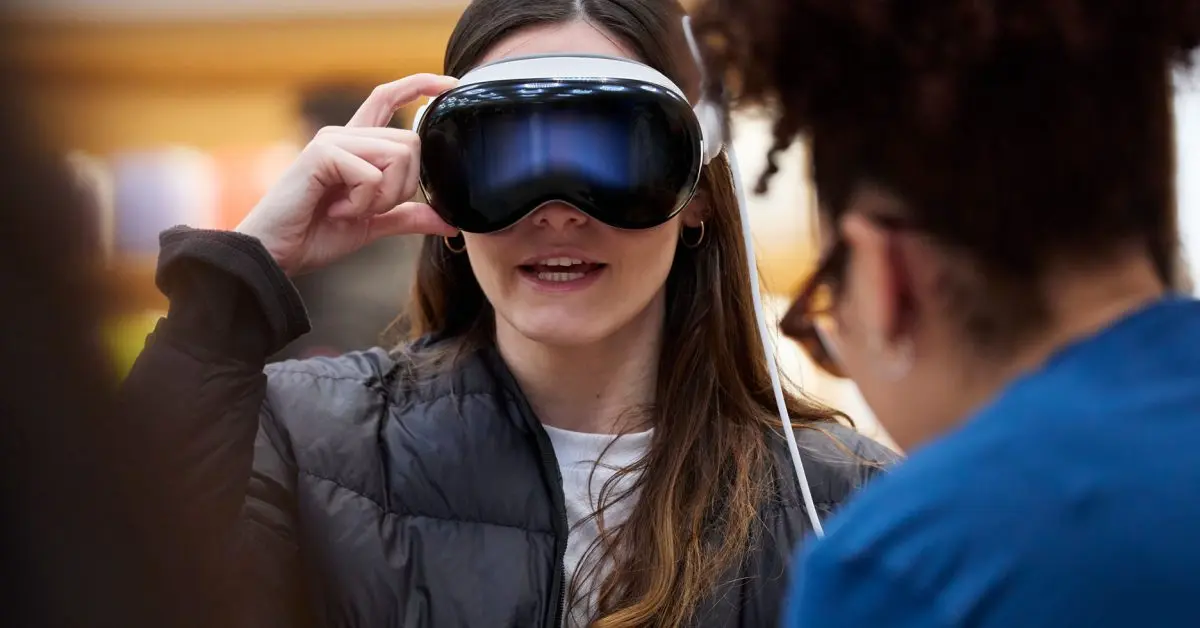
According to reports, OpenAI has hired Paul Meade, the Apple executive who had been leading the development of the Vision Pro headset and the company's smart glasses efforts. Meade is expected to join OpenAI's hardware unit, where he will work on an upcoming family of AI-powered devices. This marks the latest in a series of high-profile hires from Apple by OpenAI, as the AI company accelerates its push into consumer hardware.
OpenAI's Hardware Ambitions
Last year, OpenAI announced a partnership with renowned designer Jony Ive and several members of his LoveFrom design collective to create a subsidiary called io, focused on releasing AI-first hardware. The venture aims to leverage OpenAI's advanced artificial intelligence models in custom-designed devices that could compete in the nascent market for AI wearables and smart assistants. Since then, OpenAI has been steadily poaching talent from Apple, including longtime Ive collaborators Evans Hankey—who led Apple's design for three years after Ive's departure—and Tang Ten. The addition of Paul Meade, a hardware engineering veteran with deep experience in both consumer electronics and emerging form factors, signals that OpenAI is serious about building a full-fledged hardware division.
Paul Meade's Career at Apple
Paul Meade joined Apple in 2010 as a key iPad manager, overseeing the development of one of the company's most successful product lines. In 2012, he became head of iPhone program management, a role that placed him at the center of Apple's flagship product strategy. In 2017, Meade transitioned to the Vision Products Group (VPG), where he initially led hardware engineering for what would eventually become the Apple Vision Pro. By 2019, he had taken over all hardware engineering within the VPG, making him the top executive for Apple's mixed-reality efforts. During his seven years with the Vision Pro team, Meade oversaw the engineering of the device from early prototypes through to its commercial launch. More recently, he also led Apple's initiative to develop its first smart glasses, a product that had been expected to launch in late 2027. According to reports, Meade's responsibilities included managing a large team of engineers and coordinating with suppliers, manufacturing partners, and software teams to bring complex hardware to market. His departure leaves a significant void in Apple's emerging products division.
Apple's Executive Reshuffling
The timing of Meade's exit is closely tied to a major reorganization within Apple's hardware engineering ranks. Earlier this year, Apple announced that John Ternus, previously the head of hardware engineering, would become the company's next CEO following Tim Cook's retirement. As part of the transition, Johny Srouji—Apple's chips chief—was appointed chief hardware officer, replacing Ternus. Srouji immediately initiated a controversial shake-up of the hardware engineering unit, restructuring reporting lines and reassigning several vice presidents. According to sources, Meade and other hardware leaders now report to Tom Marieb, the new vice president of hardware engineering, rather than directly to Srouji. This effectively pushed Meade down a level in the organization, a change that reportedly contributed to his decision to leave. The reshuffling has been described as a demotion for several executives, leading to a wave of departures. For Apple, losing a seasoned hardware leader like Meade at a critical juncture for its Vision Pro and smart glasses roadmap could delay future products or alter their design philosophy.
Impact on Apple Vision Pro and Smart Glasses
With Meade's departure, many of his responsibilities as head of the Vision Products Group will now fall to Fletcher Rothkopf, his longtime deputy who had been in charge of product design for both the Vision Pro and the smart glasses efforts. Rothkopf is expected to lead the hardware engineering team through the next development phases. However, the loss of Meade's deep engineering expertise and institutional knowledge may slow progress, especially on the smart glasses initiative, which was still in early development. Apple's Vision Pro has already faced challenges in the market, including high pricing, limited consumer adoption, and competition from more affordable mixed-reality headsets from Meta and others. The company has been working on a lower-cost version and next-generation features, but the management shake-up could affect timelines. Meanwhile, the smart glasses project—which aims to create lightweight, everyday wearable devices with integrated AI—is now under new leadership during a period of intense competition from companies like Meta and Google, which are also developing AR glasses with AI assistants.
Broader Context: AI Hardware Talent War
The hiring of Paul Meade is part of a broader trend of AI companies aggressively recruiting hardware experts from consumer electronics giants. OpenAI, in particular, needs top engineering talent to design devices that can house its powerful AI models in ways that are intuitive, secure, and manufacturable at scale. The company's partnership with Jony Ive underscores its ambition to create objects that are not only functional but also aesthetically refined—much like Apple's product philosophy. Beyond Apple, OpenAI has also hired engineers from Meta's Reality Labs, Google's hardware divisions, and other firms. The movement of talent from Cupertino to San Francisco highlights the shifting center of gravity in the tech industry, as artificial intelligence becomes the dominant paradigm. For Apple, the loss of hardware leaders like Meade poses a risk to its long-term product pipeline, especially in the nascent wearable AI category. The company has yet to publicly announce its smart glasses timeline, but insiders suggest that without Meade's oversight, the project may be delayed or pivoted. Conversely, for OpenAI, gaining a veteran who has shipped complex hardware at scale gives it credibility and accelerates its path to market.
According to one report, Meade will start at OpenAI by next week, joining a team that already includes former Apple designers and engineers. The subsidiary io is expected to release its first AI-powered device within the next 18 months, potentially competing with existing products like the Rabbit R1, Humane AI Pin, and Meta's Ray-Ban smart glasses. Meade's experience with the Vision Pro—a device that required solving some of the hardest engineering challenges in optics, sensors, and thermal management—will be invaluable as OpenAI aims to build something similarly ambitious. However, the company also faces scrutiny over privacy, data security, and the ethics of AI in wearable devices, areas where Apple has traditionally held a strong position. Whether OpenAI can outmaneuver its rivals will depend partly on how well it integrates the hardware expertise Meade brings with its core AI capabilities. The next few years will be pivotal in determining whether AI hardware becomes a mass-market reality or remains a niche pursuit.
Source: 9to5Mac News