

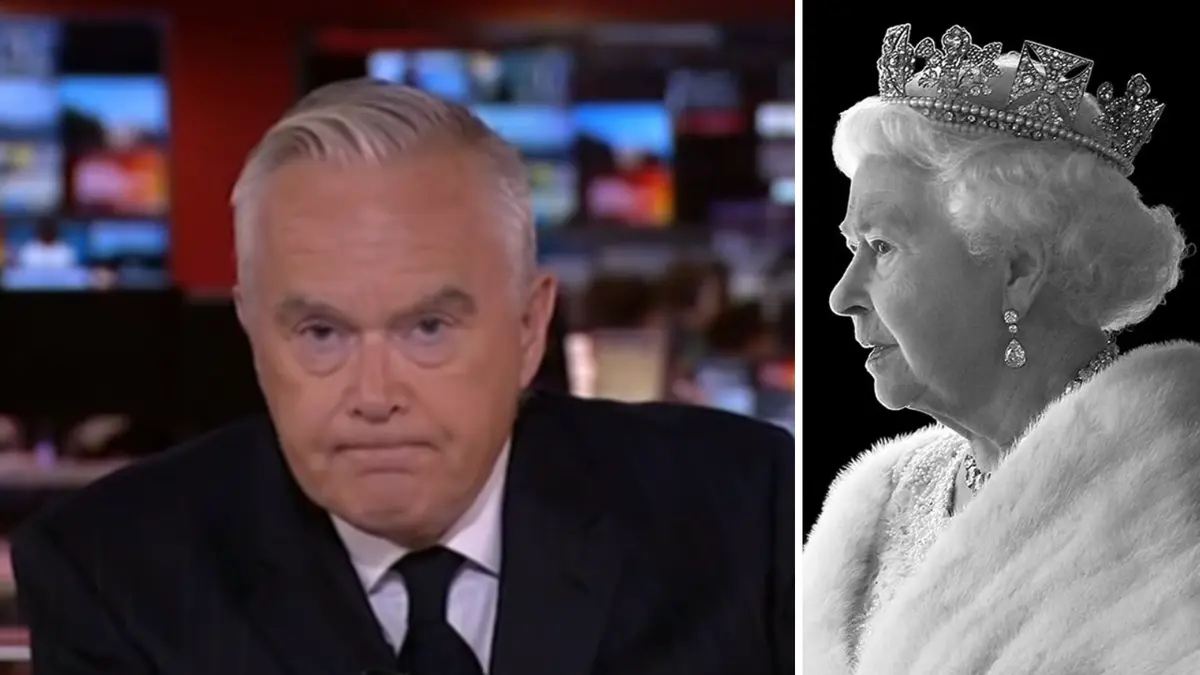
At 6:30 PM local time on September 8, 2022, regular television programming across the United Kingdom was interrupted. A somber-faced presenter, wearing a black suit, tie, and crisp white shirt, appeared on screens. In a measured, emotional tone, he read the official statement from Buckingham Palace: "The Queen died peacefully at Balmoral this afternoon. The King and The Queen Consort will remain at Balmoral this evening and will return to London tomorrow." The presenter paused, pursed his lips, and repeated the news to ensure viewers fully grasped the historic moment. It was the first time many people learned that Queen Elizabeth II, the longest-reigning monarch in British history, had passed away at the age of 96.
The broadcast did not happen in isolation. Earlier that day, the same presenter had announced that doctors were concerned for the Queen's health and that she was under medical supervision at Balmoral Castle in Scotland. This triggered an immediate change in the tone of news coverage. The presenter's attire—a black suit—was a clear signal to many that the end was near. During the hours between the medical update and the official announcement, the BBC aired montages of the Queen's life, showing her coronation in 1953, her many royal tours, and her interactions with world leaders. These images served as a visual tribute to a woman who had dedicated seven decades to public service.
Global Reactions and Mourning
As the news spread, people around the world began to react. In London, crowds gathered outside Buckingham Palace, Windsor Castle, and Balmoral. Many carried flowers, letters, and photographs of the Queen. The iconic Piccadilly Circus billboards displayed portraits of Elizabeth, and the city's black cabs paused in a moment of silent respect. Strangers hugged each other in the streets, united by a shared sense of loss. The Daily Mirror's Royal Editor, also dressed in black, described the scene as an "outpouring of emotion across the world" that he had never witnessed before. He noted that the 96-year-old monarch had touched millions of people, and her death left a void that would be felt for years.
On social media, tributes flooded in from political leaders, celebrities, and ordinary citizens. The presenter's professionalism drew widespread praise. Many viewers noticed the tears in his eyes as he delivered the news. One Twitter user wrote, "Respect to the BBC presenter. That must have been so desperately difficult to announce—even though they were expecting it. May she rest in peace. So very sad." Another added, "Clearly with tears in his eyes, announcing it. Very sad." The ability to convey the gravity of the moment while maintaining composure was seen as a hallmark of experienced journalism.
The Queen's Final Days and Legacy
The Queen's health had been declining in the months leading up to her death. Mobility issues had prevented her from attending many public engagements, but she remained determined to fulfill her constitutional duties. Just two days before her death, she met with the new Prime Minister, Liz Truss, at Balmoral. Photographs from that meeting showed the Queen smiling, using a walking stick, but still bright-eyed. Those who saw her that day described her as "determined" and "getting on with the job." It was her last official act, and it underscored her commitment to service until the very end.
Her reign, which began in 1952, spanned an era of immense change. She oversaw the dissolution of the British Empire, the rise of the European Union, the digital revolution, and a global pandemic. Through it all, she remained a symbol of stability and continuity. Her personal qualities—duty, dignity, and a quiet sense of humor—endeared her to people across the political spectrum. The last official photograph of her, smiling with the new Prime Minister, became an enduring image of her final legacy.
The Mechanics of Royal Death Announcements
The death of a British monarch triggers a series of carefully planned protocols known as Operation London Bridge. Originally designed for a death in London, the plan had to be adapted when the Queen passed away in Scotland. The Scottish version, Operation Unicorn, came into effect. The plans outline everything from the announcement to the funeral arrangements, including periods of national and royal mourning. National mourning lasts for ten days, while royal mourning continues for a month. The Queen's body would lie in state at Westminster Hall, followed by a state funeral at Westminster Abbey.
In the hours after the announcement, the new King, Charles III, and the Queen Consort, Camilla, remained at Balmoral. The next day, they would travel to London to begin their official duties. The royal family requested privacy during this initial period of grief, but public expressions of respect were encouraged. Flags were lowered to half-mast across the country, and gun salutes were planned in the days ahead. The media played a crucial role in guiding the public through these unprecedented events.
The Role of the Broadcaster
The broadcaster's handling of the announcement became a defining moment in the history of British journalism. The presenter, a veteran with decades of experience, had covered major events including the death of Princess Diana in 1997 and the wedding of Prince William and Kate Middleton in 2011. His ability to balance emotion with professionalism was widely commended. The decision to wear black earlier in the day, before the official announcement, was a subtle but powerful indicator that the network anticipated the worst. This foresight allowed the team to switch seamlessly from regular programming to a rolling coverage of the Queen's life and legacy.
Throughout the evening, the network played the national anthem, "God Save The Queen," as a portrait of a young Elizabeth appeared on screen. This transition from solemn news to musical tribute helped viewers process the loss. The broadcaster's coverage continued overnight, with historians, royal experts, and politicians offering their reflections. The reporting was not only about the death but also about the life: her childhood, her wartime service, her coronation, and her decades of duty.
Historical Context and Comparisons
The death of Queen Elizabeth II was compared to that of Princess Diana in 1997, but on a much larger scale. Diana's death sparked an unprecedented public outpouring of grief, but the Queen's passing affected an even broader swath of society. As the Daily Mirror editor noted, "This is something that I don't think we would have seen for many, many years. Certainly when Princess Diana died I remember the scenes that came over the next few days, but this is an outpouring of emotion across the world that I don't think we have ever seen before." The Queen had been a constant presence for 70 years, and her absence was felt as a profound loss of stability.
Newspapers around the world devoted their front pages to the Queen. Many chose a classic image from her coronation in 1953—a young monarch in a crown, smiling. Others used recent photographs showing her with a walking stick, emphasizing her humanity and frailty. The global press coverage reflected the Queen's unique status as a figure known and respected in every corner of the planet.
The announcement itself became a piece of television history. The moment when the presenter read the statement, paused, and then repeated the words will be replayed for decades. It encapsulated the gravity of the news and the sorrow felt by a nation. The broadcaster's commitment to accurate, dignified reporting ensured that the public received the information with the respect it deserved.
International Tributes and Memorials
World leaders issued statements of condolence. The President of the United States called the Queen "a stateswoman of unmatched dignity" and ordered flags to be flown at half-mast. Leaders from Canada, Australia, New Zealand, and other Commonwealth realms expressed their sadness. In many countries, buildings were lit up in red, white, and blue, the colors of the Union Jack. In London, a rainbow appeared over Buckingham Palace shortly before the announcement, which many took as a poignant sign of the Queen's passing.
Crowds continued to gather at royal residences for days. The floral tributes outside Buckingham Palace grew into a sea of color, with messages reading "Thank you, Ma'am" and "Rest in peace." The royal family acknowledged the public's grief by reading some of the messages and pausing to speak with mourners. The Queen's death was not just a British event but a global one, marking the end of an era.
As the days passed, the focus shifted to the funeral and the succession. King Charles III addressed the nation the following day, vowing to follow his mother's example of lifelong service. Plans for the coronation were set in motion, though the ceremony would not take place for several months. The transition of power was smooth, thanks to the meticulous planning that had been in place for years.
The BBC presenter's role in breaking the news will be remembered as a masterclass in live broadcast journalism. His ability to maintain his composure while conveying the weight of the moment set the tone for the entire nation's response. The moment he looked down at the statement and paused, then looked up and repeated the words, became a symbol of the collective shock and sorrow.
Source: 7NEWS News