

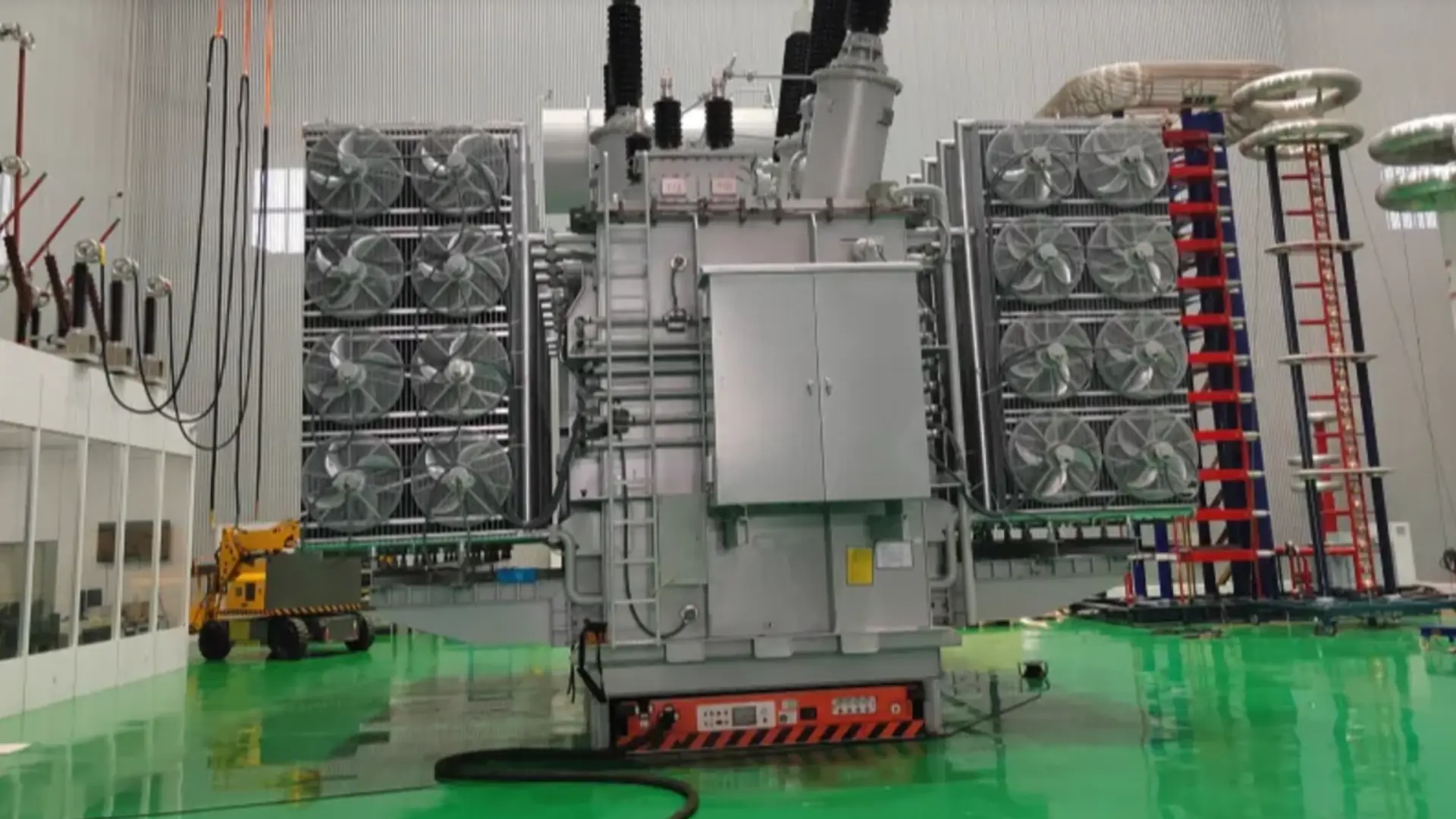
The world is facing an unprecedented energy challenge. As artificial intelligence drives an explosion in data center construction and electric vehicles (EVs) become mainstream, the electrical grids of Europe and America are buckling under the strain. Transformer manufacturers are overwhelmed, with lead times now stretching to four years. Factories are being forced to scale back production, and the risk of darkness—rolling blackouts and brownouts—looms over entire regions. This is not a distant future scenario; it is happening now.
The AI Data Center Boom
Data centers are the backbone of the digital economy, but the current wave of AI development has dramatically increased their power consumption. Training a single large language model can consume as much electricity as hundreds of homes in a year. Companies like OpenAI, Google, and Microsoft are racing to build massive facilities, each requiring hundreds of megawatts of power. In Northern Virginia, the world's largest data center market, electricity demand has surged by over 40% in just five years. Similar hotspots are emerging in Ireland, the Netherlands, and Germany. The grid simply cannot keep up.
Utilities are finding it difficult to connect new data centers to the grid because transformer production is bottlenecked. Transformers, the devices that step up or step down voltage for transmission, are in such high demand that wait times have ballooned. A recent survey by the International Energy Agency (IEA) found that global transformer production capacity has not increased in a decade, while demand has skyrocketed. The result is a four-year wait for custom units, forcing data center operators to either delay projects or buy second-hand equipment at inflated prices.
The Electric Vehicle Revolution
Electric vehicles are meant to save the planet, but they are also adding to grid pressure. As more consumers and businesses switch to EVs, charging stations proliferate. A single fast-charging station can draw as much power as a small factory. In the United Kingdom, the number of public chargers has increased fivefold in three years, but grid upgrades have not kept pace. Local transformers are often overwhelmed, causing voltage dips and outages. In Los Angeles, the city's Department of Water and Power has warned that without massive investment, the grid will face significant reliability issues by 2030.
The challenge is not just about peak demand. EVs are often charged in the evening, coinciding with existing peak usage from households. This creates a double peak that strains distribution transformers. In Germany, utilities are already installing smart chargers that can throttle charging during peak times, but the hardware needed—advanced transformers and control systems—is in short supply. The transformer shortage is becoming a choke point for the entire energy transition.
Factory Capacity Decimated
It is not just the grid that is suffering. The manufacturing sector is also feeling the pain. Many industrial plants rely on high-voltage electricity for processes like smelting, chemical production, and machining. When transformer failures occur or wait times for replacements stretch to years, factories must shut down. In the American Midwest, several steel mills have been forced to idle production lines because they cannot get the transformers needed to upgrade their electrical systems for increased automation. In Europe, a major cement producer in Poland reported that a blown transformer led to a three-month outage, costing millions in lost revenue.
Smaller manufacturers are hit even harder. They lack the resources to stockpile transformers or secure expedited orders. A recent survey by the Confederation of British Industry found that 30% of UK manufacturers have had to delay expansion plans due to grid connection delays, many of which are directly caused by transformer shortages. The result is a drag on economic growth and productivity just when it is most needed.
Infrastructure Underinvestment
The root cause of this crisis is years of underinvestment in grid infrastructure. In the United States, spending on transmission and distribution has flatlined since the 1970s when adjusted for inflation. Many transformers in service are over 40 years old and close to failure. In Europe, the situation is similar. The European Commission estimates that the EU will need to invest €600 billion in grid modernization by 2030, but current spending is only a fraction of that. The transformer shortage is a symptom of this broader neglect.
Transformer manufacturing is a specialized industry dominated by a handful of players, including Siemens Energy, ABB, and Hitachi Energy. They are running at full capacity, but expanding factories takes time and capital. Raw materials like grain-oriented electrical steel are also in short supply, driving up costs. The price of a standard transformer has quadrupled in some markets over the past three years. These costs are passed on to utilities, data centers, and ultimately consumers.
Regional Differences and Responses
The crisis is playing out differently on each side of the Atlantic. In the United States, the federal government has taken some steps to address the issue. The Department of Energy has launched a program to encourage domestic transformer production, and the Inflation Reduction Act includes tax credits for clean energy manufacturing that could help expand capacity. However, these efforts are slow-moving. In Europe, the focus is on demand-side management. Countries like Denmark and the Netherlands are experimenting with curtailment agreements that allow utilities to shut down large consumers during peak times. But these measures are controversial and can harm businesses.
Some regions are more vulnerable than others. California, with its tight electricity supply, regularly faces flex alerts urging conservation. In the UK, National Grid has warned of potential blackouts if a cold snap coincides with low wind output. In France, the closure of several nuclear plants has made the grid more reliant on imports, which are constrained by transformer availability at interconnector stations. The risk is greatest in areas with high data center concentration and rapid EV adoption.
Technological Solutions and Innovations
Engineers are exploring ways to mitigate the crisis. Solid-state transformers, which use semiconductors instead of metal coils, are smaller, more efficient, and can be manufactured more quickly. Companies like General Electric and The University of Tennessee are developing prototypes, but commercial deployment is still years away. Another approach is to use distributed energy storage, such as batteries, to smooth peak demand and reduce the need for transformer upgrades. Some utilities are installing large-scale storage at substations to handle EV charging loads.
Virtual power plants, which aggregate millions of smart appliances and chargers, can also help. By coordinating when EVs charge or when data centers run backup generators, grid operators can avoid overloading transformers. However, these systems require advanced communication and control hardware that is also in demand. The transformer shortage is a bottleneck that no single technology can quickly fix.
Policy makers are also looking at permitting reform to speed up grid upgrades. In the US, the Federal Energy Regulatory Commission (FERC) has issued rules to streamline interconnection, but they have been met with legal challenges. In the EU, the revised Energy Taxation Directive aims to align energy prices with environmental goals, but it does not address the immediate hardware shortage. The timeline for new transformer factories is at least three years, meaning the crisis will persist well into the late 2020s.
Meanwhile, data center operators are adapting by co-locating with small modular nuclear reactors (SMRs) or building their own renewable microgrids. Amazon Web Services has announced plans to use on-site solar and battery storage to reduce grid dependence. Google has invested in high-voltage direct current (HVDC) lines that can bypass weak parts of the grid. These solutions are promising, but they are limited to cash-rich tech giants. Most smaller data center operators and EV drivers have no choice but to rely on the increasingly brittle public grid.
The coming years will test the resilience of modern society. Electricity is the lifeblood of digital economies and green transportation. If transformers remain in short supply, the dreams of an AI-powered future and a decarbonized transport sector may be dimmed. The risk of darkness is not a scare headline; it is a structural reality that demands immediate and massive investment in the invisible infrastructure that keeps our lights on.
Source: TechRadar News