

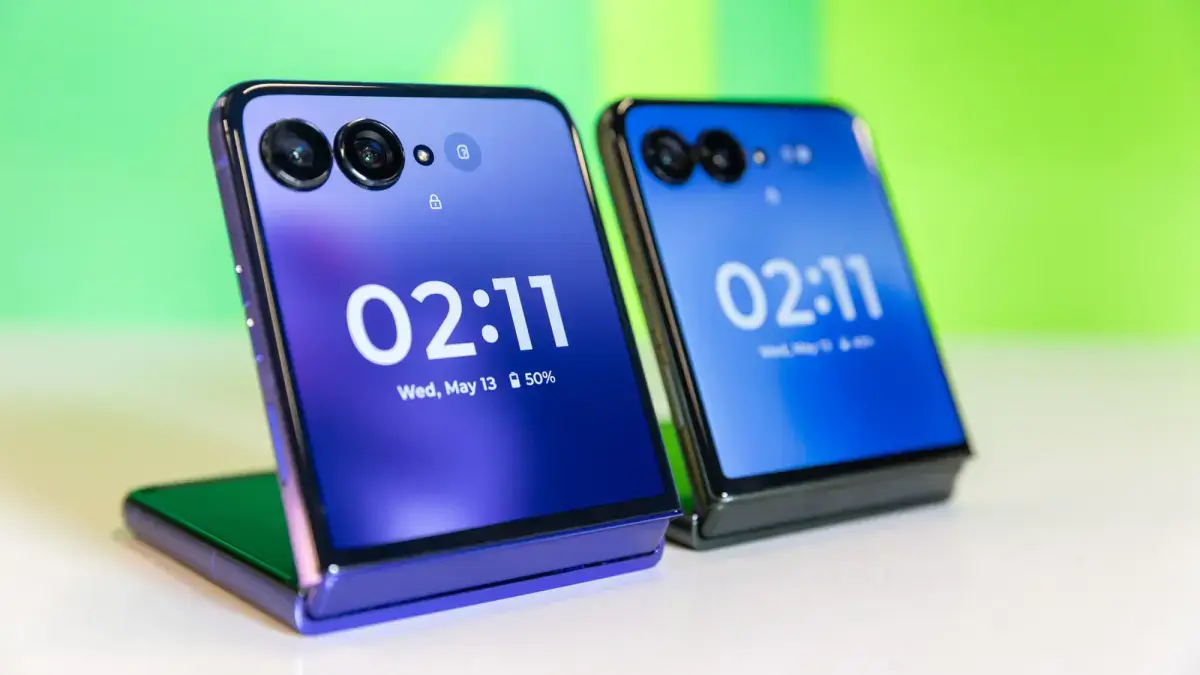
The clamshell foldable phone segment has evolved from a niche curiosity into a mainstream battleground, with two titans—Samsung and Motorola—leading the charge. Motorola’s Razr Ultra landed earlier this year, while Samsung is poised to unveil the Galaxy Z Flip 8 at its Galaxy Unpacked event on July 22. Both devices share the iconic flip-phone form factor, but they diverge in crucial ways. This in-depth comparison examines every aspect, from pricing and physical design to internal specs, camera capabilities, and software ecosystems.
Samsung Galaxy Z Flip 8 vs. Motorola Razr Ultra: Price
The Razr Ultra commands a retail price of $1,499. Samsung has not yet announced the Z Flip 8’s pricing, but history offers clues. The Galaxy Z Flip 7 debuted at $1,099 last year. However, the smartphone industry is currently experiencing a phenomenon dubbed “RAMageddon,” where memory and component costs are rising sharply. This trend makes a price increase for the Z Flip 8 almost inevitable. Analysts predict Samsung may set a starting price between $1,199 and $1,299, still undercutting the Razr Ultra but marking a notable jump from its predecessor. The final figure will be critical: a lower price could give Samsung an edge, while a higher one might push budget-conscious buyers toward Motorola’s offering.
Samsung Galaxy Z Flip 8 vs. Motorola Razr Ultra: Design
At first glance, both phones are nearly indistinguishable—clamshell foldable with a small cover display and a larger inner screen. Yet the devil lies in the dimensions. The Razr Ultra sports a 7-inch inner display and a 4-inch outer display. Leaks suggest the Z Flip 8 will offer a 6.9-inch inner display and a 4.1-inch outer display, making the size difference negligible in real-world use. Where Samsung may pull ahead is in physical footprint and weight. The Razr Ultra measures 88.12 x 73.99 x 15.69 mm folded (171.48 x 73.99 x 7.19 mm unfolded) and weighs 199 grams. The Galaxy Z Flip 7—on which the Z Flip 8 is likely based—was 85.5 x 75.2 x 13.7 mm folded (166.7 x 75.2 x 6.5 mm unfolded) and weighed just 188 grams. Samsung has a track record of trimming millimeters and grams each generation, so the Z Flip 8 could be even more compact and lighter than the Razr Ultra. This portability advantage, combined with the satisfying hinge mechanism and premium materials, makes the Z Flip series a favorite for those who prioritize pocketability without sacrificing screen real estate.
Samsung Galaxy Z Flip 8 vs. Motorola Razr Ultra: Specs
Under the hood, the Razr Ultra packs a Snapdragon 8 Elite mobile platform, 16GB of RAM, 512GB of storage, and a hefty 5,000mAh battery. In contrast, rumored specifications for the Z Flip 8 include either an Exynos 2600 chip or a Snapdragon 8 Elite Gen 5 (depending on region), 12GB of RAM, 256GB or 512GB of storage, and a 4,300mAh battery. The chipset ambiguity stems from Samsung’s historical practice of using Exynos in some markets and Snapdragon in others. The Razr Ultra clearly leads on raw numbers: more RAM, potentially faster chip (the Snapdragon 8 Elite is already well-regarded), and a larger battery. However, battery life depends not only on capacity but also on display efficiency, software optimization, and thermal management. The Z Flip 8’s smaller battery may still deliver a full day of use for average consumers, but power users might prefer the Razr Ultra’s extra headroom. Moreover, Samsung’s Exynos chips have historically lagged behind Qualcomm’s in GPU performance and power efficiency, though recent reports suggest the Exynos 2600 could close the gap.
Samsung Galaxy Z Flip 8 vs. Motorola Razr Ultra: Cameras
Clamshell foldables are rarely the first choice for photography enthusiasts, but both companies aim to deliver respectable imaging. The Razr Ultra features a triple 50MP setup: a wide lens, an ultrawide, and an inner selfie camera. The Z Flip 8 is rumored to employ a 50MP wide sensor, a 12MP ultrawide, and a 10MP inner camera. On paper, Motorola wins hands down, but megapixels are only part of the story. Image quality hinges on sensor size, pixel binning algorithms, image processing, and software tuning. Samsung’s computational photography has matured significantly; the Z Flip 7 already produced competitive daylight shots and decent low-light performance. The Z Flip 8 could narrow the gap further. One advantage shared by both devices is their clamshell form factor: users can flip the phone partly open to use the powerful rear cameras for selfies, with the cover display acting as a viewfinder. This flexibility is a key selling point for vloggers and casual photographers who want high-quality front-facing photos without compromising the rear camera system.
Samsung Galaxy Z Flip 8 vs. Motorola Razr Ultra: Software Features
Running Android, these phones deliver a similar baseline experience: notifications on the cover display, app multitasking on the split inner screen, and gesture-based navigation. However, the software layers differ in depth and direction. The Razr Ultra embraces a wide array of AI assistants, including Gemini, Perplexity, Copilot, and Motorola’s own Moto AI, making it a versatile platform for AI-powered tasks like language translation, summarization, and content creation. Samsung counters with its Galaxy AI suite, which has been iterating since the Galaxy S24 series. Features include Photo Assist for smart edits, Live Translate for real-time call transcription, Chat Assist for message tone adjustments, and Circle to Search (powered by Google). The Z Flip 8 is expected to debut new Galaxy AI capabilities at Unpacked, possibly including generative wallpaper creation, advanced video editing, and deeper integration with Samsung’s ecosystem of wearables and smart home devices. In the end, the choice may come down to which AI ecosystem you prefer: Motorola’s open approach or Samsung’s tightly integrated system.
Source: Mashable News