
Samsung is pushing forward with a major AR exit
Samsung has confirmed that two of its older augmented reality apps will no longer be part of the Galaxy experience. AR Doodle and Quick Measure, both of which were introduced during a period when Samsung was eager to showcase camera-based AR features, are scheduled to be sunset on Dec. 31, 2026. The disclosure was made through updated product listings on the Galaxy App Store rather than a broad public announcement.
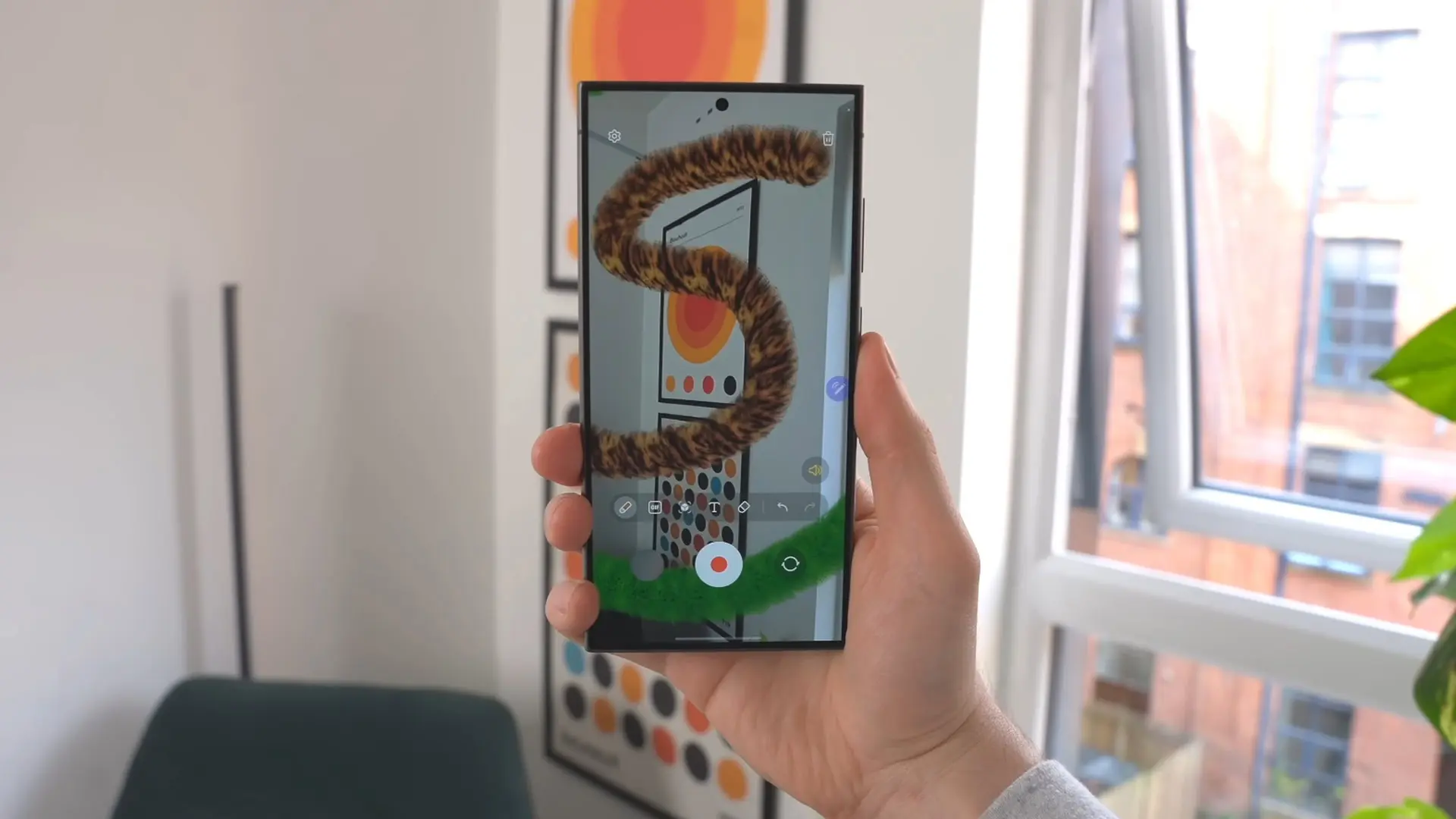
Even though Samsung once highlighted these applications as creative tools for the Galaxy lineup, they failed to become essential features for most users. AR Doodle allowed people to draw in the air using the rear or front camera, while Quick Measure offered a simple way to estimate the size of objects through the lens. Both tools were useful in demonstrations and in short social media clips, but neither managed to remain a frequent stop for the majority of Galaxy owners.
The key facts about the shutdown
The announcement is easy to summarize in a few concise points.
- AR Doodle and Quick Measure will be retired on Dec. 31, 2026.
- After that date, neither app will be offered for download on the Galaxy App Store.
- Samsung has said that future versions of One UI will no longer support either application.
- Some newer devices, including the Galaxy Z Fold 8, already do not show these apps as available.
- If the apps are already installed on a compatible phone, they may continue to run until that phone moves to an unsupported version of One UI.
These changes might be easy to ignore for someone who never used the apps, but they matter for Samsung fans who still enjoy drawing on live camera views or taking measurements without a tape measure.
What did AR Doodle and Quick Measure do?
To understand why this shutdown matters, it helps to look at how the tools actually worked. AR Doodle was integrated into Samsung's AR Zone and allowed users to paint over a live camera feed. Instead of overlaying digital effects on a photo after it was taken, AR Doodle tracked objects and faces in real time. A user could write text in the air, draw a mustache over a friend's face, or add sparkles around a moving object, and the drawing would stay anchored to the scene. On phones with an S Pen, the experience was more precise because the stylus acted as a brush.
Quick Measure was a more practical application. It used the camera's sensors and Samsung's software to estimate the dimensions of physical objects. For a moving company, a delivery person, or anyone trying to find out whether a new piece of furniture would fit into a room, Quick Measure promised a rough answer without needing a physical ruler. It was not intended to replace professional measurement tools, but it was a fun and occasionally useful utility to keep on a Galaxy phone.
Both activities are possible with other apps, but Samsung had integrated them into a larger AR Zone package. In its own marketing, Samsung framed AR Doodle and Quick Measure as proof that its phones could do more than take excellent photos.
Why is Samsung removing these apps now?
The technology landscape has changed. Around the time these AR features were created, companies were competing to demonstrate how cameras could understand the physical environment. Apple's ARKit and Google's ARCore helped developers build augmented reality experiences, and hardware makers rushed to include AR stickers, face effects, and measurement tools in their phones. Samsung's AR Zone was part of that wave. But the enthusiasm did not last. Augmented reality remained promising for specific use cases, yet it did not become the universal feature that many companies hoped it would be.
Artificial intelligence has now taken over as the industry's central theme. Samsung has invested heavily in Galaxy AI, adding generative photo editing, live translation, call assistance, and summarization tools to its premium phones. These features are easier to explain to consumers than AR drawing tools, and they are more closely connected to the modern smartphone experience. Keeping older AR apps alive requires developer time, compatibility work, testing, and customer support. Samsung appears to believe that those resources are better spent on features people use every day.
This is not the first time Samsung has pruned less popular software. Over every major Android update, the company has removed apps and merged functions into its main interface. There was a time when Samsung had a much larger list of companion apps and experimental services. Many of those experiments have already disappeared. The retirement of AR Doodle and Quick Measure is simply the latest step in that ongoing cleanup.
What does this mean for future One UI versions?
The most important part of Samsung's announcement is its reference to future versions of One UI. Samsung does not usually promise to keep old apps alive forever. But when the operating system stops supporting an app, the app can disappear from the visible interface or become unusable even if it remains in storage. The fact that the Galaxy Z Fold 8 does not list AR Doodle or Quick Measure in the Galaxy App Store is a strong sign that the apps are already absent from Samsung's newest platform setup.
If a future One UI update is installed on a device that currently has these apps, the update might disable them or remove access to AR features that depend on camera APIs. Samsung may also stop supporting the cloud-side data that these apps used for object tracking or measurement models. In practice, users should not assume that installing every system update will keep their favorite AR tools safe.
What should Galaxy owners do before the shutdown?
Anyone who wants to experience AR Doodle or Quick Measure before they disappear should download them well before Dec. 31, 2026. Once the deadline passes, there will be no easy way to get them from Samsung's official store. Users who already have the apps installed should also avoid deleting them. Reinstalling an app that no longer appears in the Galaxy App Store can be difficult, and there is no guarantee that sideloaded copies from third-party sources would install cleanly or receive any future fixes.
It is worth noting that Samsung does not necessarily expect every Galaxy owner to act. The company has stated that future One UI versions will not support these tools, which is another way of saying that they will be phased out naturally as people upgrade their devices. For most users, this will happen in the background without any noticeable interruption. But for the small group of people who genuinely value them, the important thing is to act before the official cutoff date.
Samsung's decision also serves as a useful reminder that software platforms are not permanent. Features that once felt futuristic can become unnecessary when an industry changes direction. AR Doodle and Quick Measure were created to show off the camera capabilities of Samsung's phones, and they did that well. Now Samsung has a new tale to tell about artificial intelligence, and the company is making room for the next stage of Galaxy software.
Source: Android Authority News