
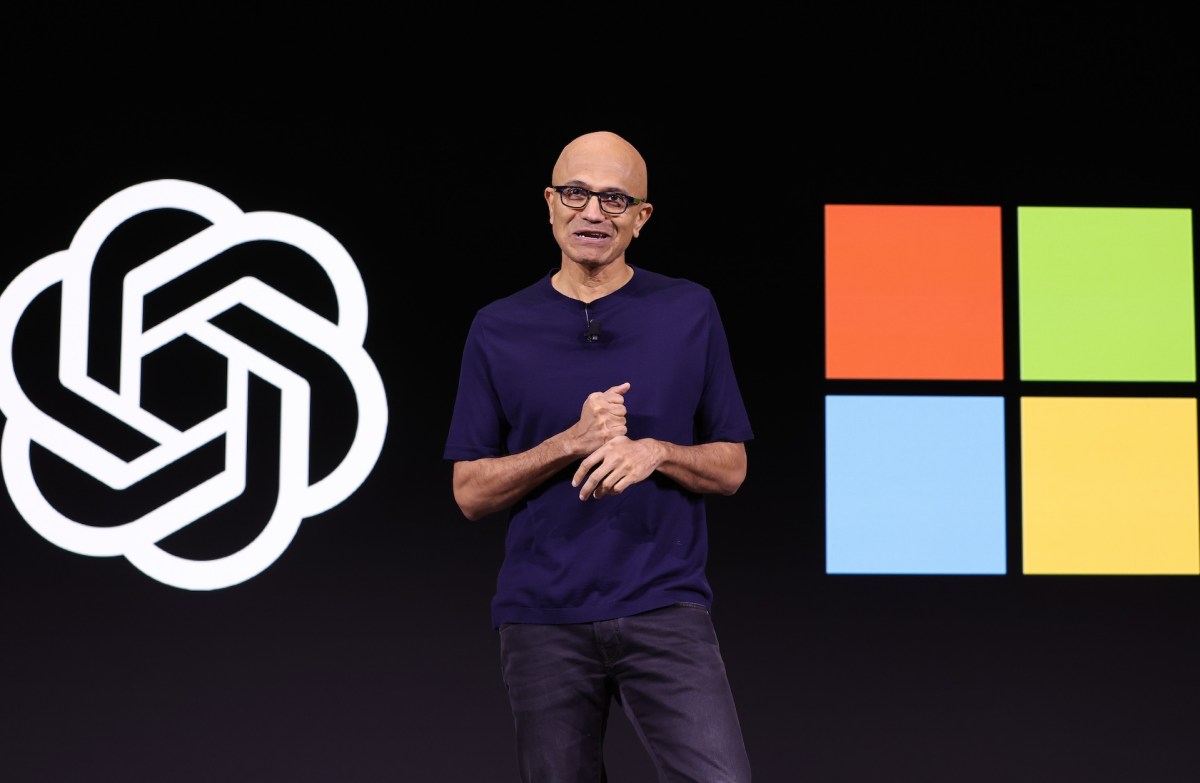
In a recent blog post that has sent ripples through the tech industry, Microsoft CEO Satya Nadella issued a stark warning to enterprises relying on proprietary artificial intelligence models from companies like OpenAI and Anthropic. Nadella argues that these organizations are effectively paying for AI intelligence twice: once through token usage fees, and again by unknowingly surrendering their most valuable asset—proprietary business knowledge.
The concern revolves around how AI models learn from user interactions. Every prompt, correction, and agent tool used feeds what Nadella calls "exhaust"—data that teaches the model about the nuances of a company's operations. Over time, this institutional know-how becomes something a competitor could never buy, yet enterprises are giving it away freely. This warning echoes sentiments expressed by venture capitalists like Jason Calacanis and Palantir CEO Alex Karp, who have long worried that AI labs act as Trojan horses, gaining access to sensitive information that could later be used against their own customers.
The Hidden Cost of Proprietary AI
At the heart of Nadella's argument is the concept of "double payment." Companies openly spend money on AI token usage, but they also pay with something far more valuable: the proprietary knowledge required to make the AI useful. "The better you want the model to perform, the more of that knowledge you have to feed it!" Nadella writes. This creates a feedback loop where enterprises become increasingly dependent on the model provider, while the provider becomes an ever-richer repository of competitive intelligence.
Nadella also points out a fundamental hypocrisy in the AI industry. Model makers freely scrape the internet to train their systems, leveraging public data without permission. Yet they often impose restrictive terms on customers who want to reverse-engineer those models through a process called "distillation"—using the model's own outputs to train alternative, cheaper models. This practice, which Anthropic recently accused Chinese open-source models of exploiting, is seen as essential for fostering competition and innovation. Nadella argues that if model makers can train on the world's data, enterprises should have the same right to learn from the models they've helped train.
A Growing Movement Toward Open Source and On-Premises AI
Nadella's warning comes at a time when many large enterprises are already reevaluating their AI strategies. After experimenting with proprietary models from labs like OpenAI, Anthropic, and Google, these companies are increasingly turning to open-source alternatives that can be run on their own premises. Idit Levine, founder and CEO of Solo.io, a company that provides networking and security software for enterprise AI systems, confirms this trend. Her customers are asking: "Can I take an open source model and run it on-prem? It will do almost 90% of what the big one's doing. It will cost way less. They understand that, and they can control it."
Solo.io's technology was selected last year to power the Linux Foundation's Agentgateway project, and its customers include major corporations like T-Mobile, ADP, and SAP. Levine sees on-premises open-source models as the next big wave in enterprise AI use. This sentiment is shared by other industry players. Vercel, a platform known for building and hosting websites that recently added AI model-switching tools, reported that open-source models accounted for 29% of all traffic routed through its gateway last month. Similarly, OpenRouter, a company that helps developers route requests across different AI models, is seeing a surge in traffic to open-source alternatives.
Nadella's Proposed Solution: Cloud-Based Data Ownership
Nadella's solution is characteristic of a CEO of a major cloud provider. He urges companies to "retain ownership" of their data, including prompts, feedback, and corrections. To achieve this, he recommends building "proprietary learning environments" on the cloud—likely Microsoft's Azure—where data is already stored. He also advocates for incorporating "orchestration layers" that allow easy switching between AI models from different providers, preventing lock-in. Tools like AI gateways that enable such flexibility have become increasingly popular.
While Nadella never explicitly uses the term "open source," the subtext is clear. Large companies, many of which maintain their own data centers alongside cloud infrastructure, are already moving toward open-source models deployed on-premises. This shift is driven by a desire for control, cost savings, and data security. By keeping models and data within their own environments, enterprises can avoid the risks of proprietary AI while still reaping the benefits of advanced intelligence.
Historical Context: The Rise of AI Trust Issues
Nadella's warning is not isolated. It builds on a long history of concerns about data privacy and vendor lock-in in the tech industry. During the early days of cloud computing, similar fears emerged about companies like Amazon Web Services and Google Cloud accessing customer data for their own purposes. The recent explosion of generative AI has amplified these worries, as models require vast amounts of user interaction data to improve. The open-source movement in AI, led by projects like Meta's Llama 2 and Mistral, offers an alternative that prioritizes transparency and user control.
Experts point out that the issue is not just about data leakage—it's also about competitive dynamics. If a proprietary AI model learns the intricacies of a company's supply chain, pricing strategy, or product roadmap, the model maker could theoretically use that knowledge to develop competing solutions. While companies like OpenAI and Anthropic have policies against such practices, the potential for misuse remains a serious concern. This is especially true in industries like finance, healthcare, and defense, where data confidentiality is paramount.
Nadella's blog post has already sparked widespread discussion across technology forums and executive meetings. Many see it as a call to action for enterprises to rethink their AI strategies. "In consuming intelligence, you are creating intelligence. And what you create should belong to you," Nadella writes. This statement encapsulates the central message: businesses must take ownership of the knowledge they generate through AI interactions, rather than handing it over to third parties.
As the debate continues, one thing is clear: the era of blind trust in proprietary AI models is coming to an end. Enterprises are increasingly demanding transparency, control, and flexibility in their AI tools. Whether through open-source models, on-premises deployments, or cloud-based orchestration layers, the trend is toward a more decentralized and owner-controlled AI ecosystem. With the CEO of Microsoft—a company that has invested billions in both OpenAI and Anthropic—now openly cautioning against these very partnerships, the shift is likely to accelerate. Companies of all sizes would do well to heed Nadella's warning and take proactive steps to protect their most valuable asset: their data.
Source: TechCrunch News