

Handheld gaming systems are no longer a niche category. Today's devices range from compact retro emulation machines to full-fledged handheld PCs capable of running modern AAA titles. That variety is exciting but also makes shopping harder. The best gaming handheld now depends less on a single standout device and more on how, where, and what you want to play.
Best handheld gaming PCs for 2026
Steam Deck – Best handheld gaming PC for most
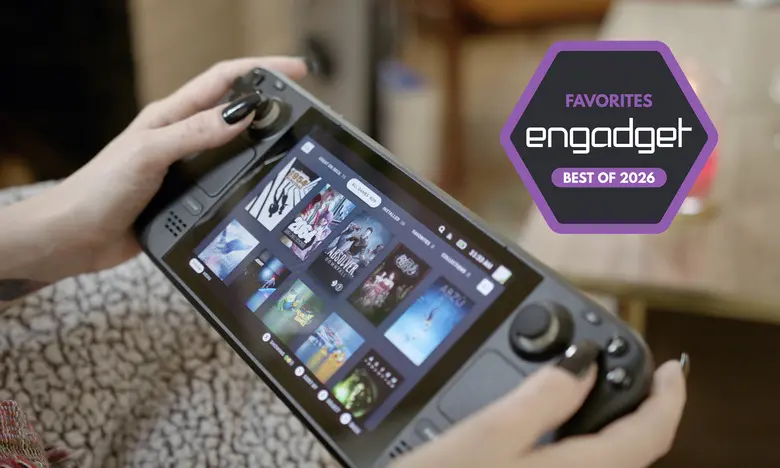
Valve's Steam Deck remains the best balance of price, performance, and usability. The Steam Deck OLED, starting at $549, brings a 7.4-inch HDR OLED display, a larger battery, a more efficient AMD APU, and quieter cooling. It is brighter, faster, and more vivid than the LCD model. The entry-level LCD version costs $399 and delivers the same core experience with a 7-inch IPS display and a 256GB SSD. The OLED lasts three to twelve hours depending on the game; the LCD lasts two to eight. Both run SteamOS, a user-friendly yet flexible platform, and both can emulate many classic consoles via third-party tools like EmuDeck.
However, the Steam Deck is aging in 2026. Many graphically demanding games released over the past couple of years do not run well, and anti-cheat software blocks some live-service titles. Still, it can play hundreds of games like Elden Ring or Final Fantasy VII Rebirth, and the list of Steam titles that run acceptably is massive. The main downside is its size: almost a foot long and two inches thick, it stretches the definition of a handheld. The d-pad is also a bit mushy. But the LCD model is a fantastic value, and the OLED display is a superb upgrade for those with a larger budget.
Lenovo Legion Go S (SteamOS, Z1 Extreme) – Best premium handheld gaming PC
The Lenovo Legion Go S is the closest thing yet to a Steam Deck 2. It is the first third-party device to natively run SteamOS, and it comes with a more modern set of internals: an AMD Ryzen Z1 Extreme processor, 32GB of RAM, and a 1TB SSD. It can pull up to 33W in handheld mode or 40W when plugged in, well above the Steam Deck's 15W. The result is better performance in recent AAA games and far more room to reach 60fps at higher settings. The 8-inch LCD display has a 1920x1200 resolution, a 120Hz refresh rate, and variable refresh rate support, though it lacks the OLED contrast and HDR of the Steam Deck OLED. The Z1 Extreme version costs $900. A cheaper configuration with a Z2 Go chip costs $650 but has less RAM and storage.
The Legion Go S is chunkier and slightly heavier than the Steam Deck, but its rounded edges and textured grips make it comfortable. Hall-effect joysticks and dual USB-C ports are welcome. Only two back buttons and a small touchpad are present, however, and fan noise is louder. The 55.5Whr battery often lasts a little less than the Steam Deck's, especially on demanding titles. If you want to play the latest blockbusters on the go and prefer SteamOS, this is the one to get.
ASUS ROG Xbox Ally X – Best Windows gaming handheld
For those who want maximum software flexibility, the ASUS ROG Xbox Ally X is a Windows 11 handheld built around an AMD Ryzen Z2 Extreme chip, 24GB of RAM, and an 80Whr battery. It ships with an "Xbox full screen experience" that aggregates games from various storefronts into one gamepad-friendly interface. The 7-inch 1080p LCD supports a 120Hz refresh rate and VRR, and it is both sharper and faster than the Steam Deck's display, though its colors are not as rich as the OLED panel on Valve's device. Because Windows runs almost anything, the Ally X can access Steam, Epic Games Store, GOG, and Xbox Game Pass without workarounds. At $1,000, it is expensive, but for players with libraries across many stores or who need anti-cheat-compatible online games such as Destiny 2, this flexibility is a major advantage.
Windows on handhelds is still somewhat rough. Navigation outside the Xbox UI can be awkward, and you may need to use desktop mode for certain updates. The Ally X's large battery, comfortable grips, and responsive controls help offset those quirks. We got roughly 3.5 hours of demanding gameplay at 1080p with the screen at full brightness. The device is bulky and its haptics are lackluster, and there is no included case. A cheaper ROG Xbox Ally model at $600 is not recommended because it has a weaker processor, smaller battery, and half the memory and storage.
Best mobile gaming handhelds
Retroid Pocket 5 – Best for most people
The Retroid Pocket 5 is the Android handheld to get if you mainly want to emulate older consoles. It costs $219 and runs on a Snapdragon 865 chip with 8GB of RAM. Its 5.5-inch OLED display is bright and vivid. With some setup, it can run most PlayStation 2 and GameCube games at full speed and up to 2.5x native resolution. PSP, Dreamcast, N64, and PS1 titles run flawlessly at higher upscales. Some Wii and 3DS games are also playable, though the interface can be cumbersome. The device also handles Android games and cloud streaming well.
But emulation on this device requires a lot of tinkering. You will need to source ROM files, choose the right emulator cores, and tweak settings for many games. The design is sturdy and comfortable for the most part, with textured grips and excellent face buttons. The joystick layout places the left stick below the d-pad, which can become uncomfortable for 3D or modern Android games. Battery life ranges from about three hours with heavy games to more than ten hours with older 8- or 16-bit emulation. The built-in fan helps keep things cool but can be noisy on its highest setting.
Retroid Pocket Flip 2 – Another good option
The Retroid Pocket Flip 2 is essentially the Pocket 5 in a clamshell shape. It has the same Snapdragon 865 chip, OLED display, 5,000mAh battery, and active cooling, and it costs $229. The folding design provides screen protection and makes the device easy to drop into a bag. However, the joysticks must be recessed to avoid touching the screen, which makes them feel awkward. The face buttons and d-pad are also smaller than they could be. It is thicker and heavier than the Pocket 5, but if you prefer a DS-style layout, this is a fine alternative.
AYN Odin 2 – Best mobile gaming handheld overall
The AYN Odin 2 is a step up for those who want stronger emulation performance. It uses a Snapdragon 8 Gen 2 processor, the same chip found in flagship phones from 2023. Starting at $299, it plays PS2, GameCube, and most Wii/3DS games at higher resolutions with less tweaking than cheaper handhelds. It is also more comfortable to hold, with curved grips and offset joysticks that work well for cloud streaming and modern Android games. The 6-inch 1080p IPS display is bright, though not as colorful as the OLED panels on Retroid devices. Battery life is excellent, often exceeding eight hours of PS2 emulation or twenty hours of lighter tasks. AYN has a newer Odin 3 model out that we have not yet tested.
Analogue Pocket – Best Game Boy-style handheld
The Analogue Pocket is the ultimate Game Boy for fans of physical cartridges. It plays Game Boy, Game Boy Color, and Game Boy Advance titles through its card slot, and it can also support systems like Game Gear and Neo Geo Pocket via adapters. Its field-programmable gate array (FPGA) hardware emulates games with near-perfect accuracy. The 3.5-inch display is incredibly sharp and can be filtered to resemble vintage panels. It costs $220 and can play ROMs from a microSD card after a firmware update. The device has excellent build quality, but stock issues and shipping delays are common, which remains its biggest drawback.
Playdate – Honorable mention
The Playdate is a small yellow handheld with a 2.7-inch monochrome display and a side-mounted crank. Its library is full of quirky, compact indie games, and a couple dozen come included with the system. At $229, it is hard to call a great value for most people, but those who appreciate experimental gameplay will find it a delightful toy.
What about the Nintendo Switch 2?
The Nintendo Switch 2 is already more popular than any device on this list, but it is not included as a formal pick because it exists in its own world. Its main draw is access to new Nintendo exclusives, which no other handheld can legally offer. The hardware itself is a substantial upgrade over its predecessor, with a sharper 7.9-inch display, magnetic Joy-Cons, and better performance. Early exclusive software is still limited, so unless you have a strong urge to play Donkey Kong Bananza or Mario Kart World, you can wait before rushing out to buy one.
Other gaming handhelds we've tested
Lenovo Legion Go 2
The Legion Go 2 is a powerful alternative with an 8.8-inch OLED 144Hz display and detachable controllers. It is extremely heavy, weighing over two pounds, and performs slightly worse than the ASUS ROG Ally X at equal settings. Prices start at $1,100, making it a niche choice for those with money to burn.
MSI Claw 8 AI+
The MSI Claw 8 AI+ offers solid performance with an Intel Core Ultra 7-258V and 32GB of RAM, often exceeding frame rates of older competitors. Its 8-inch 120Hz display is bright and has VRR. But at $1,100, it is too expensive and its software is less polished than ASUS's Xbox UI.
ModRetro Chromatic
The ModRetro Chromatic is a Game Boy-style FPGA handheld with a premium metal frame and a bright display. It requires three AA batteries, lacks save states, and does not support ROMs or GBA carts. At $200, it is not as versatile as the Analogue Pocket. In addition, its creator's ties to defense contracting make it an ethically difficult choice for many potential buyers.
Lenovo Legion Go S (Windows, Z2 Go)
The Windows 11 variant of the Legion Go S with the Z2 Go chip is a decent device on paper, but its performance at $730 lags too far behind the ROG Ally X and other competitors. Windows is still clunky in this form factor, so we only recommend the SteamOS version.
Ayaneo Flip DS
The Ayaneo Flip DS is a clamshell Windows handheld with dual displays, which makes it a natural fit for Wii U or 3DS emulation. However, the foldable design forces shallow, recessed joysticks and flat buttons. It runs hot, battery life tops out around two hours, and prices start above $1,100.
Ayaneo Kun
The Ayaneo Kun is a large Windows handheld with a sharp 8.4-inch display and a powerful processor. It can replace a desktop PC in a pinch, but it is expensive, heavy, and lacks VRR. The ROG Ally X is the better buy for most.
Retroid Pocket Classic
The Retroid Pocket Classic is a vertical Android handheld that primarily emulates retro games. It has a superbly bright 3.9-inch OLED screen and an excellent price of $129. It cannot play physical cartridges like the Analogue Pocket, but it is a better value for those who just want to play ROMs.
Retroid Pocket Mini
The Retroid Pocket Mini is a smaller version of the Pocket 5 with a 3.92-inch 4:3 OLED screen. It runs on the same Snapdragon 865 chip and is well suited for older retro systems that use the 4:3 aspect ratio. The tiny display feels limiting for widescreen or modern games, though, and there is extra empty space around the panel.
Retroid Pocket 4 Pro and Retroid Pocket 4
The Retroid Pocket 4 Pro remains a decent budget option under $200, but it lacks the larger OLED screen and ergonomic design of the Pocket 5. The base Retroid Pocket 4 is less capable and best avoided unless you only need light emulation.
Miyoo Mini Plus
The Miyoo Mini Plus is a popular low-cost handheld with a nice Game Boy-style shell and a 3.5-inch display. It can emulate up to original PlayStation games and its Linux-based software is highly customizable. However, it lacks fast charging, can be difficult to buy, and requires tinkering to reach its full potential.
TrimUI Brick
The TrimUI Brick is another affordable vertical handheld with a brushed metal backplate and a sharp 3.2-inch IPS screen. It has a weaker chip than the Retroid Pocket Classic, stiffer buttons, and a clunky stock interface. Most people will be happier paying a bit more for the Pocket Classic.
Anbernic RG35XX Plus, RG35XXSP, RG405M
Anbernic offers a wide range of inexpensive handhelds with varying quality. The RG35XX Plus is a decent budget option but its stock software is sloppy. The RG35XXSP uses a clamshell design but has concerning battery quality issues. The RG405M has a metal body but is outclassed by Retroid's offerings in both performance and ergonomics.
PlayStation Portal
The PlayStation Portal is a remote play accessory for the PlayStation 5. It streams games over Wi-Fi, so its performance depends entirely on your network. It does not support Bluetooth audio and lacks built-in emulation. At $200, most people are better off using a smartphone and controller.
Logitech G Cloud
The Logitech G Cloud has a bright 7-inch display and an all-day battery life, but it costs $300. Its Snapdragon chip is less powerful than the Retroid Pocket 5, which lowers the price and offers better emulation performance. The G Cloud is a nice device, but not at its current price.
What to know about the gaming handheld market
The gaming handheld market can be divided into three broad tiers. At the top are x86-based portable PCs like the Steam Deck and ROG Ally X. These are the most powerful devices, capable of running modern PC games and emulating a wide range of consoles. They are also the largest, most expensive, and often have short battery life. Next come mobile handhelds that run Android or Linux. These devices are more portable and usually cost between $50 and $400, but they cannot play modern PC or console games without streaming. Many people buy them for retro emulation through software such as RetroArch, though the legality of downloading ROMs is murky. The final tier includes dedicated handhelds like the Nintendo Switch 2 or Playdate, which offer a unique, often exclusive library of games and are typically more user-friendly.
Recent updates
In November 2025, the ASUS ROG Xbox Ally X replaced the older ROG Ally X as our top Windows handheld. We also added notes on the Lenovo Legion Go 2, ModRetro Chromatic, Retroid Pocket Classic, and TrimUI Brick. Several new devices have been announced, including the Retroid Pocket 6 and AYN Odin 3, but we have not yet completed testing on those models.
Source: Engadget News