

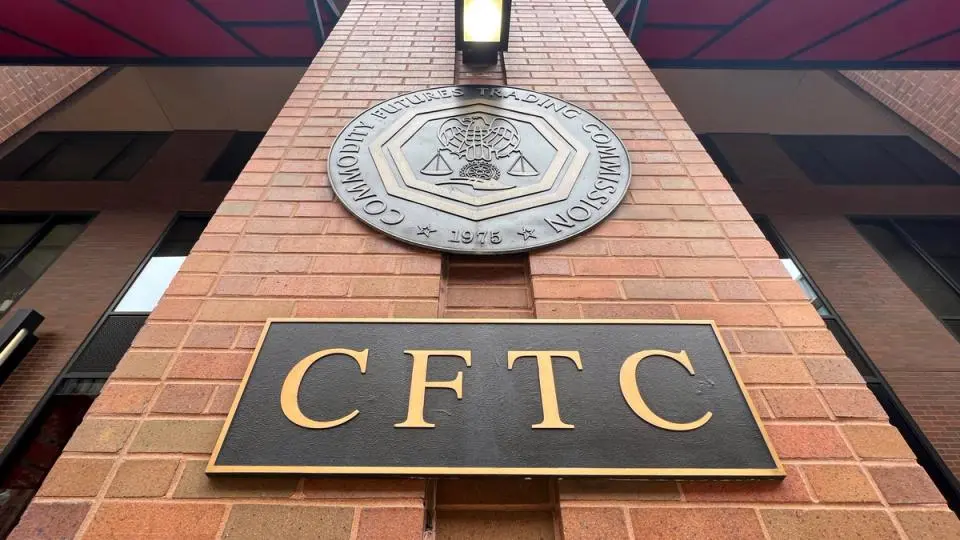
The United States Commodity Futures Trading Commission (CFTC) has issued a notable advisory to the derivatives industry, stating that around-the-clock trading is well-suited for cryptocurrency firms but may present significant challenges for other sectors. This guidance was released on the same day the CFTC granted its first approvals for crypto perpetual futures contracts, marking a pivotal moment in the regulation of digital asset derivatives.
Advisory Highlights Regulatory Divide
The advisory, published on May 29, 2026, explicitly notes that the nature of the cryptocurrency sector lends itself more appropriately to 24/7 operations compared to traditional financial instruments. The CFTC warns that expanding to non-stop trading services could introduce pitfalls for non-crypto derivatives platforms, including increased operational risk, strain on clearing systems, and potential confusion for market participants accustomed to conventional trading hours.
This statement suggests an increasing supervisory divide between new digital entrants and established players within the derivatives market. The regulator appears to be drawing a clear line: while innovation in crypto markets is encouraged, traditional asset classes may not benefit from the same round-the-clock practices. The advisory serves as a cautionary note for exchanges and clearinghouses that might consider offering seamless 24/7 trading for products tied to equities, commodities, or interest rates.
Perpetual Futures Approvals Signal New Era
The CFTC concurrently announced landmark approvals for crypto perpetual futures contracts at Kalshi and Coinbase. Perpetual futures, which have become a cornerstone of crypto trading globally, are derivatives that have no expiration date, allowing traders to maintain open positions indefinitely. They typically use a funding rate mechanism to keep prices aligned with the underlying asset.
These approvals represent a significant step toward mainstream acceptance of crypto derivatives within the U.S. regulatory framework. Previously, such products were largely offered by offshore platforms, often outside U.S. oversight. By granting approval to CFTC-regulated entities, the Commission aims to bring these products into a more transparent and legally compliant environment, offering investor protections that were previously absent.
The approvals also underscore the CFTC's evolving approach to digital assets. Under current leadership, the agency has shown a willingness to accommodate crypto innovation while imposing robust risk management requirements. The inclusion of 24/7 trading capabilities in these contracts was a key factor, as crypto markets operate continuously, and traders expect the ability to manage positions at any time.
Background on CFTC's Role in Crypto Regulation
The CFTC has emerged as a primary regulator of digital asset derivatives in the United States. While the Securities and Exchange Commission (SEC) oversees assets deemed securities, the CFTC has jurisdiction over commodities and derivatives, including futures and swaps. Bitcoin and Ether are classified as commodities, placing many crypto derivatives under the CFTC's purview.
Historically, the CFTC has taken a cautious stance on new products, requiring extensive review before approving contracts. However, recent years have seen a shift toward more proactive engagement. The agency has granted approvals for Bitcoin and Ether futures ETFs, and more recently for physically settled options. The perpetual futures approvals are a natural extension of this trend.
In the advisory, the CFTC elaborated on the unique characteristics of crypto that make 24/7 trading feasible. For one, crypto assets trade continuously on spot exchanges worldwide, meaning overnight gaps and price jumps are common. Traditional markets, in contrast, operate with defined trading hours and have mechanisms like circuit breakers to manage volatility. A 24/7 regime for non-crypto derivatives could require fundamental changes to clearing and settlement infrastructure, which is built around daily netting and batch processing.
The regulator also highlighted risks for retail investors, who might be more susceptible to impulsive trading decisions if markets never close. Crypto traders, however, are generally more accustomed to constant market activity and have developed risk management practices accordingly.
Impact on Traditional Derivatives Markets
The advisory raises questions about the future of derivatives tied to traditional assets. While some exchanges have experimented with extended hours for equity futures and options, full 24/7 trading remains rare. The CFTC's warning may serve as a deterrent for those considering such expansions without adequate safeguards.
Industry experts note that the operational burdens of round-the-clock trading extend beyond technology. Clearing members would need to maintain staffing and capital resources at all times, and margin models would require recalibration to account for continuous price movement. Additionally, regulatory oversight itself would need to adapt, as the CFTC and other agencies currently operate on a standard business schedule.
For traditional commodity derivatives like oil or gold futures, the case for 24/7 trading is weaker because the underlying spot markets have limited hours. Even global benchmarks like Brent crude trade nearly 24 hours a day through electronic platforms, but physical delivery and settlement processes remain tied to business hours.
Broader Context of Digital Asset Regulation
The CFTC's move comes amid a broader push by U.S. regulators to integrate crypto into existing frameworks while addressing risks. The SEC has been grappling with classification issues, while the Treasury Department has focused on anti-money laundering compliance. The CFTC's advisory and approvals are part of a coordinated effort to establish clear rules for crypto derivatives.
In recent months, Congress has also considered legislation like the CLARITY Act, which aims to define stablecoin regulation and clarify jurisdictional boundaries. The debate around that bill has highlighted tensions between banks and crypto firms over stablecoin rewards, as seen in the JPMorgan CEO Jamie Dimon's criticism of Coinbase CEO Brian Armstrong. The CFTC's advisory subtly reinforces the idea that crypto markets operate on a different rhythm and may require tailored regulatory approaches.
Notably, the approvals for perpetual futures at Kalshi and Coinbase do not grant carte blanche for all such products. The CFTC said it will continue to monitor these contracts and may impose additional conditions if risks emerge. The agency also emphasized that firms must maintain robust compliance programs, including real-time market surveillance and customer protection measures.
Global Implications and Competitive Dynamics
The U.S. regulatory stance on 24/7 crypto trading contrasts with jurisdictions like the European Union, which is moving toward its own Markets in Crypto-Assets (MiCA) framework. MiCA does not explicitly mandate 24/7 trading but allows for it. In Asia, Singapore and Hong Kong have also permitted perpetual futures under strict licensing conditions.
The CFTC's approval could encourage more U.S. platforms to offer these products, potentially diverting volume from offshore exchanges that previously dominated. However, the advisory regarding traditional derivatives may keep those markets within conventional hours, preserving a clear demarcation between crypto and non-crypto assets.
Market participants have reacted positively to the approvals, noting that regulated perpetual futures provide a safer avenue for hedging and speculation. The contracts traded on Kalshi and Coinbase will be subject to position limits, reporting requirements, and transparent pricing. This regulatory oversight is expected to attract institutional investors who were previously hesitant to engage with unregulated offshore markets.
At the same time, the CFTC's warning about 24/7 trading for other sectors has sparked debate among exchanges. Some argue that modern technology makes round-the-clock trading feasible for all asset classes, while others contend that the physical settlement processes and liquidity patterns of traditional markets do not warrant it. The CFTC's guidance may tilt the balance in favor of maintaining the status quo for now.
Historical Evolution of Trading Hours
The concept of 24/7 trading is not entirely new. Electronic trading systems have allowed near-continuous access to many markets for decades. Foreign exchange markets operate 24 hours a day on weekdays, and major stock exchanges have extended hours for certain products. However, full weekend trading remains rare due to liquidity gaps and settlement complexities.
The crypto market, being digital and global by nature, has always traded around the clock. This has normalized constant monitoring for participants. The CFTC's advisory recognizes that crypto firms have already built systems to handle this, whereas traditional firms would need to invest heavily to replicate it safely.
The regulator's nuanced stance is likely to inform future policy decisions. As the crypto industry matures, its operational differences from legacy finance will continue to challenge regulators to adapt without sacrificing investor protection. The CFTC's recent actions suggest a pragmatic path forward: embrace crypto's unique characteristics within a regulated framework while cautioning against thoughtless adoption of those characteristics in other domains.
Source: Coindesk News