

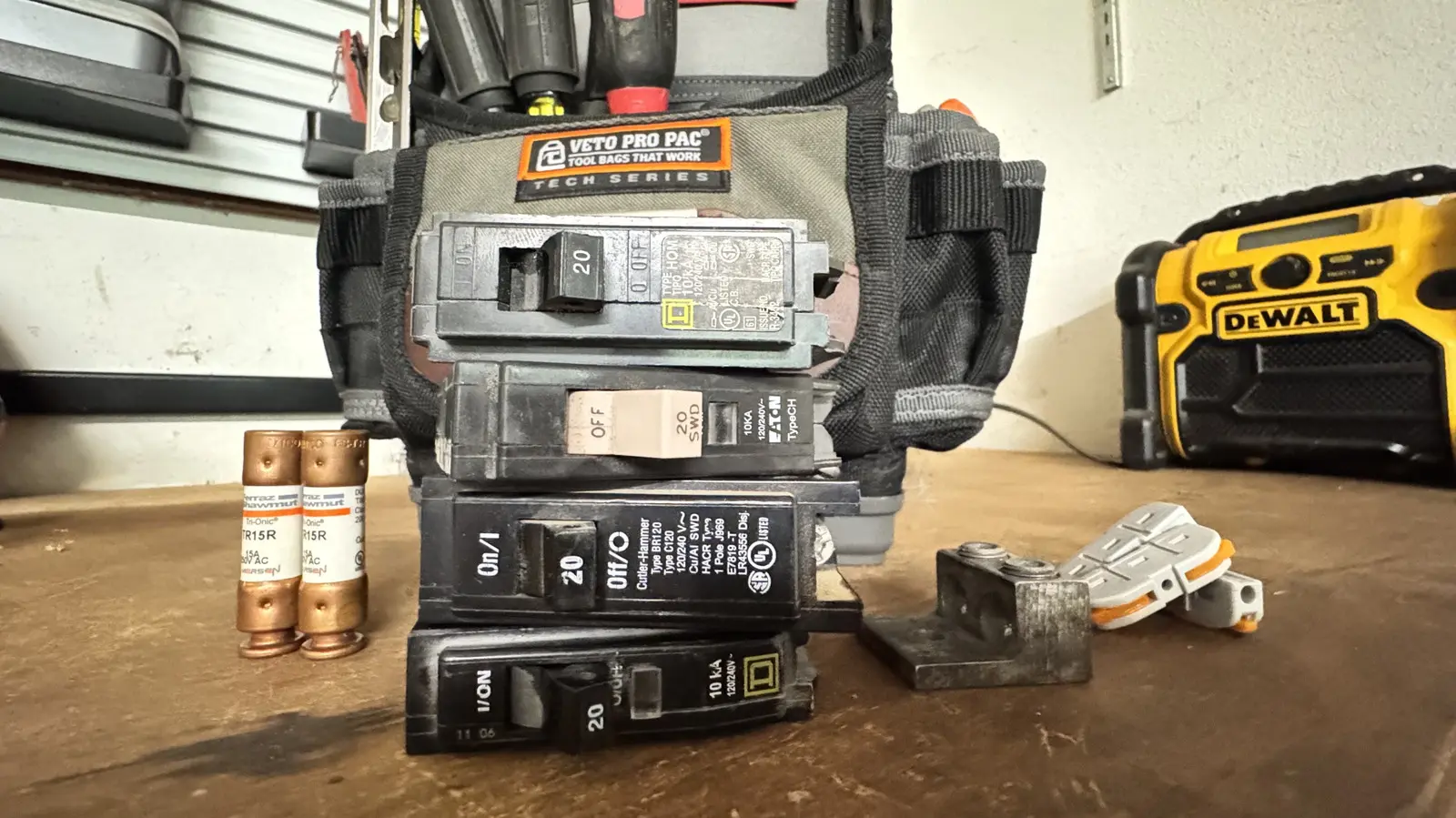
Circuit breakers are fundamental components of any electrical system, serving as overcurrent protection devices (OCPDs) that safeguard wiring, equipment, and people from the dangers of overloads and short circuits. From the small 15-amp breakers found in residential panels to massive industrial units rated for thousands of amps, all circuit breakers share the same core function: to interrupt current flow when a fault is detected. However, the conditions under which breakers can be safely operated are governed by a set of rules that have evolved through decades of electrical codes and testing standards. One of the most well-known yet frequently misunderstood regulations is the so-called 80% rule.
The 80% rule dictates that a standard circuit breaker should not be loaded to more than 80% of its rated current for continuous loads. In other words, a 100-amp breaker should not carry more than 80 amps continuously. A continuous load is defined by the National Electrical Code (NEC) as a load where the maximum current is expected to persist for three hours or more. Examples include lighting in commercial buildings, electric vehicle chargers, and air conditioning units that run for extended periods. Non-continuous loads, such as a microwave oven that operates for minutes at a time, are not subject to this limitation in the same way.
Contrary to popular belief, the 80% rule is not explicitly stated as a single sentence in the NEC. Instead, it is derived from a combination of code articles and testing requirements. The primary NEC reference is Article 210.20(A), which requires that the rating of the OCPD for a branch circuit supplying continuous or a combination of continuous and non-continuous loads must be at least the sum of the non-continuous load plus 125% of the continuous load. Since 1 divided by 1.25 equals 0.8, the mathematical equivalent is that the breaker can only be loaded to 80% of its rating for continuous loads. This 125% factor is also applied to conductor sizing and is intended to provide a safety margin for heat buildup.
Another critical driver of the 80% rule is the Underwriters Laboratories (UL) standard UL 489, which governs the testing and listing of molded-case circuit breakers. Standard breakers are tested to carry 100% of their rated current, but only under specific test conditions with ideal ventilation and ambient temperatures. In real-world installations, factors like panel enclosure size, the number of adjacent breakers, and the ambient temperature can all reduce the breaker's ability to dissipate heat. The terminals (lugs) where wire connections are made are particularly vulnerable to overheating because they are not designed to handle that continuous thermal stress at full rating. UL 489 testing for standard breakers only certifies them for continuous operation at 80% of their rating unless they are specifically marked as 100%-rated.
To qualify as a 100%-rated breaker, the device must undergo more rigorous testing under UL 489 and meet additional installation requirements. These breakers often use heavier lugs, larger heat sinks, and are tested in enclosures with minimum spacing and ventilation specifications. Even then, the NEC requires that the breaker be installed in a panelboard or enclosure that is specifically designed to handle the continuous full-load current, with proper clearance and often forced or natural ventilation. Because of these complexities, 100%-rated breakers are rarely used in residential applications; they are more common in industrial and commercial settings where large continuous loads like data centers or manufacturing equipment are present.
Understanding what constitutes a circuit is also essential. In NEC terms, a branch circuit is the set of conductors between the final OCPD and the outlets it protects. Outlets are points where power is taken, such as receptacles, lighting fixtures, or appliance connections. A circuit breaker protects that branch circuit by monitoring current and tripping if it exceeds the breaker's rating for a sustained period (overload) or nearly instantaneously (short circuit). The internal components of a breaker—the frame, copper contacts, actuating mechanism, arc extinguisher, and trip unit—all contribute to its performance limits. The heat generated by continuous current flow affects these components, especially the thermal-magnetic trip mechanism, which can degrade over time if pushed beyond its continuous duty rating.
A common misconception is that the 80% rule applies to any load at any time. In reality, it only applies to continuous loads. A breaker can safely carry 100% of its rating for non-continuous loads. For example, a general-purpose receptacle circuit in a home usually supplies intermittent loads like vacuum cleaners, lamps, and electronics. A 15-amp breaker on such a circuit can supply 15 amps for as long as it takes to vacuum a room, but if that same circuit were used for a 12-amp air conditioner running for hours, it would violate the 80% rule because the continuous load would be 12 amps, which is 80% of 15 amps—the limit. If the air conditioner drew 14 amps (above 80% of 15), that would be a code violation and a fire hazard.
The rule also influences how electricians size breakers for new installations. When designing a circuit for a continuous load like a 30-amp EV charger, the breaker must be sized at 125% of the load, meaning a 37.5-amp breaker, which is not a standard size, so a 40-amp breaker is used. The circuit conductors must also be sized at 125% of the continuous load, so they too are selected accordingly. This ensures that neither the breaker nor the wire overheats under prolonged use. Failure to observe the 80% rule can lead to nuisance tripping, where the breaker trips even though the load is within its rating, or worse, thermal damage and electrical fires.
Beyond the NEC and UL 489, the 80% rule is reinforced by the industry-wide acceptance of the National Electrical Manufacturers Association (NEMA) standards, which provide guidelines for breaker application. NEMA AB 1, for instance, discusses the duty cycle and ambient temperature corrections that affect breaker performance. The rule is also a key consideration when installing multiple breakers in a panelboard. The collective heat generated by several breakers operating near their 80% limit can raise the internal temperature of the enclosure, further reducing the safe capacity of each breaker. This is why panel schedules often stagger loads to avoid all breakers being heavily loaded simultaneously.
The historical evolution of the rule reflects the growing complexity of electrical systems. Early breakers in the early 20th century were simple thermal devices, and the need for continuous duty margins was not well understood. Over time, as electrical loads increased and building codes became more thorough, the 125% factor emerged. The 1986 NEC was one of the first to explicitly require the 125% factor for branch circuits supplying continuous loads, though it had been informally applied earlier. Since then, the rule has remained largely unchanged, though proposals are periodically made to update it for modern solid-state breakers or smart breakers that can better manage heat dissipation through active cooling.
It's important to distinguish between the 80% rule for breakers and similar rules for other equipment, such as generators or transformers. While the same 80% logic applies in some contexts, the exact percentages and justifications differ. For generators, the rule is often 80% of rated capacity for continuous operation to leave margin for surges and prevent wear. For transformers, the loading limit is typically 100% for continuous, but with temperature rise considerations. The breaker rule is unique because it is tied to the thermal characteristics of the device and its termination points.
In residential practice, the 80% rule is rarely a concern for typical circuits. Standard 15- and 20-amp breakers supplying general-purpose receptacles and lighting are not expected to run at full capacity for three hours. However, dedicated circuits for appliances like refrigerators, freezers, and sump pumps may be continuous over long periods. The code requires that the breaker and wire be sized accordingly. For example, a 12-amp refrigerator should be on a 20-amp circuit (since 80% of 20 is 16, which is above 12) or on a 15-amp circuit if the refrigerator is not actually continuous (but refrigerators cycle, so they are often considered continuous). The NEC definition of three hours provides a bright line, but actual load patterns matter.
The 80% rule also interacts with the concept of derating when breakers are installed in elevated ambient temperatures. Standard breakers are tested at 40°C (104°F) ambient. In hotter environments, such as attics or outdoor enclosures in summer, the breaker's capacity must be further reduced. The NEC provides correction factors in Table 310.15(B)(2)(a) for conductors, but for breakers, the manufacturer's instructions and UL listing often dictate the permissible continuous current at higher ambients. Some breakers are rated for 50°C or 60°C ambients, but the 80% rule still applies to the corrected rating.
The real-world consequences of ignoring the 80% rule can be severe. Electrical fires caused by overheated breakers account for a significant number of residential and commercial fires each year. According to the U.S. Consumer Product Safety Commission, electrical fires are one of the leading causes of home fires, and many are attributed to overloaded circuits and breakers that fail to trip because they are thermally damaged from prolonged low-level overloading. The 80% rule is one of the simplest yet most effective safeguards against this.
Finally, when selecting breakers for a project, electricians and engineers must check the product labeling. Standard breakers will have no special marking, while 100%-rated breakers are clearly marked as such, often with the phrase "Continuous load at 100% rating" or "UL 489 Listed for 100% continuous operation." The National Electrical Code also requires that where breakers are used at 100% rating, the terminals be rated for 75°C or higher, and the installed conditions must follow the manufacturer's instructions, which frequently mandate 1-inch spacing between breakers and 90°C wire at the lugs. These requirements make 100%-rated installations more expensive and less common, reinforcing why the 80% rule is the default standard.
In summary, the 80% rule is a critical safety margin that protects circuit breakers from overheating under continuous loads. It originates from the NEC’s 125% factor and UL testing standards, not a standalone code rule. Understanding its application helps prevent violations, reduce fire risk, and ensure reliable electrical system performance. Whether you are a homeowner, electrician, or engineer, the principle remains the same: never load a standard breaker to more than 80% of its rating for continuous operation, and always refer to the code and product listings for specific installations.
Source: SlashGear News