

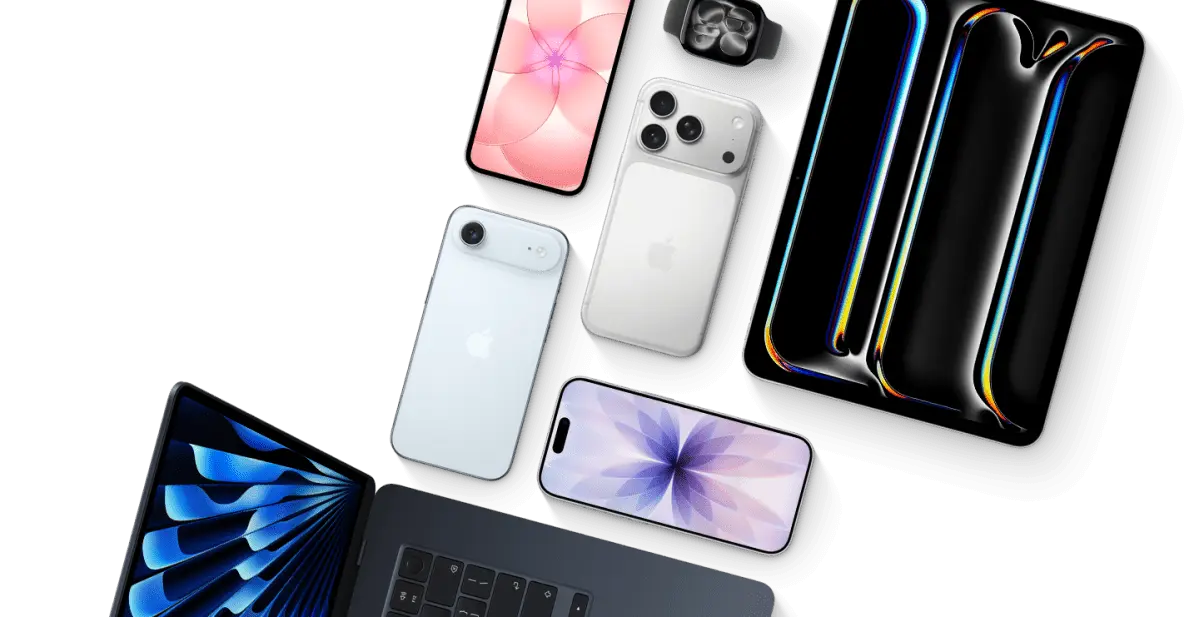
Apple’s new Upgrade Program is officially here, giving customers the chance to lease select models of iPhones, iPads, Macs, and Watches with a relatively low monthly payment. On the surface, it sounds like an incredible deal: the company promises you won’t pay more than the full price of the device over the course of the one- to three-year lease, and in some cases, you’ll pay hundreds of dollars less than if you bought the device upfront.
But as with any program involving monthly payments, contracts, and trade-ins, there are caveats. The most important one is your ability to keep paying on time throughout the entire length of the contract. Missing payments can trigger serious consequences, including debt collection. There are also hidden fees for early termination, damage to the device, and even a six-month period after the lease ends where you’ll still be charged monthly if you haven’t made a decision. Let’s break down everything you need to know about Apple’s Upgrade Program, including the true cost of leasing versus buying, and whether it’s actually a smart financial move.
How the Apple Upgrade Program works
The core structure of the program is simple: you pay a fixed monthly fee for the duration of your lease. The lease terms range from one to three years, depending on the device you choose. That monthly payment is designed to be lower than what you’d pay if you financed the device through a traditional installment plan, because you’re not actually paying for the full cost of the device. Instead, you’re paying for the depreciation and usage during the lease period, plus fees.
At the end of the lease, you have three options. First, you can purchase the device outright by paying the difference between what you’ve already paid and the original retail price. For example, if you lease an iPhone Air for two years and pay $695.76 in monthly payments, you would need to pay an additional $303.24 to own the device at its $999 price tag. Second, you can simply return the device and walk away, but you lose any potential resale or trade-in value. Third, you can upgrade to a new device immediately and start a new lease with whatever monthly payment that new device requires.
Apple provides a handy breakdown for each device in the program, showing both the total lease cost and the additional payment needed to purchase the device at the end of the lease. For example, the iPhone 17 lease works out to $551.76 over two years, with a remaining balance of $247.24 if you want to keep the phone. The MacBook Air, meanwhile, has a higher monthly payment but also a higher residual value. The key point is that the total of your monthly payments plus the buyout price always equals the full retail price of the device. That means if you choose to buy the device at the end, you don’t pay any interest or financing charges. But if you simply return it or upgrade, you’re essentially paying rent for the time you had it.
The biggest catch: it’s still a loan
The single biggest catch of the Upgrade Program is that it’s ultimately just a loan. Apple has partnered with Klarna, the buy now, pay later service, to underwrite the leases. That means there’s a contract, possible fees, and terms you have to abide by. While Apple advertises that there are no late fees or interest on these loans, the reality is more nuanced. If you miss a payment, you won’t be charged a penalty, but you will be in default. Klarna spokesperson Clare Nordstrom confirmed that if a person misses three payments in a row, the company will terminate the lease agreement and require the customer to pay the full outstanding balance immediately.
What happens if you don’t pay that balance? Klarna’s support page says that if a payment is not registered by the last reminder due date, the debt is transferred to debt collection. This is standard practice for BNPL services, but it can have serious consequences for your credit score and financial well-being. Unlike a credit card or a traditional personal loan, BNPL agreements often have clauses that allow the lender to seize the device or take other legal action. Klarna also reserves the right to use your customer data for personalized advertising, which is another hidden cost of the program.
Apple has tried to quell fears that the company might brick your device if you fail to make payments. Earlier, code spotted in Apple’s system suggested a “Restricted Mode” could be activated for missed payments, but Apple spokesperson Brian Bumbery confirmed that there will be no limitations placed on device functionality due to missed payments or default. Still, the debt collection risk remains, and that is perhaps the most important thing to consider before signing up.
Hidden fees and the cost of AppleCare
Beyond the loan structure, there are several hidden fees that can make the Upgrade Program more expensive than it first appears. During the lease, Klarna owns the device. That means you are responsible for any damage, and you will be charged a fee if you don’t return the device in “good condition.” To avoid these fees, Apple encourages customers to sign up for an AppleCare subscription. AppleCare costs $9.99 per month and up for iPhones, $5.49 per month for iPads, $3.99 per month for Macs, and $4.99 per month for the Watch Series 11 and newer. You can also pay $19.99 per month to cover up to three devices. That may not sound like much, but it adds up over a two-year lease. For an iPhone 17, adding AppleCare increases your total monthly outlay from about $23 to $33, which increases the total cost of the lease by more than $200.
Apple also charges an early termination fee if you want to return the device before the lease ends, or if you want to upgrade early. The exact fee depends on how many payments you’ve made and the remaining balance. And even after the lease ends, you have six months to decide whether to upgrade, exit the program, or buy the device outright. During that six-month window, you’ll continue to be charged the monthly payment. That means if you delay your decision, you could end up paying far more than the retail price of the device. It’s a clever way to nudge you into making a decision quickly, but it also punishes procrastination.
Upgrading vs buying outright: the trade-in math
The biggest financial drawback of the Upgrade Program becomes clear when you compare it to buying a device outright and selling it or trading it in later. Let’s use the iPhone 17 as an example. If you lease it for two years, you’ll pay $551.76 in monthly payments. If you choose to upgrade to the next iPhone at the end of the lease, you don’t have to pay the $247.24 buyout, but you also lose the device. The phone still has significant resale value. Data from the price comparison site SellUp suggests that iPhones lose around 35 to 40 percent of their value two years after launch. If we apply that to the iPhone 17, a two-year-old device could be resold for around $520. That means if you had bought the phone outright for $799 and then sold it after two years, your net cost would be only $279. That’s far less than the $551.76 you would have paid under the Upgrade Program, even before factoring in the buyout option.
If you prefer trading in your device, you’ll get a little less than if you sold it yourself, but you would still get hundreds of dollars in credit toward your next device. Under the Upgrade Program, you get zero credit toward a new device because you have to return the old one. That’s a huge opportunity cost. The program essentially forces you to give up the residual value of your device in exchange for lower monthly payments. For people who always want the latest iPhone and don’t care about owning the device, that might be acceptable. But for anyone who has ever sold an old phone to fund a new one, the Upgrade Program is a bad deal.
Is the Apple Upgrade Program worth it?
The answer depends on your personal financial situation and how you use your devices. If you are someone who can afford to buy a new iPhone outright but prefers to spread the cost over time, the Upgrade Program is a relatively expensive way to do that. You’ll pay the full retail price if you choose to buy the device at the end, and if you upgrade instead, you’ll lose out on resale value. On the other hand, if you don’t have $1,000 to drop on a new iPhone or MacBook, the monthly lease payments can make the latest technology more accessible. The program also offers flexibility that a traditional installment plan doesn’t: you can walk away after the lease ends without any obligation to buy.
However, there are significant risks. Buy now, pay later services like Klarna have come under scrutiny for encouraging consumers to take on more debt than they can handle. A 2025 study from LendingTree found that nearly half of all BNPL users paid late on at least one of their loans. The consequences can range from late fees to damage to your credit score. Even though Apple says there are no late fees, the risk of debt collection is real. If you lose your job or face unexpected expenses while you are in the middle of a lease, you could find yourself in financial trouble.
Another consideration is the psychological effect of having a constant monthly payment for a device that you could otherwise own outright. People who lease devices tend to upgrade more often because the barrier to a new phone is just another monthly payment. That can lead to a cycle of perpetual payments, where you never actually own a device and always have a bill to pay. For some, that’s a feature, not a bug. For others, it’s a trap.
Apple’s Upgrade Program is not inherently a scam or a rip-off. It’s a legitimate leasing option that provides access to expensive technology with lower upfront costs. But it’s not the money-saving miracle it appears to be at first glance. The math clearly shows that buying outright and selling or trading in your device after two years is almost always cheaper than leasing and upgrading. The only people who truly benefit from leasing are those who would otherwise buy a new device every year and who don’t care about maximizing their resale value. For everyone else, the best approach is to do the math yourself, read the fine print, and consider whether the convenience and flexibility of the Upgrade Program is worth the extra cost.
Source: The Verge News