

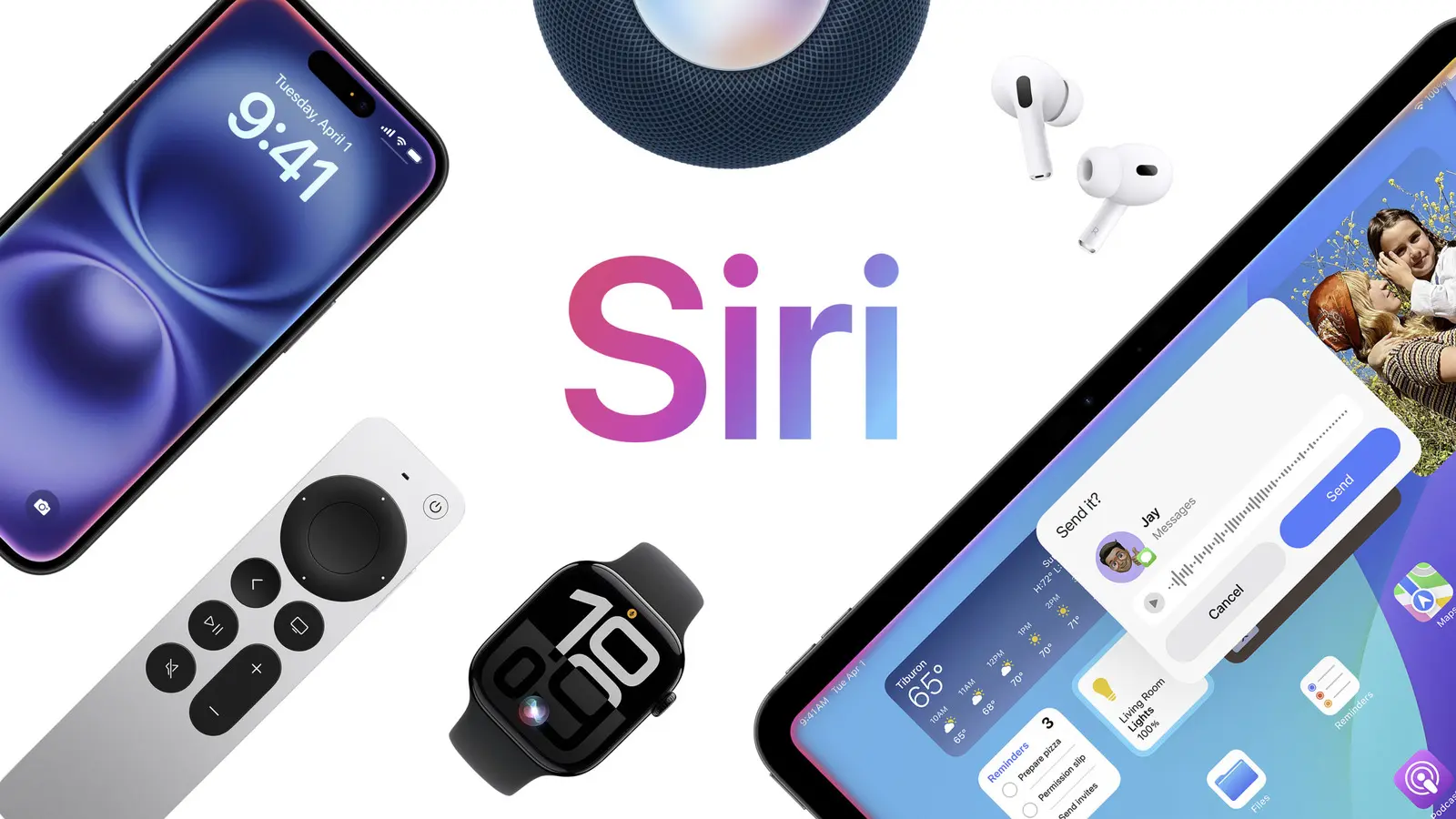
Apple has agreed to pay $250 million to settle a class action lawsuit that accused the company of misleading iPhone buyers about the availability of a new, AI-powered version of Siri. The lawsuit claimed that Apple knowingly advertised the feature as part of the Apple Intelligence suite announced at WWDC 2024, yet failed to deliver the updated assistant almost two years later. The settlement, first reported by The Financial Times, must still be approved by a judge.
The class action covers US purchasers of the iPhone 16 lineup and the iPhone 15 Pro, who were promised a more personalized Siri capable of understanding context and taking actions within apps. However, Apple has yet to ship that version of Siri. Under the terms of the proposed settlement, affected buyers may receive financial compensation, though Apple is not required to admit any wrongdoing or fault regarding its advertising of the AI features.
The saga of Siri's delayed upgrade is part of a broader pattern of Apple's gradual rollout of Apple Intelligence features. At WWDC 2024, Apple unveiled a suite of capabilities including text editing, image generation, and ChatGPT integration. While some of these features trickled out through software updates in late 2024 and early 2025, the advanced Siri—one of the most anticipated components—never arrived. Apple did not publicly acknowledge the delay until March 2025, more than five months after the iPhone 16 launched. The iPhone 16 was marketed as being purpose-built to run Apple Intelligence, including the promised Siri features.
The company subsequently pulled television and online advertisements that prominently showcased the new Siri capabilities, which had been aired before the iPhone 16 release. The delay has been attributed to technical challenges in delivering a genuinely context-aware assistant that can interact with a user's on-device data and third-party apps. Sources inside Apple have suggested that the original plan underestimated the complexity of creating an AI assistant that works seamlessly with Apple’s privacy-focused on-device processing.
Background on the Siri Litigation
Class action lawsuits against tech companies for unfulfilled promises are not new, but the scale of this settlement underscores the financial impact of failing to meet consumer expectations. The lawsuit was filed in 2025 by a group of iPhone buyers who alleged that Apple engaged in deceptive trade practices by advertising features that were not yet ready. Legal experts have noted that the $250 million figure represents a significant penalty, even for a company of Apple’s size, and could serve as a deterrent against similar premature announcements in the industry.
The case also highlights the evolving legal landscape around AI marketing. As more companies race to announce generative AI features, regulators and courts are paying closer attention to claims about product capabilities. Apple’s decision to settle rather than fight the case in court likely reflects a desire to avoid protracted litigation that could reveal internal decision-making processes or damage its reputation further.
Apple’s new Siri has been in development for years. Originally introduced in 2011 as a voice assistant with natural language capabilities, Siri faced criticism for lagging behind competitors like Amazon’s Alexa and Google Assistant. The promise of a generative AI overhaul was seen as Apple’s chance to reclaim leadership in digital assistants. The new Siri was supposed to integrate deeply with Apple Intelligence, drawing on the user’s personal context—such as messages, calendar events, and app usage—to offer proactive suggestions and execute complex tasks across multiple apps.
Technical Hurdles and the Path to Release
The delay is not solely a matter of incomplete coding. Siri’s integration with other apps requires a level of permission and understanding that has proven difficult to achieve while maintaining Apple’s strict privacy standards. Apple Intelligence processes data on-device wherever possible to minimize data sent to servers. For a contextual assistant, this means handling sensitive information like emails, photos, and messages entirely locally—a technically challenging paradigm.
Apple has reportedly partnered with Google to overcome some of these obstacles, licensing the company’s Gemini models to power the underlying AI. The new Siri, along with a collection of other enhanced AI features, is now expected to launch later this year as part of iOS 27. Analysts believe that the collaboration with Google will enable Apple to catch up quickly, though it also marks a notable shift from Apple’s usual strategy of developing core technologies internally.
Impact on Consumers and the Industry
For consumers who bought an iPhone 16 expecting a revolutionary Siri, the $250 million settlement offers a modest remedy. Individual payouts may range from a few dollars to perhaps hundreds, depending on the number of claimants and the terms of the final plan. Many affected users will need to file claims to receive any compensation. The lawsuit also serves as a warning to manufacturers about overpromising in the highly competitive AI space.
Industry observers note that Apple is not alone in struggling to deliver on AI promises. Several companies have faced backlash after announcing features that later took months or years to materialize. The difference with Apple, however, lies in the premium perception of its products: customers pay a higher price and expect a more polished, timely experience. The Siri delay has dented that perception, especially among tech enthusiasts who view the assistant as a core differentiator.
The timeline for the new Siri remains uncertain even within Apple. While the company targets a release with iOS 27 in the fall of 2026, internal sources caution that the feature may need further refinement. Apple has also been testing a more limited version of the contextual assistant in beta builds, suggesting that a phased rollout may be likely. Some features, such as third-party app actions, could arrive later than the core contextual understanding.
Historical Context of Siri’s Evolution
Since its inception, Siri has gone through several transformations. It gained third-party app support in 2016, multilingual capabilities in subsequent years, and a refreshed voice in 2021. However, the assistant has consistently been criticized for not matching the depth of competitors’ offerings. The integration with Apple Intelligence was supposed to change that, leveraging Apple’s own large language model research and the billions of dollars invested in AI acquisitions.
Apple’s cautious approach to AI—prioritizing on-device privacy—has been both a strength and a drawback. While users appreciate the security, it limits the ability to use vast cloud datasets for training and inference. The partnership with Google Gemini may allow Apple to offload some processing to Google’s cloud while still applying differential privacy techniques to protect user data.
The $250 million settlement marks a significant chapter in Apple’s AI journey. It is a costly reminder that even the most powerful companies must manage expectations carefully when announcing features that are not yet ready for prime time. For the millions of iPhone 16 and 15 Pro owners, the wait for a truly intelligent Siri continues, with hope that the final product—when it arrives—will live up to the vision first shown at WWDC 2024.
Source: Engadget News