

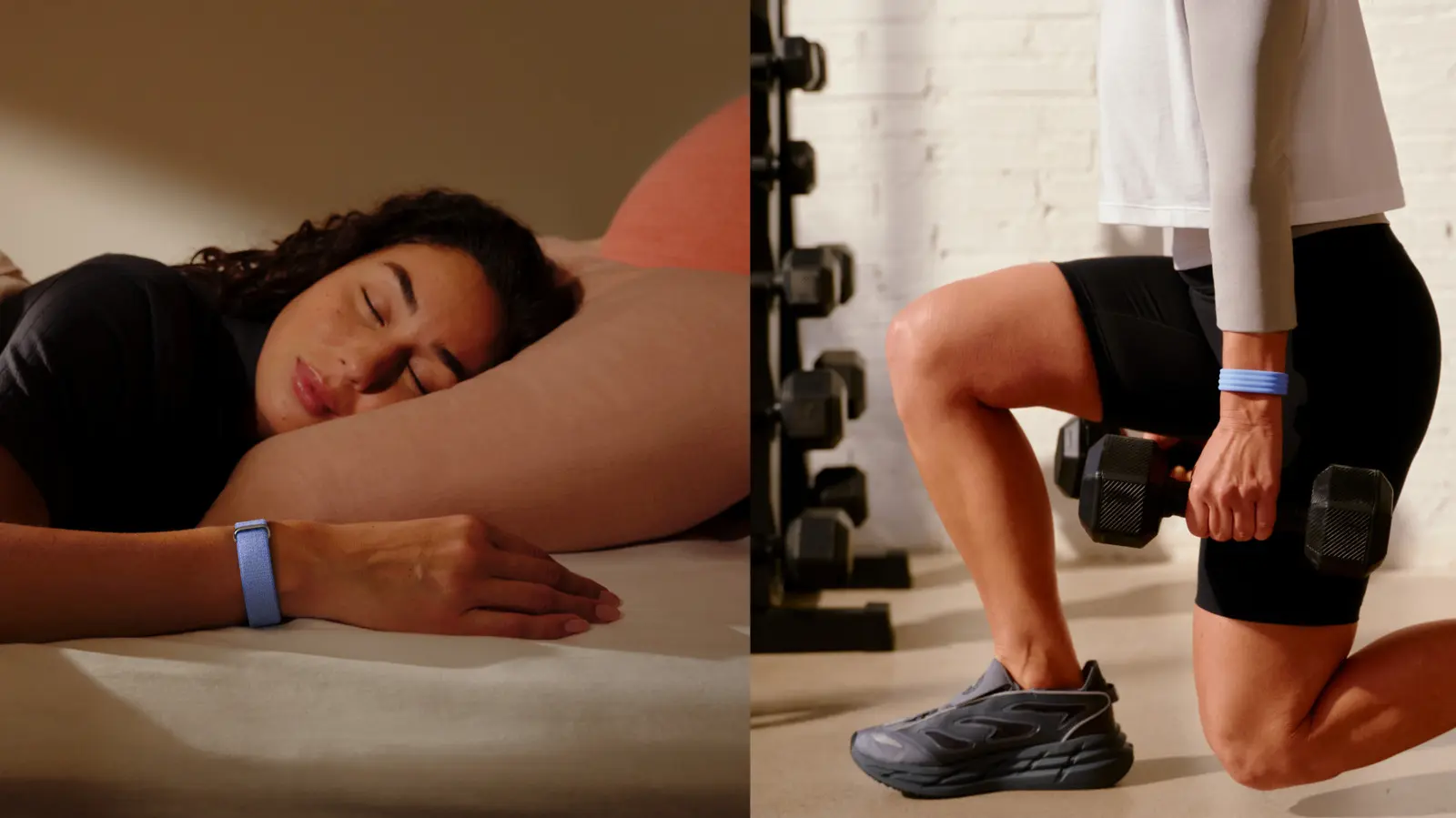
Google has officially unveiled the Fitbit Air, a screenless wearable that borrows heavily from the Whoop strap philosophy. First teased in March, the device is now available for pre-order at a competitive price of $100. The Fitbit Air represents a departure from traditional fitness trackers by removing the display entirely and focusing on passive, continuous data collection. Designed to be worn 24/7, it slips into a wristband, chest strap, or virtually any accessory the user chooses—though for now, only wristbands are available at launch.
The Fitbit Air is remarkably small and lightweight. According to Rishi Chandra, General Manager for Google Health, the Air is 25 percent smaller than the Fitbit Luxe and 50 percent smaller than the Inspire 3. The device weighs just 12 grams (0.42 ounces) with a band and a mere 5.2 grams (0.18 ounces) without. In an independent consumer perception study conducted last year, the Air was rated as more comfortable than leading competitors in the U.S. market. Google emphasizes a “secure, micro-adjustable fit” that promises to be so comfortable users will forget they are wearing it—at work, at the gym, or in bed.
Without a screen or buttons, the Fitbit Air is a passive observer. It continuously monitors heart rate, using Google’s long-established algorithms to track sleep stages, deliver a Sleep Score each night, and provide insights into heart rate variability (HRV). The device also offers irregular heart rhythm notifications that can detect signs of atrial fibrillation (AFib). For exercise, the Air automatically detects common activities such as walking, running, cycling (stationary and outdoor), rowing, elliptical, and other high-heart-rate sports. Users can manually start sessions for approximately 40 activity types via the app, including aerobics, kickboxing, yoga, and dancing. Additionally, the app allows users to log over 140 activities—from archery to household chores—that were not automatically detected.
The Fitbit Air also tracks weekly cardio load, readiness, steps, distance, and active minutes. A built-in vibration motor enables silent alarms and Google’s Smart Wake feature, which vibrates at the optimal point in your sleep cycle to gently wake you. Google claims the Air is powered by advanced machine learning models that are 15 percent more accurate than previous generations, and the Sleep Score has been refined to better reflect recovery.
As implied by its name, the Fitbit Air heavily integrates artificial intelligence. The centerpiece is the Google Health Coach, a Gemini-powered conversational interface that launched in public preview last October. It allows users to chat with the Google Health app and receive personalized suggestions based on their data. The Health Coach can create dynamic, tailored fitness plans that adapt to real-time performance and schedule changes. According to Google, the coach works with data from Cycle Health and other vital medical information, all while maintaining user privacy and data security.
Three band options are available at launch: the micro-adjustable Performance Loop Band, the sweatproof and wetproof Active silicone band, and an Elevated Modern Band that resembles a fashionable bracelet. Google states the Air is water resistant to 50 meters but not officially waterproof. A chest strap or other accessories are not yet available, but Chandra told Engadget that more bands are in development. The device has a battery life of up to one week and can fast-charge: five minutes of charging provides up to one day of use, while a full charge takes about 90 minutes. The charger is magnetic and bi-directional, similar to the Pixel Watch 4’s charger, eliminating orientation fuss.
Google also released a special edition Fitbit Air in collaboration with basketball star Stephen Curry, who serves as the company’s “Performance Advisor.” This edition features a raised interior print for improved airflow, signature Curry design elements, and an additional water-resistant coating. It costs $130, a $30 premium over the standard model. All purchases of the Fitbit Air (including the Special Edition) come with three months of Google Health Premium. Devices will begin shipping on May 26.
The Fitbit Air marks a strategic shift for Google’s wearables division. By stripping away the screen and focusing on a comfortable, always-on form factor, Google directly targets the market segment dominated by Whoop. Whoop has long championed screenless wearables that prioritize recovery, strain, and sleep over flashy notifications. Google’s offering undercuts Whoop’s subscription-based pricing (which can exceed $30 per month) by providing the device for a one-time $100 fee, though it includes a limited premium subscription trial. The inclusion of Google Health Coach also differentiates the Air, leveraging Gemini’s conversational AI to offer personalized guidance—a feature Whoop lacks in its native app.
The timing of the launch is notable. Google has been steadily expanding its health ecosystem, from the Pixel Watch lineup to the acquisition of Fitbit and the integration of AI across services. The Fitbit Air appears to be a testbed for how AI can enhance passive health tracking without overwhelming users with data. The machine learning improvements in accuracy and the refined sleep algorithm suggest that Google is investing heavily in the software side of wearables. Additionally, the partnership with a high-profile athlete like Steph Curry underscores the company’s ambition to appeal to serious fitness enthusiasts and professionals.
However, the Fitbit Air faces challenges. It enters a market where smartwatches like the Apple Watch and Samsung Galaxy Watch offer screens, apps, and LTE connectivity for a few hundred dollars more. For users who prioritize notifications, maps, or music control, the Air’s screenless design may feel limiting. Moreover, the device’s reliance on a smartphone app for all interactions could be a drawback for those who prefer glanceable information on a wrist display. Google’s decision to offer only wristbands at launch—despite the chest strap potential—also narrows its appeal for segments like competitive rowing or high-precision heart rate monitoring.
Another consideration is subscription lock-in. While the $100 price tag is aggressive, the full value of the Google Health Coach and advanced analytics may require a Google Health Premium subscription after the three-month trial ends. Google has not publicly disclosed the monthly cost of this subscription, but similar services often run $10–$15 per month. Over two years, a user might pay $340 total ($100 + 21 months of subscription), which is comparable to an entry-level smartwatch. Whoop, by contrast, charges an upfront fee for the device (often $0 with a subscription) and then $30 per month, totaling around $720 over two years—so Google’s model is cheaper upfront but still carries recurring costs.
Despite these caveats, the Fitbit Air marks a bold step for Google. It demonstrates a willingness to experiment with form factors and pricing to capture specific niches. The device is currently available for pre-order directly from Google’s online store. With shipments beginning on May 26, the first wave of users will soon test whether a screenless, AI-driven health companion can truly replace a traditional fitness tracker or smartwatch. The success of the Fitbit Air will likely depend on how effectively Google Health Coach delivers personalized insights and whether users find the comfort and battery life compelling enough to forego a screen.
Source: Engadget News